Topklasse Team of the Year 2026

Rod Lyall & Bertus de Jong | 30-09-2026


This year we (and you!) are spared our annual debate about how many overseas players we should include in our Topklasse Team of the Year, thanks to the KNCB’s new player points system (full disclosure: one of us initially proposed the system and is involved in its implementation). We shall adopt the 28-point limit for our side, and argue instead solely about the relative merits of the candidates for selection. And we will, with apologies for the long delay in picking this year’s team, be confining ourselves to the 50-over competition.

Openers

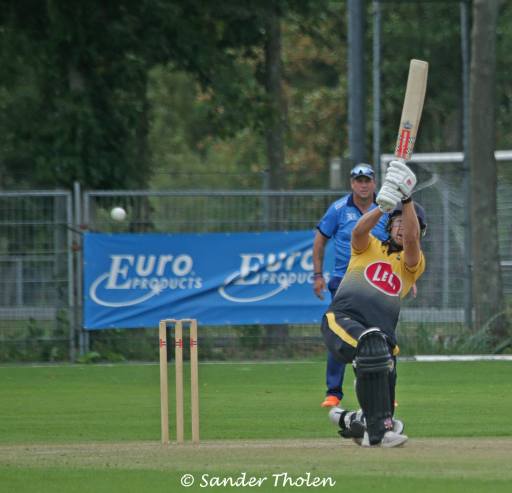
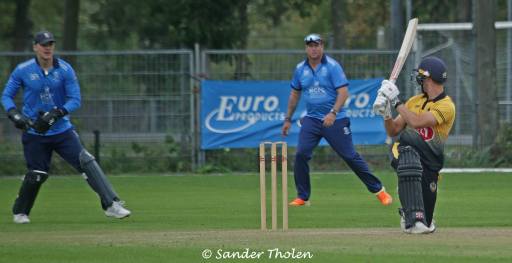
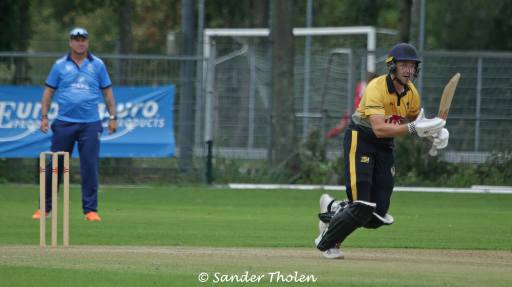
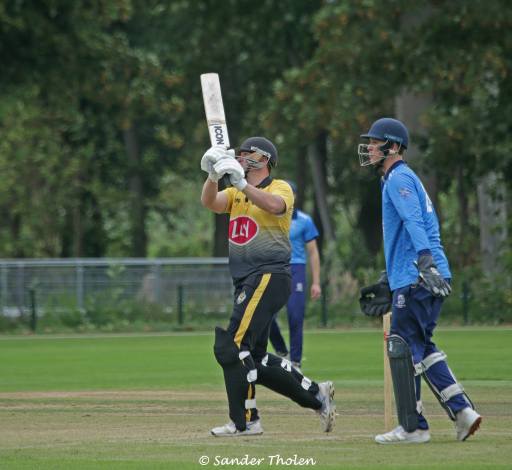
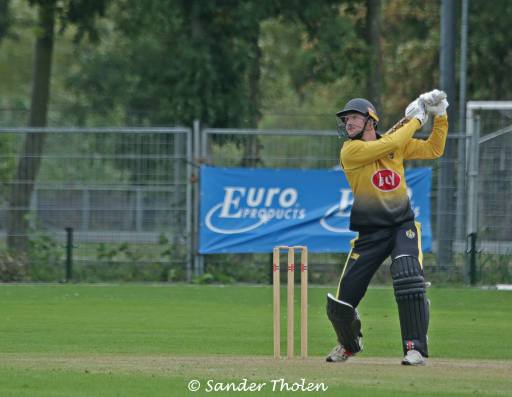
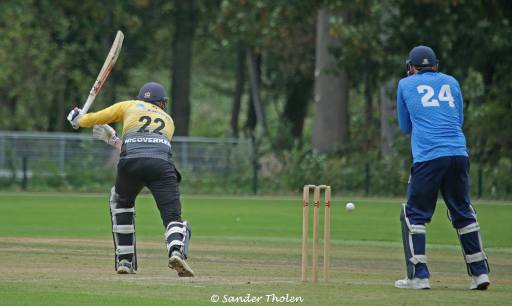
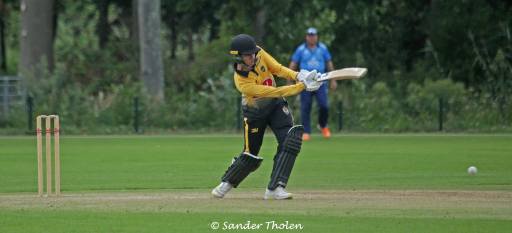
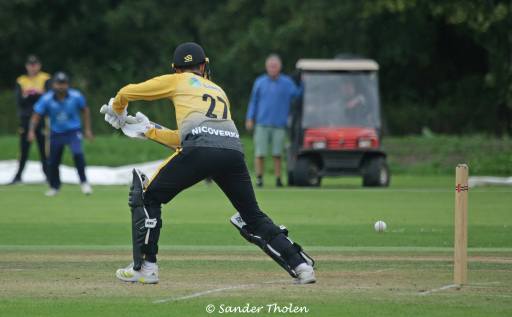
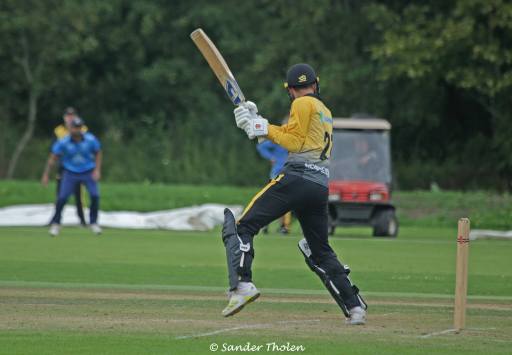
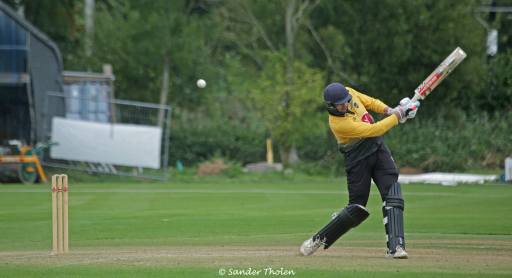
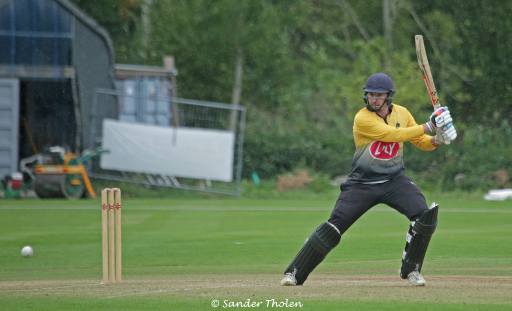
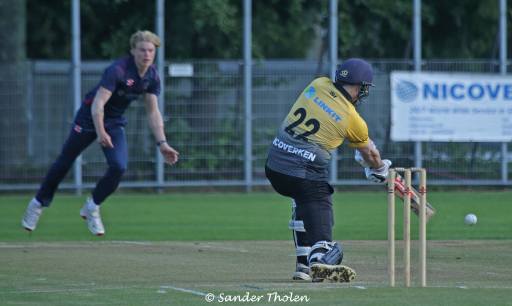
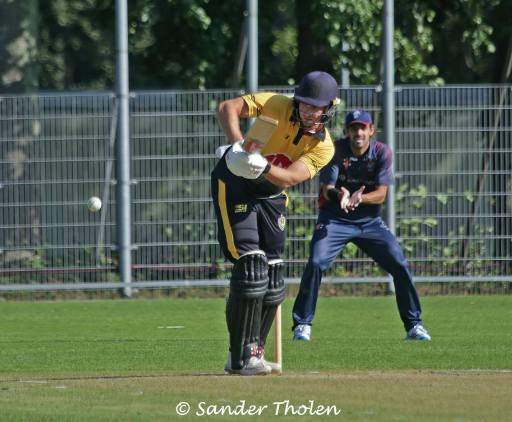
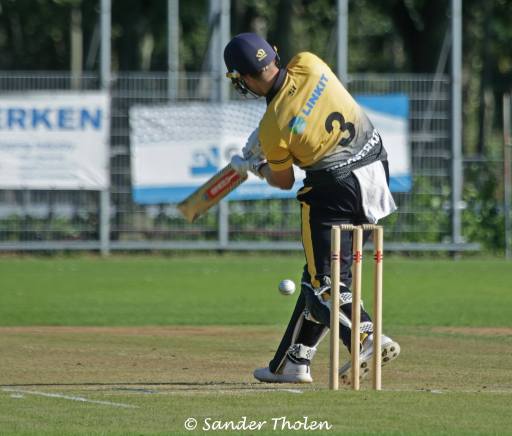
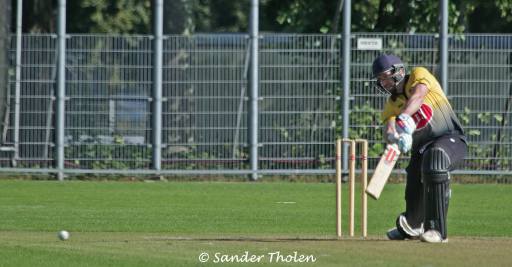
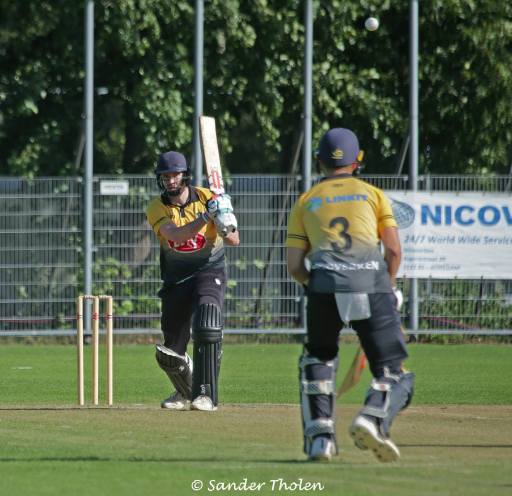
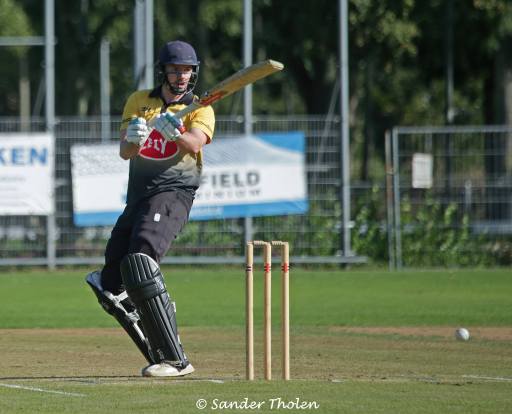
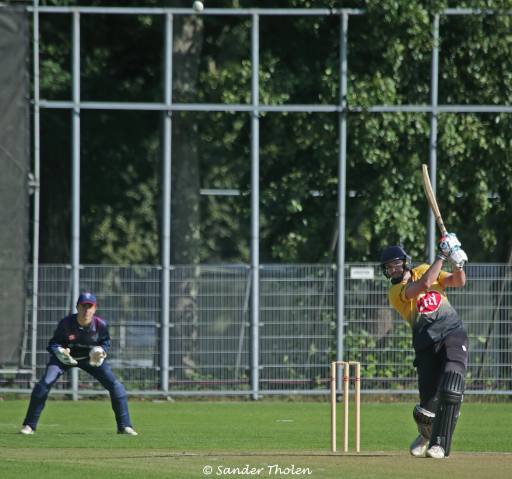
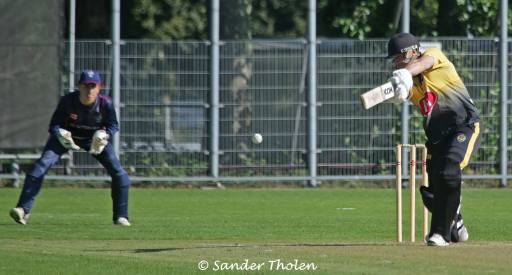
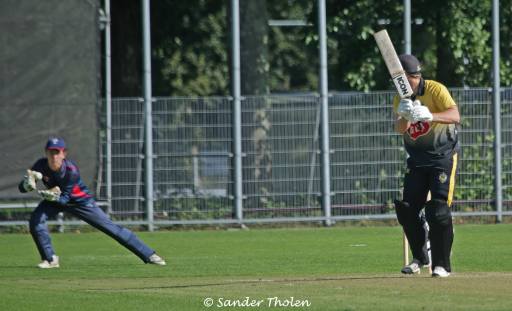
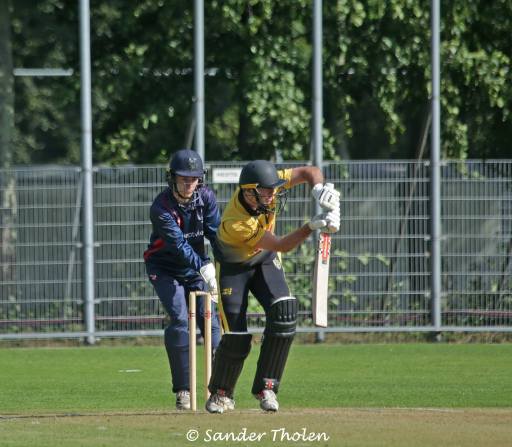
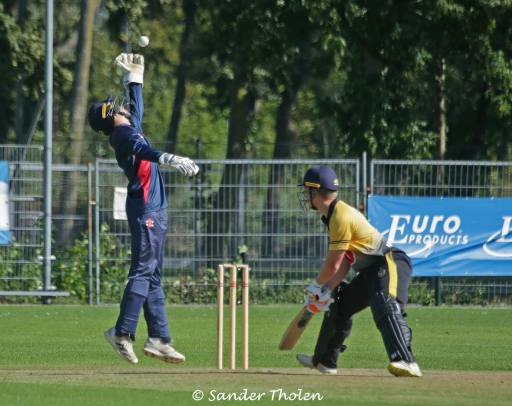
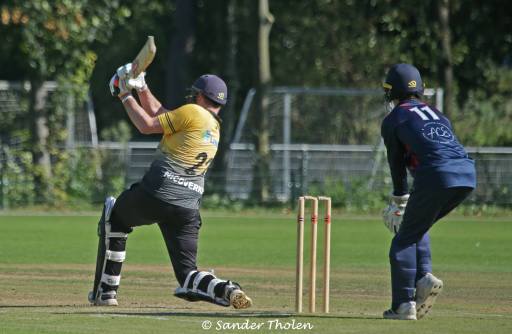
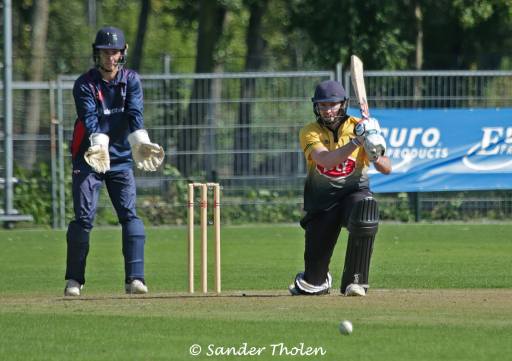
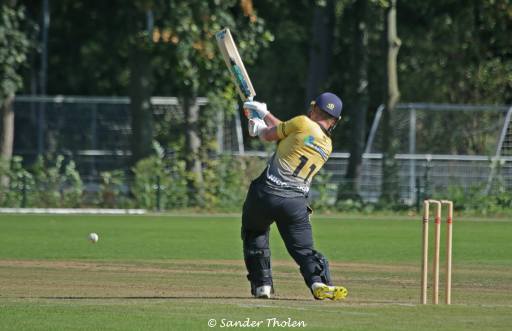
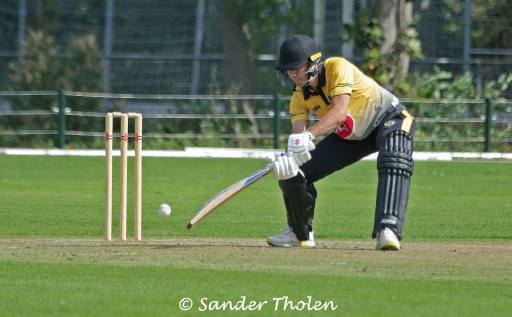
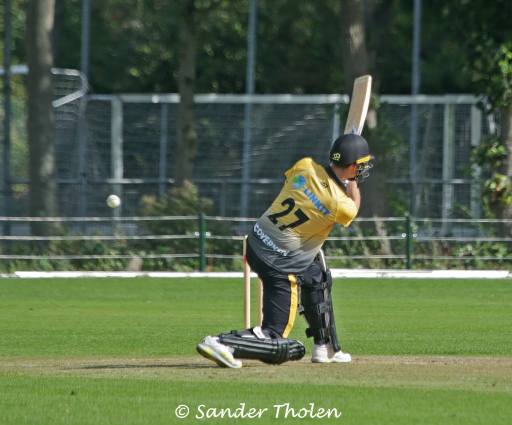
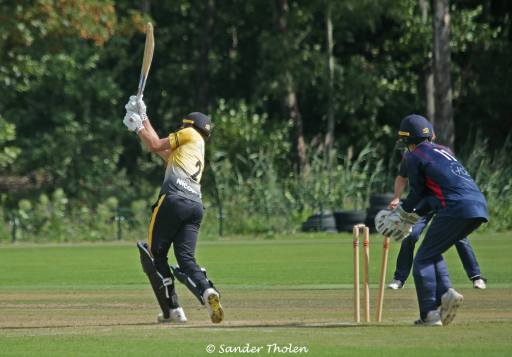
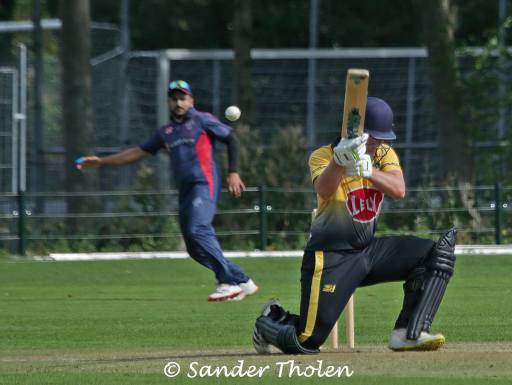
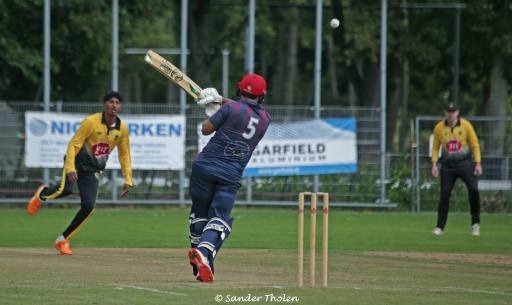
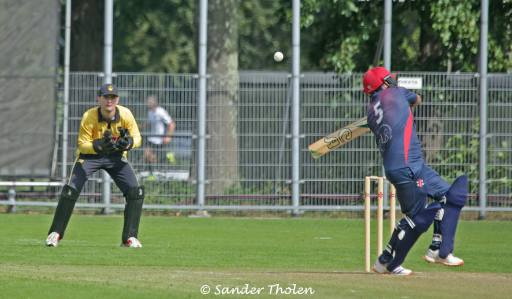
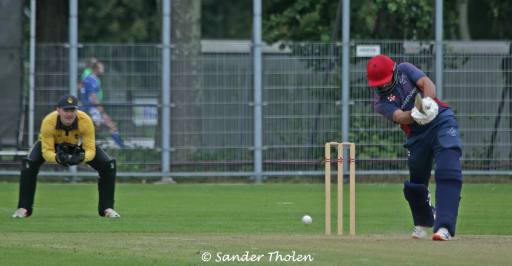
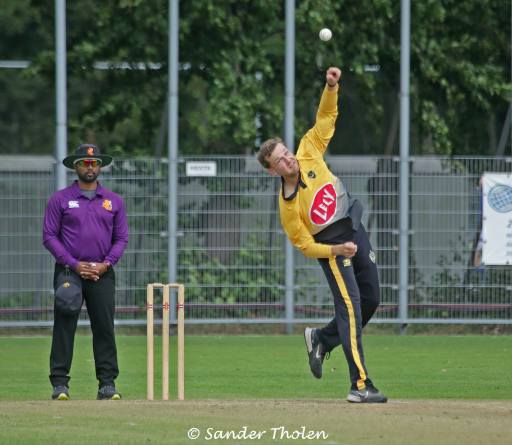
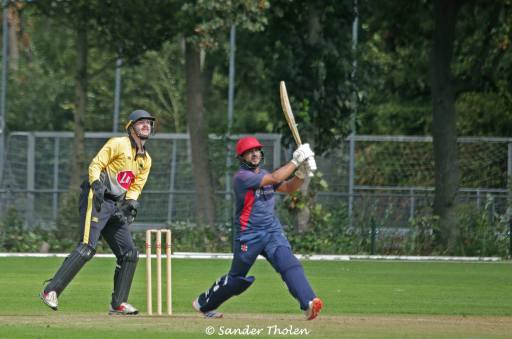
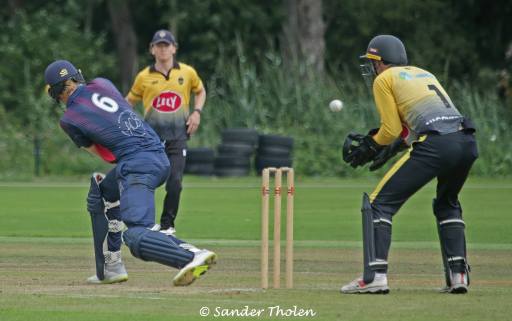
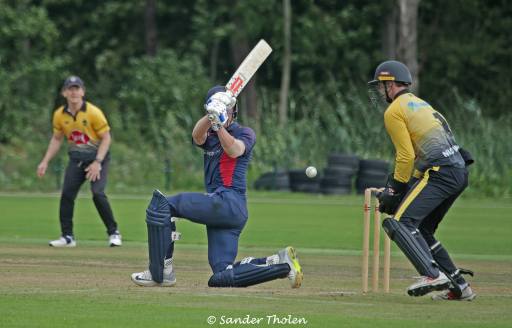
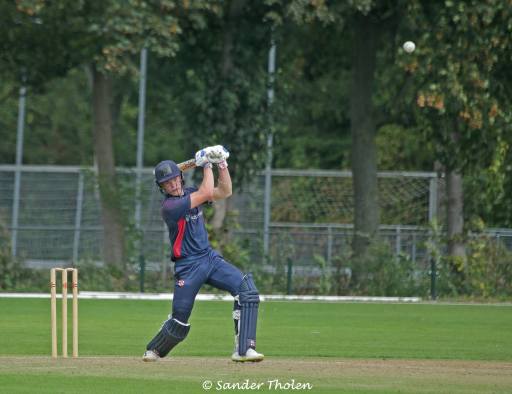
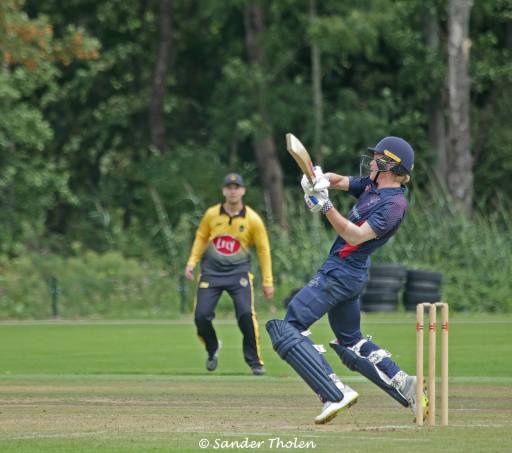
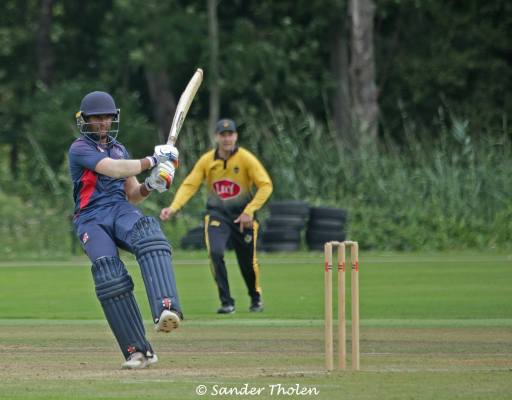
RL: There are several outstanding candidates here, not least Voorburg’s Cedric de Lange, whose run of big scores at the start of the campaign earned him a spot in the national team for the League 2 series in Canada; he finished with 574 at 52.18 and is fifth in the overall aggregates. We also can’t ignore another left-hander in Rotterdam’s Musa Ahmad: his 638 runs at 49.08 played a vital part in his side’s taking the title, and their phenomenal run of big totals. If we’re looking for a right-hander to pair with one of them, then we should certainly look at Tonny Staal (HCC), who quietly accumulated 493 runs at 41.08, or indeed Musa’s opening partner Shoaib Minhas, with 468 at 36.00. Then there’s David Rushmere (Hermes-DVS), a feast-or-famine specialist: 454 of his 591 runs came in three innings, but there’s no denying his destructive abilities once he’s set. The coward’s way out would be to open with Musa and Staal (or Rushmere) and bat De Lange at three, but that reduces the scope for picking the top order in a remarkably run-heavy season.
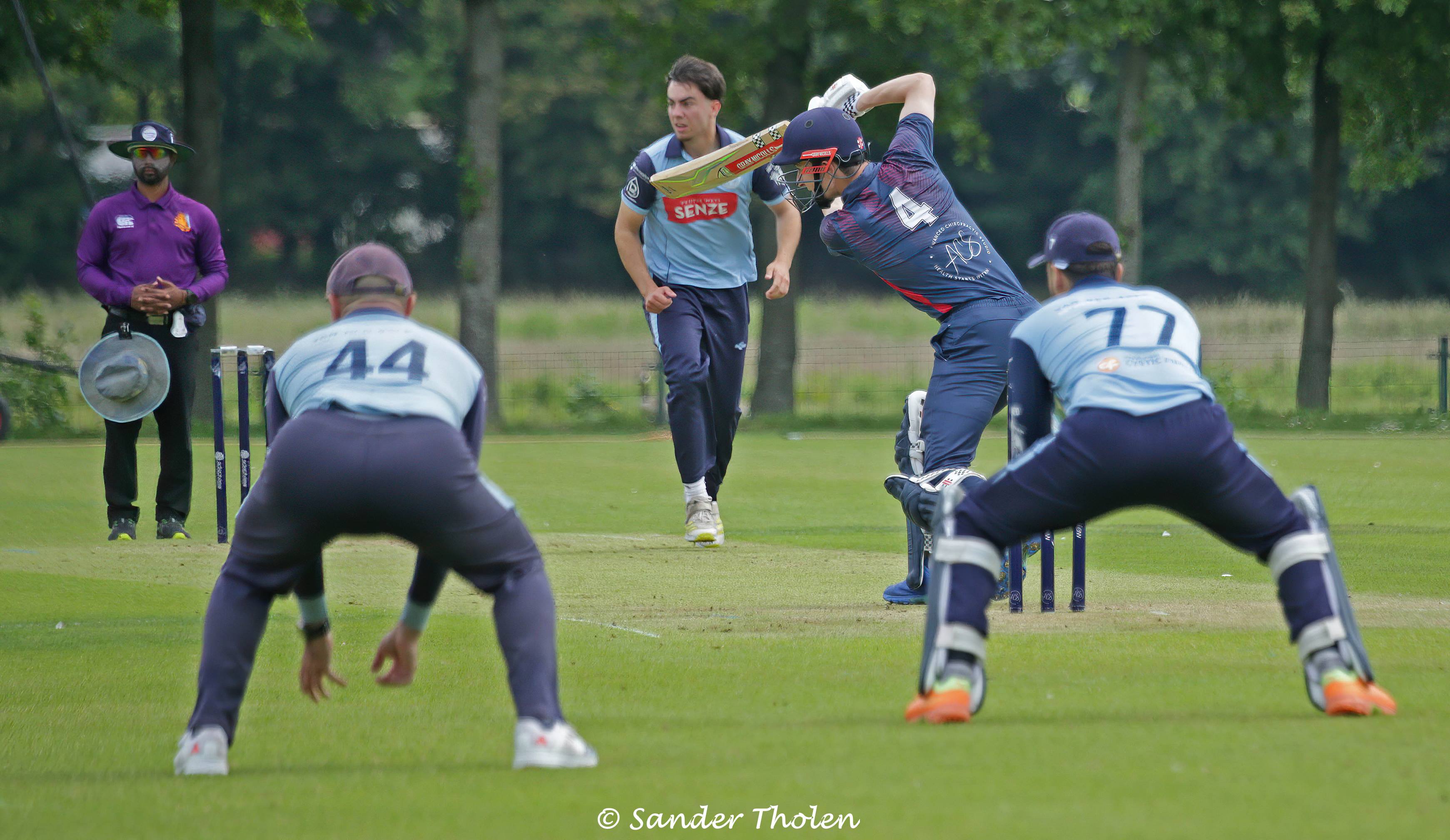
Cedric de Lange
Cedric de Lange

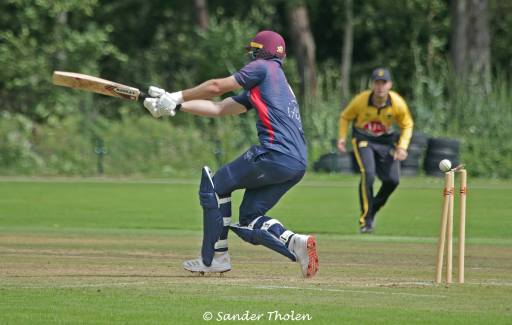
BdJ: It has indeed been a season heavily dominated by bat over ball, though arguably as much a personnel issue as a reflection of conditions, two of last season’s three lead wicket-takers subbed out for batting acquisitions, though certainly the turf wickets have tended toward the batting-friendly too. Nonetheless the success of young Dutch-produced batting talent this season has been remarkable, and few have enjoyed better season’s than de Lange, who was racking up tons like it was going out of style for the first few rounds. His efforts earned him an ODI debut in the least hospitable conditions one can encounter in International cricket, and though his courageous showing in the pits of King City aren’t factored into our selection policy for this exercise, de Lange’s place at the top of the order is an easy pick. Ahmad’s claim is almost as strong, and indeed he outscored de Lange in aggregate over the season, in part due to being overlooked by the selectors. His 638 runs at a shade under 50, accumulated over the course of more than 24 hours at the crease, were the foundation upon which the record-breaking, championship-winning Rotterdam batting basilica was built. It’s difficult to make a case to displace either from the top of the order, though Staal certainly warrants and honourable mention, his understated return to form playing a big part in HCC keeping in touch with the top of the table until the final weekend. VRA’s Vikram Singh also had an excellent (albeit abbreviated) season with the bat, if somewhat overshadowed by his own efforts with the ball. 368 runs at 46 across the eight games he played was a fine return at the top, but not enough to challenge the incumbents. He’ll have a stronger case to press further down the page of course, but one can afford perhaps to disturb him from his preferred position on the batting card.

Top order

BdJ: First drop is a more closely contested position with a handful of bats doing fine work in the role across the season. None have done better than Gavin Kaplan, who struck two fifties and two tons across the six innings he played for Voorburg, but his abbreviated season probably excludes him. Of regular number threes there’s little to separate Lehan Botha, Johan Smal and Asif Gondal – the former two both passing 500 runs for the season, the latter missing that milestone by five runs though he does have a champion’s medal weighing in his favour. Smal’s forced foray into bowling owing to Singh’s absence and injury does work in his favour there though, going at a shade over fours in a high-scoring season no mean feat for a part-timer. Kampong’s Scott Edwards also has a brace of centuries from number three and his place at the top of the aggregates alongside Musa Ahmad assures him a spot somewhere in the line-up, though he’s generally been flexible about where exactly he comes in. Rotterdam’s Mohsin Riaz has rather less competition at four, though Kent Goedeke accumulated more runs across the season his top score came at five. Saqib Zulfiqar also has a strong claim to the number five slot however, the majority of his 528 runs coming at that position and his extraordinary strike rate of more than eight an over arguing strongly in his favour.

RL: I’d want to add to that list Lucas del Bianco of HBS, who probably did as much as anybody to keep the Crows in the top flight for another year: his 573 runs at 71.63 included seven fifties in just 12 innings. He is, moreover, a remarkable utility player, having broken into the side as a keeper, but increasingly slotting into the attack. He’s batted at five or six this year, and I reckon there’s a strong case, given the number of batting allrounders on offer, that we can extend our top order at least to number six. There really is very little to choose between Smal, Botha and Gondal, all of whom probably have a stronger case than Riaz, although his storming finish to the campaign put the icing on Rotterdam’s victory cake. So my four would be Smal, Gondal, Saqib and Del Bianco, with Edwards picked as keeper – a role he has seldom played for Kampong this season – and batting at seven.

Bowling

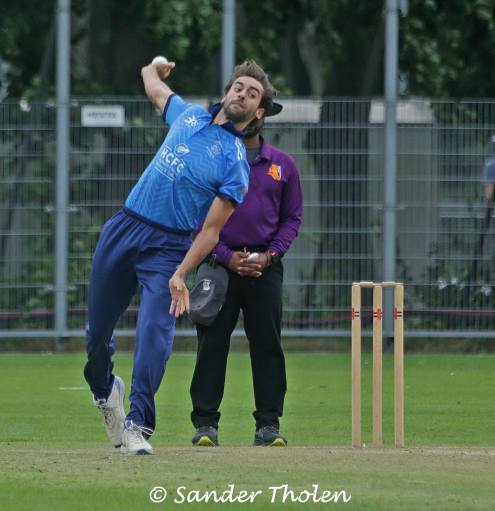
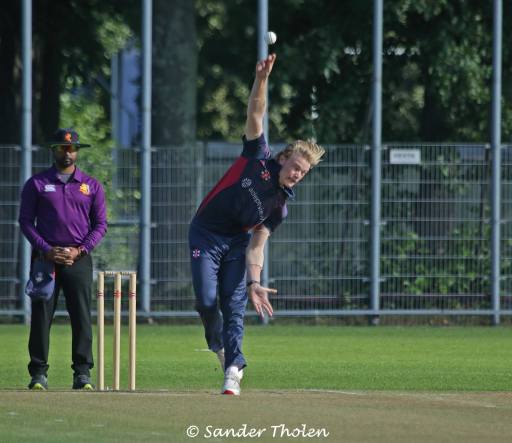
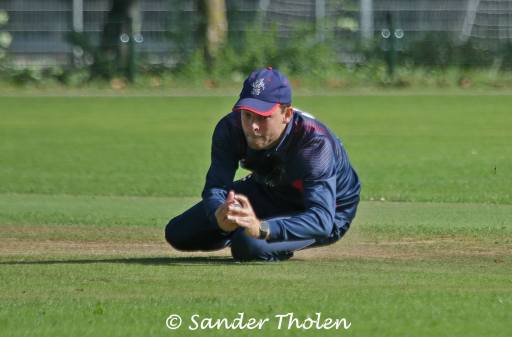
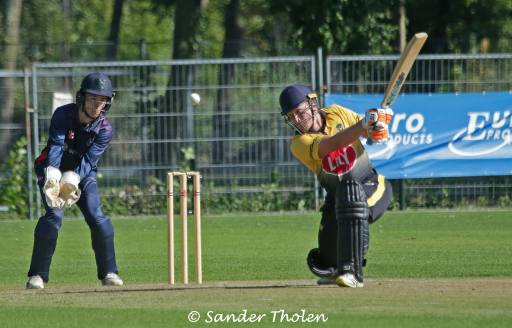
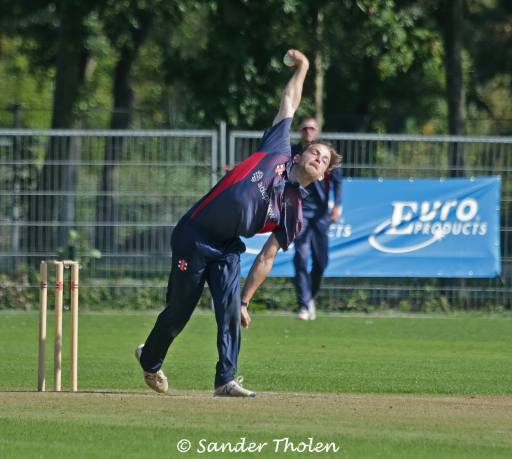
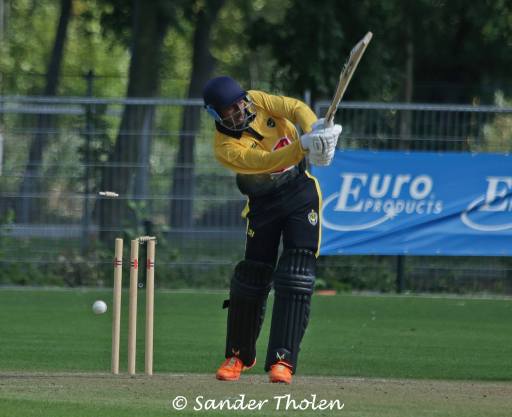
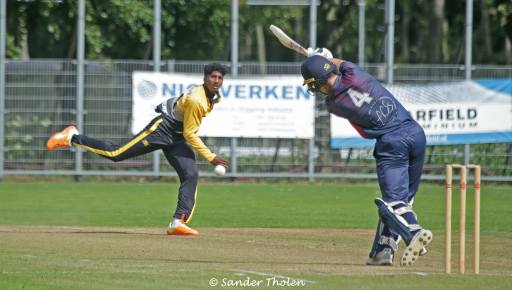
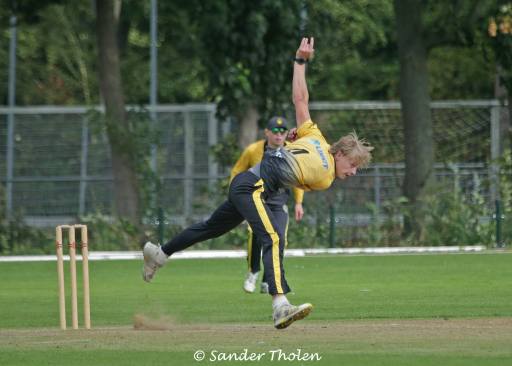
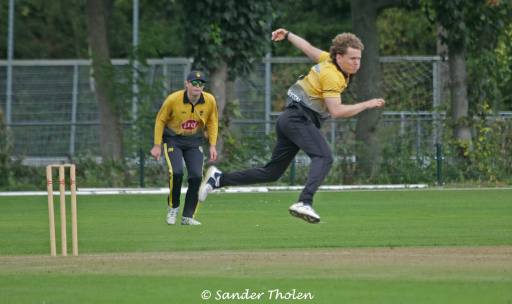
RL: Given that six of the top seven bowled more or less regularly during the 50-over season, though rarely if ever a full quota of overs, we can perhaps reasonably restrict our selection of specialist bowlers to four. Averaging 12.48 for each of his 23 wickets until injury put him on the sidelines, Vikram Singh was a dominant force for VRA in the first half of the season, and really does demand to be given the new ball, even if it would mean his batting, as Bertus signalled earlier, in a somewhat unfamiliar role. But can you imagine a more intimidating number eight? His partner should probably be Voorburg’s Jaynul Islam, who despite playing only ten matches finished with the most wickets, 28, at an average of 16.79. Josh Brown and Daniel Crowley both did sterling service for HCC, taking 25 and 19 wickets respectively, while Justin Trijzelaar had a better economy rate than either of them and deserves at least an honourable mention. Another of the up-and-coming brigade is Joris van Oosterom of HBS, whose best deliveries are capable of dismissing the best batters. If we’re looking for a third seamer, and we probably should be, then my nod would go to Crowley out of those candidates. Among the spinners, given that we already have several options among the top order, the chief claimants are probably Rotterdam’s Ahmed Shafiq, Sahil Kothari of Hermes-DVS, and Pierre Jacod of Kampong. Again, there’s little to separate them, but Shafiq’s contribution to his side’s title probably gives him the edge; genuine allrounder Jacod would be a strong contender for the twelfth man role.

Vikram Singh
Vikram Singh

BdJ: Zulfiqar looks a lock for the spin all-rounder slot, and with de Lange and Ahmad able to chip in there’s perhaops even a case to do without a second spinner. Shafiq probably has the strongest case as specialist slow bowler, aided by his outstanding 13 outfield catches across the competition, though Jacod’s all-round season does make him tough to leave out. A mention at least should also be made here of the evergreen Lorenzo Ingram, who took just six wickets this summer but was the only frontline bowler to go at under 3.5 an over in what’s been a remarkably high-scoring season, while Aryan Dutt’s 15 wickets at an economy of a shade over 4s is also worth acknowledgement in this context. It’s on grounds of economy and average too that I’d be minded to give the nod to Trijzelaar over Crowley or Brown, being the only frontline seamer to go at under fours this season, and his 18 wickets also coming at an average of under 20. It’s worth pointing out here that Kampong’s Shashank Kumar took as many wickets at a better average and at an economy rate barely over four, but the deciding factor for mine is that Trijzelaar has tended to bowl first change or later, a role for which there is comparatively little competition among the options above. In a season where bat has dominated over ball, anyone who can keep the scoring rate contained through the middle is an invaluable asset.

A strong showing for home-grown talent and long-time stalwart this season means we can be fairly confident of meeting any restrictions one might car to pick this year, but leaving the question of totalling up the exact points value as an exercise for the reader, here’s TKcricket’s 2026 Topklasse Team of the Year:

Cedric de Lange (VCC), Musa Ahmad (RCC), Johan Smal (VRA), Lehan Botha (HBS), Saqib Zulfiqar (RCC), Lucas Del Bianco (HBS), Scott Edwards (Kampong), Vikram Singh (VRA), Ahmed Shafiq (RCC), Justin Trijzelaar (HCC), Jaynul Islam (VCC)
12th man: Pierre Jacod (Kamping)

Looking a Gift Horse in the Mouth

Bertus de Jong | 24-09-2026


This article first appeared on Bertus de Jong’s Substack – Outside the Circle to which we encourage readers to subscribe.


It is, if Anselm of Canterbury is to be believed, better to exist than not.

The single greatest argument in favour of the European T20 Premier League is this ontological one; namely that, in stark contrast to its ephemeral predecessor, it exists. That the ETPL’s first season has now taken place in re could also ameliorate some (though far from all) of the league’s greatest future challenges and current shortcomings. Substantial questions remain regarding the viability of the competition (most notably on the financial side) but markedly fewer than there were a month ago. The ETPL is here, and it looks like it may even be here to stay.

Not only that, but it looks good. It looks like a top level, List A, world class franchise league. By this most superficial of metrics at least, Europe’s newest cricket league can barely be faulted. That may seem like damning by faint praise of course, but it is worth bearing in mind just how much could have gone wrong, both on and off the field, that conspicuously didn’t.

Less than a fortnight out from the opening game, the League was still waiting for the ICC to issue a no objection certificate sanctioning the competition. Dispensation for the first season eventually arrived with barely a week to spare. Rumours flew of last minute hotel bookings, rushed preparations, lagging ticket sales and a general air of panic. Yet on the opening day it proved that last minute need not be too late, and Westvliet looked magnificent, welcoming a healthy crowd for the first Dutch derby – which was played out in glorious sunshine.

nice day for it

On the field, the league has likewise been an unambiguous success. The cricket was competitive and at times thrilling, the wickets were generally sporting, and even the weather could have been worse. A judiciously chosen format ensured the contest for the top spot and two play-off places remained keenly contested throughout the group stage, and while it quickly became clear that was a four horse race, there was not a single dead rubber across the entire competition.

The standard of broadcast was likewise top notch, far exceeding what Dutch, Scottish or even Irish fans are used to for their home internationals. The Sunset & Vine crew do not come cheap of course, nor does the ball-tracking required for the decision review system, and indeed one might argue that assembling a commentary team that was larger than most of the squads competing, at a cost estimated at close to half a million USD, might even be considered a tad excessive. Yet the overall effect of maintaining a production standard barely distinguishable from established elite leagues may be worth the price down the line, given the value of first impressions on potential future partners watching on.

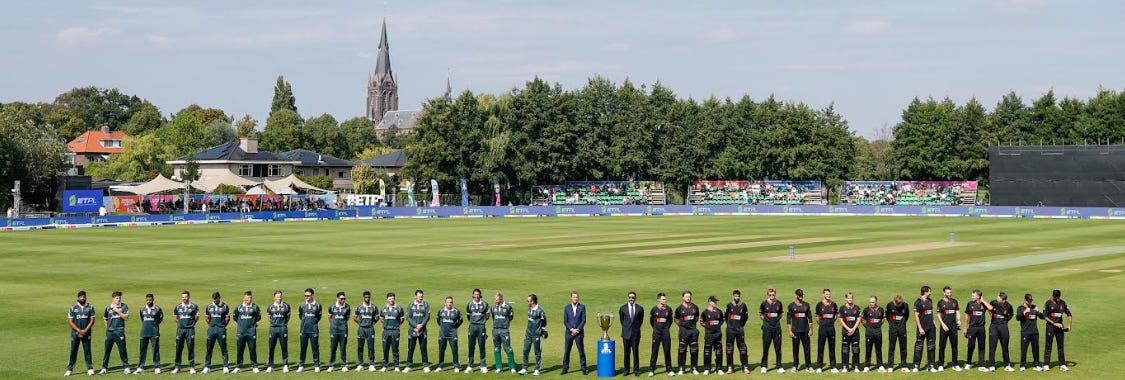
That said, even in terms of surface presentation one can’t award the league full marks given the conspicuous shots of near-empty stands that marred most matches. Attendance overall wasn’t great. Though the opening game drew a decent crowd and the Voorburg curtain call was a full house (in part likely thanks to good weather and the adroit scheduling a second Amsterdam-Rotterdam derby to close out the Dutch leg) the mid-week fixtures in the Netherlands were sparsely attended, and the Irish leg was worse. To some degree this is an inevitable a consequence of the decision to limit the competition to two grounds, with each venue hosting a dozen match-days in succession – more than enough to exhaust demand in the most cricket-mad metropolis much less Dublin or the Hague, but it also points to genuine failures on the part of the organisers to understand or engage with the local cricket communities.

some seats still available…

Unquestionably tickets were initially overpriced, needlessly so given that the League is never making its money back at the gate anyway. By the back end of the competition that realisation seemed to dawn, with the organisers effectively opting to open the gates for the Malahide leg. That call came a little late however, and understandably annoyed the few fans that had paid in advance, but ultimately the principal problem was promotion. Many in the Dutch cricket community were only vaguely aware of the league, and local marketing seemed at best an afterthought. Probably the organisers’ most substantial mistake was either wildly overestimating the inherent demand for tickets or underestimating the value of a packed (or packed-looking) ground – if only for how it looks on television.
Who is this for?

Even in little Voorburg itself most people on the street had no idea the competition existed, further afield there was next to no flyering ahead of time, not even a poster or two at other Dutch cricket clubs. Over in Dublin billboards were apparently to be seen at the airport, but amusingly only by departing passengers. In terms of digital promotion, Voorburg did run ETPL ads on their Topklasse livestreams, but that seems to have been on their own initiative rather than a central strategy. KNCB site did not sell tickets, the Topklasse match centre and live scores made no reference to the competition. We at TKcricket have a modest audience, but that audience is per definition entirely the target demographic. Yet nobody asked us to do any promotion, nor were CricketEurope across the seas roped in. Though the league’s social media output was impressive, the content was overwhelmingly done by Indians for Indians, a label that it’s consequently difficult to avoid applying to the League in general.

On air, the broadcast likewise did little to dispel this impression. The sweeping ignorance of the local cricket scene evinced by most (though certainly not all) of the voices speaking for the league again seems like something of an own goal here. Watching most games one might easily come away with the impression that the ETPL was the first and only serious cricket ever played in the Netherlands. Despite roping in some seventeen different commentators from across the globe, there was room for only three from Ireland, one from the Netherlands, none from Scotland. The consequence of the preponderance of full member voices, most of whom rarely work in Associates cricket, was generally patronising air that at times verged on sneering.
The local European connection is ultimately the League’s unique selling point, and too many of the on-air voices undermined it. It’s worth noting here too that League’s European broadcast partner, the Olympic Channel, was announced late and with so little fanfare that most potential viewers on the continent had no idea where to watch the league. Moreover in the event, for reasons that remain unclear, the channel streamed only a selection of matches. Many of these shortcomings are attributable to teething problems compounded by the first edition’s late go-ahead, but based on this first effort it difficult to escape the overall impression that the ETPL is in Europe, but not for it.

It should be said here that these criticisms of the central organisation do not necessarily extend to the franchises, some of whom made commendable (if at times understandably haphazard) efforts at local engagement. The Rotterdam Dockers made an unmistakeable effort to engage the punters on the ground, some smartly timed merch distribution ensuring they captured the crowd on day one, while ownership group figurehead Jonty Rhodes was regularly to be seen circulating outside the VIP zone throughout the Voorburg leg. The Amsterdam Flames local engagement was less immediately visible, but the organisation was on the ground early in the Netherlands to host their launch event at VRA alongside a well-attended clinic. Both sides roped in locals to assist with social media and the like, while the Flames scholarship initiative sponsoring young Dutch keeper-bat Noor van Rietschote for a stint at the Gary Kirsten academy this winter is exemplary, and also suggests the franchise is paying welcome attention to the women’s game, even if the prospect of a women’s ETPL remains a distant one. All told there’s a strong case to be made that the franchises have done a better job than the league organisers in terms of localisation, a sentiment which a few franchise investors have privately echoed.

It should of course be acknowledged here of course that the primary purpose of the League is not to take over responsibility for the development of cricket from any of the three boards. The ETPL is not a charity, and any such benefits are essentially incidental to the league’s baseline value to the hosts in the form of comparatively modest fees to the host boards (Cricket Ireland being the only on of the three with equity in the league itself), and of course the more substantial payments to the local players, for whom ETPL pay-cheques are potentially transformative.

rubbing shoulders

Thus far it appears that everyone has been paid more or less on schedule (and even early in at least one case). Now one might reasonably regard simply paying players on time as hardly worth celebrating, but it’s a hurdle that trips up plenty of franchise leagues. Last year the World Cricketers Association described the late- or non-payment of players in franchise cricket as an “epidemic” so it’s worth noting that the same organisation singled out the ETPL as a model of good practice. It is perhaps also worth noting here that the current WCA president is herself on the ETPL payroll, being one of the expansive squad of overseas commentators, but as conflicts of interest in cricket’s gig economy go that’s surely one of the least egregious and overall the broad sentiment currently seems to be that the players at least are all happy.

Regrettably, in the current environment just paying the bills on time has become a key benchmark by which to judge new competitions. That the ETPL and the franchises have thus far shown no signs of failing to meet this benchmark is encouraging, yet huge questions also remain around the medium term financial viability of the enterprise going forward. In short, while it is reasonably clear where the money is being spent, it is far from obvious how the ledger is to be balanced.

Who’s paying for all this?

Much of the initial spending will of course be covered by the franchise owners, not only player payroll but also substantial franchise fees paid to the central organisation. Long term, however, franchise owners are themselves investors presumably expecting a return, not a revenue stream for the league. As it stands the five franchisees are thought to be in the hole to the tune of three or four million dollars apiece. The sale of the Edinburgh franchise also fell through shortly before the competition began, leaving the league to cover the additional costs, though the Castle Rockers victory in the final does at least mean the organisers are able to offer the defending Champions for sale to potential 2027 investors.

If the competition is to become self-sustaining, however, the lion’s share of income will have to derive from sponsorship and the sale of broadcast rights. In this regard they face an uphill battle, and initial signs are hardly promising. Prior reporting on Outside the Circle suggested that the value of broadcast rights for new franchise leagues has been trending toward the negative, which the talk around the rope over the past few weeks corroborated. The exact details of the ETPL’s agreements with broadcasters are not public, but those in the know suggest the league is earning next to nothing on broadcast for the first season (and perhaps not even the right side of nothing once shared production costs are factored in). It was also notable that several of the teams sported shirt sponsors directly connected to the franchise owners, or none at all. Likewise the flashy digital advertising hoardings around the boundary were mostly displaying the league’s own logo or those of the host boards, and only occasionally those of sponsors. Estimates for just how much of a deficit the competition ran in its first season vary wildly, but they are all expressed in dollar amounts running to eight figures.

not great signs…

There is, nonetheless, good reason to believe that that figure will come down next year. With a largely successful first season to show as proof-of-concept (and a title-winning franchise to sell), the 2027 ETPL will be a more appealing prospect for sponsors and broadcasters both. While one or more franchises may still be looking for further outside investment to sustain their positions, it’s hard to imagine that any of them will have been banking on immediate returns in year one. Yet while there’s so far little to suggest that there’s any immediate shortage of liquidity, the long-term business case for the league and franchises both remains opaque, and the venture likely needs a fundamental change in the commercial environment if it is to shed a dependency on continued cash injections, be it from franchise fees or the owners themselves.

The future of the league may eventually come down to the question of how long it can be run at a loss, and indeed whether eventual profitability is even a “must-have” rather than “would-be-nice” for the league owners and/or franchise owners. It’s hardly inconceivable that some or all of the investors regard their stake in the competition as a passion project or status symbol, or see the league as essentially one great corporate box.1 They would hardly be the first to put money into a team or league primarily as means to promote other business interests, blurring the distinction between the logics of ownership and sponsorship.

Quo Vadis, ETPL?

For the time being, at least, it seems as though the ETPL is likely to remain a fixture of the European calendar, though the logistics and scheduling already look to be shifting for season two, with both the window and the venues likely to shift. While the stated intention remains to eventually play the league across all three of the titular hosts, the expectation is that it will remain a two-venue affair for the next edition with Scotland getting their turn for 2027, the Irish leg moving to Belfast, and the Netherlands missing out. The organisers are also looking at a July window for the competition in the expectation that the Hundred will be pushed later to accommodate the Ashes, though an expanding MLC season may shrink the available gap in the calendar there.

The switch to Scotland and Northern Ireland would simplify visa issues, removing the need for Schengen entry for overseas players. Meanwhile a July window may also help with the weather and the crowds (as well as making Edinburgh a feasible venue, which would not be the case in August due to the Fringe). The move would be a disappointment for the KNCB of course, who are still holding out hope for some sort of token Netherlands leg next year, if only an opening weekend or the like. But it’s hard to see how that could be accommodated without wiping out the logistical advantages and cost savings that make the two-venue option attractive.

Ye conversely, it’s difficult to see the league building a committed following in all three countries if it skips a host every edition. Despite the prevailing opinion in Dubai or Delhi regarding the format that “minnows” ought to prefer, the fact is that most Irish, Dutch and Scottish cricket fans have little inherent affinity for the T20 game. Securing genuine buy-in from local fans, already an uphill battle, will be even tougher from abroad. There is, moreover, a risk that disappointment in the Netherlands at being passed over next year may turn to resentment given the potential impact of early or mid-season window on the Dutch domestic season.

The fifty-over Topklasse was crammed into the early season to accommodate the ETPL this year, a move already raised hackles in certain corners. While a late July ETPL next year wouldn’t affect the top division on the current schedule, if it starts immediately after MLC it would clash with the climax of the season. Upending the domestic calendar again is unlikely to go down well with clubs, but nor is differential impact of unavailabilities on what remains for most Dutch fans the foundational competition of cricket in the country.

If the ETPL continues to pay its bills though, it’s hard to imagine any remonstrations from clubs having much impact. The Dutch have less riding on the success of the League than Ireland do, but looking forward none of the three boards can easily afford it’s failure. That said the ETPL is not going to be a panacea for the problems facing European cricket, and despite the qualified success of the first edition it would be deeply unwise for the three boards to count on it being around forever.

The most significant questions around the league remain on the financial side, and its most glaring failures primarily around localisation. Yet with the benefit of a season’s experience, a proven product to sell and a substantially longer lead-in period, the organisers are in a better position to address both for season two than they were ahead of the inaugural edition. Safe to say there is work to be done both on the ground and in the boardrooms over the winter, and it is perhaps too early for European fans to shed the franchise-scepticism that they have built up over the past decade of disappointment. There remains plenty of room for pessimism around the league’s prospects, but on the evidence of season one, it ought perhaps to be a more a cautious pessimism.

What to watch for:

  • The champions going unsold, or worse still current franchise owners looking to pull out or sell up.
  • Prolonged uncertainty regarding the 2027 window/venues.
  • Players, commentators or contractors going unpaid.
  • Quick confirmation of the ICC’s provisional NOC being renewed for next season, or better yet indefinitely.
  • Details of arrangements for player retention, auction etc ahead of next season.
  • Continued local engagement on the part of franchises, establishing or building on relationships with clubs and local bodies.

  1. Such motivation also might account for a particularly curious press release sent out on the second day of the tournament, announcing The GREAT Corporation as a strategic investor and co-founder in the league. Great Corp, incorporated in Singapore just six months ago, presents itself as a business dealing in rare earth minerals, specifically “building a fully integrated rare earth technology platform spanning resource development, advanced laboratories, recycling and the future of space-based resources.” Its activities in these sectors currently appear to be largely aspirational, however, and the expertise of its staff (several of them also colleagues of ETPL founder/director Saurav Banerjee at New York-based One Alpha North Capital and/or employees of Bangalore investment-pitch specialists SlydS and Craise) seems to lie primarily in securing venture capital rather than in mining, transmutation, or spaceflight. While the release was oddly walked back the same day, the firm’s vice president Sai Submaranian remains on the ETPL site as “co-founder and investor” on behalf of Great Corp. Similarly curious was the presence if a delegation of employees of Indian recording industry giant T-Series in Voorburg, all sporting Cosmic shirts and cheering loudly for the Glaswegians, though the precise connection (if any) between the music and YouTube behemoth and the Scottish franchise is not public. ↩︎

Rotterdam seal historic double

Rod Lyall 07/09/26

At the Zomercomplex on Sunday Rotterdam became the first team for fifteen years to complete the 50-over/T20 double, winning twice to finish three points clear of title-holders VRA.

The Amsterdammers had edged their way to the top of the table by Saturday evening, having won both their matches earlier in the day, but they knew that victory in either of their two games in hand would allow Rotterdam to leapfrog over them, while defeat for challengers Voorburg in the first of those games would assure Sikander Zulfiqar’s team of the title.

Voorburg, for their part, needed to beat Rotterdam, and then hope that Rotterdam would lose to HCC in the afternoon.

Their task was made all the more difficult by the fact that the ETPL had not only robbed them of four of their top six, but also deprived them of their Westvliet ground, so that their last two ‘home’ matches were played on the alien astroturf at De Diepput and the Zomercomplex.

There can be little doubt, however, that Rotterdam have been the dominant side all summer, and that this double victory was thoroughly deserved.

Aaditt Jain struck an early blow for Voorburg after Cedric de Lange had won the toss, removing Shoaib Minhas with the fourth delivery of the match, but a positive response from Musa Ahmad (34 from 29 balls) and Muhammad Gondal (28 from 16) saw Rotterdam to 60 for one by the end of the powerplay.

Michael Rippon came on immediately afterwards and had Gondal caught at deep square leg with his second delivery, and for a time the flow of boundaries was restricted.

But Abdul Rehman Niazi’s unbeaten, 31-ball 44, assisted by Sikander Zulfiqar with 27 and Burhan Niaz with 22 from 11 deliveries, enabled the home side to reach a very challenging 176 for six.

Any prospect of Voorburg matching that was effectively ended by Gondal, whose four-over spell conceded only 14 runs with the wicket of Waseem Mohsen; Gondal’s round-arm, slingy action has been causing batters problems all season, and here he ensured that the reply never really got going.

Mohsen’s 25 was in fact the top score, and although Don Glover, Tom de Leede and Rippon all contributed twenties, it was nowhere near enough, and with Tehzeeb Haider taking three for 32 and Ahmed Shafiq three for 31, Voorburg were eventually all out for 138.

The cup now safely in their hands, Rotterdam celebrated with an even more dominant effort against HCC, running up 209 for eight and then dismissing the Lions for 106.

Set up by Musa’s 36 and 31 from Gondal, the core of Rotterdam’s total was a 22-ball 49 from Sikander Zulfiqar, who hit five sixes; the damage might have been even worse without Clayton Floyd’s three for 36.

With a somewhat inverted batting order, HCC were never in the hunt, although Teun Kloppenburg hit an aggressive 45.

Tehzeeb Haider claimed the first three wickets at a cost of just 12, while Sulaiman Tariq finished things off with five for 35.

On Saturday, VRA had given themselves an outside chance of retaining their title with comfortable victories over already-relegated Sparta 1888 and then over long-time leaders Excelsior ‘20.

They began by dismissing Sparta for 107, Darsh Abhinay taking three for 27 and Shariz Ahmad two for 19, only Juandre Scheepers with 39 and Tim Ferguson with 28 showing any appreciable resistance.

Joost-Martijn Snoep removed both oeners when VRA replied, but Johan Smal held firm with a 26-ball 52 not out, and he and Teja Nidamanuru completed a seven-wicket victory with more than six overs to spare.

Batting first against Excelsior, VRA ran up 205 for eight, Smal hitting his second half-century of the day with 58, again needing only 26 deliveries, and sharing a third-wicket stand of 99 with Sam Casidy (56 from 28); Viraj Thakur chipped in with an unbeaten 43 to see his side past 200, while Jens Blankenstein and Gijs Kroesen picked up three wickets apiece.

To this Excelsior had no answer, Abhinay collecting another three-wicket haul and young seamer Shayan Moodley taking four for 24 as the Schiedammers were dismissed for 124, Joost Kroesen top-scoring with 33.

Hermes-DVS, meanwhile, were finishing off their campaign with a seven-wicket victory over Kampong Utrecht, dismissing them for 103 (Sahil Kothari three for 16) and knocking off the runs in 15.2 overs, largely thanks to a 78-run fourth-wicket partnership between Ash Ostling (44 not out) and Olivier Elenbaas (31 not out).

In the final match on Saturday, HCC dented Voorburg’s hopes of establishing an advantage over Rotterdam with a 33-run victory at De Diepput.

Victor Wiesmeier (35 from 18) and Clayton Floyd (32 from 23) set things up with a rapid third-wicket stand of 62 after Aaditt Jain had removed Kloppenburg and Boris Gorlee, and then Zac Worden (44 from 37) and Daniel Crowley (48 from 28) put on 98 for the fifith wcket to help their side reach 195 for seven.

Voorburg were 80 for one in the ninth over in reply, Cedric de Lange having made 35 and Waseem Mohsen 29, but thereafter scoreboard pressure weighed in, and although Rippon did his best with a 25-ball 39 not out, the innings closed on 162 for six.

It had been a disappointing second half of the campaign for Excelsior, but they finished on a comparative high at Thurlede on Sunday, beating Sparta by 84 runs.

An opening stand of 71 between Bibal Shah (39 from 23) and Tim Etman (30 from 21) was the foundation of their total of 161 for six, Umar Baker claiming three for 18 for Sparta, and then Karson Edward ripped through the visitors’ top order, taking three for 13 in three overs.

Only Deran Benta reached double figures, making 21 as Sparta limped to 77 for nine.

Sparta will be replaced in next season’s Topklasse T20 Cup by the winners of next Saturday’s Hoofdklasse play-off, which will be between neighbours and long-standing rivals Quick Haag and HBS Crayenhout.

Weather the winner on a frustrating weekend

Rod Lyall 31/08/26

The Dutch monsoon season decimated the penultimate weekend of the T20 Cup campaign, with only two of the scheduled seven matches reaching a conclusion, and three of the remaining five being abandoned without a ball bowled.

The resulting scatter of shared points leaves matters unresolved at both ends of the table, although it would require an extraordinary combination of events to see Sparta 1888 escape relegation, while the battle for the title has effectively been reduced to a head-to-head showdown between leaders Rotterdam and pursuers Voorburg, who will in fact meet in a virtual final on Sunday morning (weather permitting).

Long-time leaders Excelsior ‘20 still have a theoretical chance of stealing the Cup, but again it would require some almost-unimaginable reversals of form, especially since the Schiedammers have not won since the departure of overseas stars Riley Ayre and Jack Wood.

Their most recent defeat was at Thurlede on Saturday, when Voorburg restricted them to 127 for seven and went on to a six-wicket victory with four deliveries to spare.

Tim Etman’s 41 gave his side a solid start in difficult conditions, and then Joost Kroesen held the latter part of the Excelsior innings together with a 45-ball 50.

Waseem Mohsen responded with 52 from 43 deliveries for the visitors, and after Tom de Leede had chipped in with a useful 21, Michael Rippon and Nirav Kulkarni knocked off the remaining runs, timing their chase to near-perfection.

Facing Kampong in their second match of the day, Excelsior had reached 64 for four in nine overs, with Tim Etman unbeaten on 27, before the rain arrived and the match was abandoned.

Runs were much easier to come by at the Zomercomplex, where Hermes-DVS ran up 183 for four against Rotterdam, thanks in large measure to a record-breaking third-wicket stand of 130 between Ash Ostling (54) and Daniel Doyle-Calle, whose 95 not out came from 52 deliveries and included four fours and seven sixes.

Shoaib Minhas, however, replies with a 41-ball 85 for Rotterdam, and with Muhammad Gondal contributing 34 and the veteran Sherry Butt 32, the six-wicket victory came with two overs to spare.

No play was possible in the later game between Rotterdam and VRA, and at Sportpark Bermweg Sparta 1888 were on 41 for three after 9.5 overs when the players were driven from the field.

ETPL Previews | Belfast Wolves & Dublin Guardians

Bertus de Jong | 25-08-2026


So on then to the final instalment of out ETPL team previews, where it’s time to take a look at the two Irish sides; the Belfast Wolves and the Dublin Guardians. As primus inter pares among the three host boards, Ireland will have the privilege of hosting the back end of thee league phase and finals at Malahide, meaning the two Irish teams will enjoy the advantage of familiar conditions at the business end of the tournament. They’ll be looking to hit the ground running at Voorburg first though, and Westvliet isn’t entirely unfamiliar territory for much of the Irish contingent (nor even for half their overseas).


Belfast Wolves

The Belfast franchise, initially dubbed the Irish Wolves, are fronted by Australia all rounder Glenn Maxwell and backed by Rohan Lund’s Floodlight Capita. The Wolves played their cards fairly close to their chest in the lead-up to the tournament, only announcing their overseas signings late last month, along with head coach Kevin O’Brien. Besides co-owner/captain Maxwell, the full member overseas contingent comprises New Zealanders Devon Conway and Mark Chapman alongside England quick Chris Jordan and South Africa stalwart David Miller. O’Brien also brought in two of his Italian charges in Harry Manenti and Krishan Kalugamage, with former USA skipper Saurabh Netravalkar the third Associate signing.

Current Ireland T20 captain Lorcan Tucker was snapped up ahead of the draft along with Mark Adair and Gavin Hoey. The Belfast selectors then bagged left arm spinner Matt Humphreys as their first draft pick, followed by Netherlands seamer Fred Klaassen, home batters Tim Tector and Paul Stirling, teen Scotland quick Zainullah Ishan and finally recent Dutch debutant Alex Roy.

The Wolves prioritising Tector over his senior Ireland opening partner in Stirling at the draft might imply that the youngster could start ahead of the veteran, paired with Conway at the top of the order, though it would be a bold move to bench the former Ireland skipper even if his recent form has been poor. His successor, Tucker, will doubtless take the gloves and, barring all of the above starting, in all likelihood also his usual spot at three. Chapman, Miller and Manenti will likely be competing for the next two slots in the batting order, though the latter has the advantage of not taking up a full member overseas slot.

Maxwell himself will presumably play at six or seven, as has been his wont of late in both franchise and international cricket. Ross Adair has played a similar lower order punisher role for Ireland (most notably finishing top of the run-scoring tables on Ireland’s most recent series at Westvliet) and given the paucity of genuine bowling all-rounders in the side the Wolves will likely try to make room for both.

Of the remaining bowlers Jordan alone boasts significant batting pedigree at the top level, and his value both at eight and in the field make him a very probable starter. The Wolves eagerness to lock in slow southpaw Humphreys and leggie Hoey suggest that the pair are their first choice spin options, though O’Brien is also known to rate Kalugamage’s legspin highly, while Chapman is also a more useful left arm spin option.

The competition for spots will likely be fiercest among the remaining seamers, Klaassen arguably having the edge as he provides a left-arm option, while Netravalkar’s canny death bowling would come at the cost of an Associate overseas spot. Given the length of the competition both Roy and Ihsan will likely rotate in at some point, though it would be something of a surprise to see either take the field for game one.

Depending on how they balance selection, the Wolves may find themselves with a comparatively long tail (by franchise standards) though the explosive menace of the lower order arguably makes up for it. There’s plenty of depth in the spin section, though Maxwell himself is the sole frontline offie, meaning opposing left handers may pose a problem in the middle. The stable of quicks is plentiful and varied however, and Maxwell should have a tool handy for any job that crops up.

Belfast Wolves squad: Glenn Maxwell (c)[OS-AUS], Devon Conway [OS-NZ], Mark Chapman [OS-NZ], David Miller [OS-SA], Chris Jordan [OS-ENG], Harry Manenti [AP-ITA], Krishan Kalugamage [AP-ITA], Saurhab Netravalkar [AP-USA], Lorcan Tucker (wk)[IRE], Gavin Hoey [IRE], Matthew Humphreys [IRE], Fred Klaassen [NED], Tim Tector [IRE], Paul Stirling [IRE], Zainullah Ihsan [SCO], Alex Roy [NED]


Dublin Guardians

The final* franchise sale was also the one to make the most waves around the world, with news that Ravi Ashwin and Rahul Dravid (previous linked to one of the Scottish franchises) would be co-owners of the Dublin Guardians. Ashwin himself will captain the side, while Vikram Rathour takes up the reins as coach (ably assisted by Ed Joyce). Much like Belfast, Dublin held off on announcing overseas signings until fairly late in the day, with James Vince, Chris Wood, Daryl Mitchell and Vijay Shankar announced just a few weeks out. The Guardians have also signed up a total of four Associate overseas, picking up Americans Sanjay Krishnamurti and Harmeet Singh along with former UAE skipper Waseem Khan and the Greece-affiliated (though as yet uncapped) Peter Hatzoglou.

Josh Little and vice-captain-designate Harry Tector were signed ahead of the draft, and gloveman Ben Cailitz bagged first up in the draft to cover keeping duties. The next picks went on George Dockrell, Matthew Hollard and Craig Young, followed by Dutch deputy keeper Noah Croes and finally Scotland’s Chris Greaves.

Vince and Waseem are the opening pair apparent, assuming the latter isn’t called away to the ACC Premier Cup on national duty. Mitchell has also opened in the past, but he’s been coming in down the order of late and a hip strain picked up in the West Indies last month leaves his initial fitness in doubt. Vice captain Tector is assured of a spot in the top four regardless, and with Cailitz likely taking the gloves the Candian-Irish keeper can probably be pencilled in at five or six. There’s certainly a strong case for also including Croes in the XI however, the Voorburg skipper’s form and local knowledge already militating in his favour, as does his near-faultless slip fielding. If all six play that would likely crowd out Krishnamurthi, though the American could fill most any top order role should any of the above sit out (or drop out).

Shankar has been playing as a lower order pinch hitter it the LPL, a role that will likely fall to George Dockrell in this side, especially given the lack of an equivalent impact sub rule in the competition. Harmeet Singh is another left arm spin option with an excellent (if limited) record at Westvliet, bagging 3 for 8 in 4 in his last visit to Voorburg. Legspinner Hatzoglou has a still stronger local pedigree though, having played for Voorburg on several occasions and contributing heavily with bat and ball. That probably puts him ahead of Greaves for the wrist-spin slot (if there is one) for the Dutch leg of the competition at least.

Shankar’s chief value remains his role as the sole proven seam all-rounder in the side, even if he hasn’t bowled much at elite level this year. The Guardians’ stable of seamers is not to be sniffed at, but playing all of Wood, Hollard, Little and Young would leave the Guardians with an alarmingly long tail. Wood looks all but indispensable, especially at the death given Little’s dubious form since returning from injury. Playing both Wood and Shankar would push out a full member overseas bat however, leaving the top order looking somewhat underpowered and untested at elite level.

All told, for a travelling team the Guardians boast a remarkable amount of local pedigree for the Voorburg leg, a solid battery of local seamers and a selection of spinners that can all contribute contribute down the order. Nonetheless their selection dilemmas are arguably more acute than those of any of their rivals, and getting enough staying power with the bat and firepower with the ball into the same eleven looks a problem positively Gordian in its complexity.

Dublin Guardians squad: Ravichandaran Ashwin (c)[OS-IND], James Vince [OS-ENG], Chris Wood [OS-ENG], Vijay Shankar [OS-IND], Daryl Mitchell [OS-NZ], Muhammad Waseem [AP-UAE], Peter Hatzoglou [OS-HEL], Sanjay Krishnamurthi [AP-USA], Harmeet Singh [AP-USA], Harry Tector (vc)[IRE], Josh Little [IRE], Ben Cailitz [IRE], George Dockrell [IRE], Matthew Hollard [IRE], Craig Young [IRE], Noah Croes [NED], Chris Greaves [SCO]


*barring Edinburgh of course, which has since been de-sold.


Previous ETPL Previews: Amsterdam Flames & Rotterdam Dockers, Edinburgh Castle Rockers & Glasgow Cosmic

ETPL Previews | Edinburgh Castle Rockers & Glasgow Cosmic

Bertus de Jong | 24-08-2026


Though Europe’s newest franchise league is formally co-hosted by the Irish, Dutch and Scottish boards, in the case of Scotland the title of host is purely honorary, at least for the first edition. The Two Scottish franchises – dubbed the Edinburgh Castle Rockers and (eventually) Glasgow Cosmic – will be playing all their matches on foreign soil, first at Voorburg in the Netherlands and then at Malahide across the Irish Sea. Both Franchises have had some notable changes in the backroom and the boardroom ahead of the League, and a few late changes to the squads too. At press time there’s still room on the Glasgow roster for some surprise late additions, but with just two days to go before the first ball is bowled, here’s how the two travelling Scottish outfits are shaping up…


Edinburgh Castle Rockers

Arguably the most notable late shake-up in the League played out at the Edinburgh franchise, after the ownership group led by veteran Sports executive Rachel Wiseman backed out just weeks ahead of the tournament, and the team reverted to central ownership. The League organisers were always prepared to go ahead with five of six sold, but one imagines the late withdrawal won’t have been exactly welcomed. Trevor Bayliss was also a late appointment as head coach, announced as replacement for James Foster only yesterday, but the on field leadership group has stayed constant despite the changes in the back room.

New Zealand skipper Mitchell Santner will lead the side on the field, while his compatriot Trent Boult also stays on board. There’s been a few switch-ups elsewhere in the overseas section however, with Shadhab Khan opting for a CPL stint after running into visa difficulties, while putative Rocker Liam Livingstone has somehow wound up at the rival Glasgow franchise. England pair Laurie Evans and Tom Curran come in as replacements, with Australia quick Andrew Tye rounding out the full member section.

The Associate and local pre-signed group has also seen some shake-ups, with the USA’s Rushil Ugarkar replacing the Emirates’ Khuzaima bin Tanveer, while Tom Bruce also withdrew owing to domestic commitments in New Zealand. US keeper-bat Dries Gous will be available however, having ducked out of the CPL early, with Sean Solia of Samoa and JJ Smuts (now affiliated to Italy) completing the four-man Associate contingent.

Scotland stalwarts Brandon McMullen and Mark Watt were locked in ahead of the local draft, though the Rockers notably spent two early draft picks on Irishmen, snapping up Gareth Delaney and Ross Adair in the first two rounds. Jack Jarvis, Safyaan Sharif, Finlay McCreath and Oliver Jones round out the roster, the latter a late replacement for Charlie Tear, who will remain with Sussex.

The early pick of Adair suggests the Irishman is a safe bet to take on of the opening slots, with Gous likely to take the second slot along with the gloves. Solia is another option at the top, and Evans habitually opens for Surrey, though the latter is in lacklustre form and may face less competition down the order, where he comes in for Birmingham Phoenix. Pushing Gous down a rung would also disturb McMullen from his accustomed slot at number three, where the all-rounder has been prolific for Scotland. That said, Santner may well be tempted to push himself up the order, as he did to great effect when last he captained a side at Voorburg, making a personal best 77* against the Netherlands, and doing so would alleviate the lack of other left handers in the top four.

Smuts, Solia and Evans are the other overseas top order options, though there will likely be room for two of the three at most, with Finlay McCreath the local option. Tom Curran could find himself in competition with Delaney for the finisher role, though there could be room for both at six and seven if Evans sits out. With at least two and potentially all of Santner, Watt and Smuts likely to start, the Rockers won’t be short of slow left armers, though notably late arrival Ollie Jones is the only dedicated right arm finger-spinning option, and with Shahdab Khan pulling out the Rockers are currently devoid of any wrist spin.

One would expect Boult and Tye both to start if fit and available, at least early in the competition when Westvliet is expected to favour the seamers. Ugarkar’s chances of a place in the eleven may be dictated by selections up the order, as the American will be competing with locals Jarvis and Sharif for the third seamer slot, with the latter bringing the benefit of experience and the former a potential middle order stop-gap with the bat.

In sum the Edinburgh squad is arguably the most unconventional in the league in terms of balance. Going for big name bowlers over top order bats could well pay off big at the top of the programme at Voorburg, though the southpaw-dominated slow section could prove somewhat one-dimensional if and when spin comes into play at the back end of each leg. The associate/local top order looks solid enough however, and the lower middle order potentially explosive. One can expect some dramatic see-saw performances from the Rockers both match to match and across the tournament, though they’ll have to find their rhythm quickly if they’re to prove title contenders.

Edinburgh Castle Rockers squad: Mitchell Santner (c)[OS-NZ], Trent Boult [OS-NZ], Tom Curran [OS-ENG], Laurie Evans [OS-ENG], Andrew Tye [OS-AUS], Andries Gous (wk)[AP-USA], Rushil Ugarkar [AP-USA], Sean Solia [AP-SAM], JJ Smuts [AP-ITA], Mark Watt [SCO], Brandon McMullen [SCO], Ross Adair [IRE], Gareth Delaney [IRE], Safyaan Sharif [SCO], Finlay McCreath [SCO], Jack Jarvis [SCO], Oliver Jones [SCO]


Glasgow Cosmic

Glasgow Cosmic, briefly known as the Glasgow Mugafians, have already have a remarkably storied history for a side yet to play a match. Backed by Indian AI-assisted entertainment conglomerate the Mugafi Group, the team was initially named for its owners’ mountain namesake before being rechristened “Cosmic” presumably in honour of Chris Gayle, the soi-disant Universe Boss, who has since parted ways with the franchise. The Cosmic kept the name and welcomed former Australia opener Matthew Hayden as coach/co-owner/frontman for the franchise.

Unique among the six sides in designating a local skipper, George Munsey will captain the Cosmic, taking the armband ahead of established Scotland skipper Richie Berrington, who was the Glaswegians’ second Scottish pre-signing. The overseas contingent has seen a remarkable turnover since the early announcements of Finn Allen, Kamindu Mendis, Josh Phillipe, Gerhad Erasmus, Duan Jansen – all since withdrawn – with the latter two set to face off at Windhoek for the upcoming Namibia-South Africa series. In their place come Proteas pair Keshav Maharaj and Lungi Ngidi (both given the above series off), along with Englishmen Jason Roy and Liam Livingstone and late announcement Jimmy Neesham, while USA’s Ali Khan and newest Portugal captain Moises Henriques make up the Associate overseas detachment.

Scotland spearhead Brad Currie was their first pick in the draft, swiftly followed by keeper Matt Cross. Dutch quick Paul van Meekeren was the only non-scot picked up in the local draft, followed by spinners Michael Leask and Oliver Davidson, and finally Chris McBride, the latter later replaced by Liam Naylor. With no further signings announced thus far, the Cosmic thus currently have a rather streamlined roster of just fifteen.

As it stands, barring last-minute signings or very left-field line-ups, the Cosmic’s default and only plausible opening pair looks certain to be Munsey and Roy (though it’s worth observing here that two very capable openers in erstwhile Ireland skipper Balbirnie and Voorburg prodigy de Lange are still available, having both been overlooked in the draft). The number three spot is a trickier question, as the Cosmic have something of a surfeit of fours and fives but few bats that have played much at first drop of late. Berrington and Cross have both played the role for Scotland in the past though, while Henriques hit his maiden T20I ton from three for Portugal just days ago.

Should Livingstone play ahead of Neesham or Maharaj then one imagines one of Berrington or Henriques will sit out, but at least early on in the tournament the former looks the most likely of the full member overseas to be left on the bench, with Maharaj and Leask offering left/right slow bowling options while Neesham takes the role of number six and fourth seamer. Switching Maharaj out for Davidson would free up a full member slot for Livingstone, which would diversify the spin options and add depth to the batting, but it’s likely that the Glaswegians will opt to field a full pace battery for the first match at least.

There are a wealth of options when it comes to quicks, with Ngidi a banker to take the spearhead role, supported by some combination of Currie, Khan or van Meekeren. That’s unquestionably an enviable seam roster, but a potentially brittle one. Van Meekeren has only just come back from a stress fracture, while Currie and Khan have both had injury troubles in the past, and the need for rotation alone suggests Naylor will likely get a look-in at some point.

If the Cosmic’s battery of glass cannons can keep firing it will likely prove a potent weapon, while there’s enough flexibility in numerically modest roster to adapt to potentially changing conditions even without any further additions. The lack of cover for openers Roy and Munsey is a potential concern given the tournament’s fairly gruelling schedule, and it may take some time before they hit on the best combination for the rest of the top five. The lower order has plenty of firepower, even if the tail may start a slot earlier than for some of their rivals. There’s plenty of explosive elements in the Cosmic line-up, but given the limited and potentially fragile roster, an eventual implosion cannot yet be ruled out.

Glasgow Cosmic squad: George Munsey (c)[SCO], Jason Roy [OS-ENG], Liam Livingstone [OS-ENG], James Neesham [OS-NZ], Lungi Ndisdi [OS-SA], Keshav Maharag [OS-SA], Moises Henriques [AP-POR], Ali Khan [AP-USA], Brad Currie [SCO], Matthew Cross [SCO], Paul van Meekeren [NED], Michael Leask [SCO], Oliver Davidson [SCO], Liam Naylor [SCO]


Previous ETPL previews: Amsterdam Flames and Rotterdam Dockers

Rotterdam go top as Sparta face the drop

Rod Lyall 24/08/26

The T20 Cup was hit by a double whammy this weekend: a drought-breaking week of rain had left grounds somewhere between damp and sodden, and the impending start of the ETPL had differentially deprived sides of their leading players.

Climate change and franchise cricket, two scourges of the modern world.

The toll of the first was mainly felt at Maarschalkerweerd on Saturday, when both Kampong’s matches, against VRA and HCC were abandoned without a ball being bowled.

In the circumstances, Kampong might perhaps have been forgiven for taking two points from the day as something of a reprieve, but for their opponents, with championship and relegation-avoiding ambitions respectively, a point each would have been a disappointing return from the visit to Utrecht.

The two top sides, however, were able to get only the field at the Zomercomplex, and in a low-scoring match Rotterdam secured a six-wicket victory over Excelsior ‘20, displacing them at the top of the table and greatly improving their chances of pulling off a double title win.

Put in to bat, Excelsior struggled initially against Muhammad Gondal and Tehzeeb Haider, reaching just 28 for two by the end of the powerplay, and although Roel Verhagen batted throughout the innings for an unbeaten 41, it took him 56 balls to do it, and his only real support came from twenties from Stan van Troost and Joost Kroesen.

110 for six never seemed likely to be enough, and with Gondal contributing a 37-ball 42 and Abdul Rehman Niazi 34 not out, Rotterdam reached their target with 11 balls to spare.

Apart from Sikander Zulfiqar’s side, the main beneficiaries of the weekend were Hermes-DVS, whose victories over Voorburg and Sparta 1888 at the Boudewijn Hoek Oval on Saturday carried them away from the relegation zone and into a comparatively secure postion mid-table.

Against a Voorburg side deprived of most of its top order and with national women’s captain Babette de Leede behind the stumps, Hermes ran up the highest total of the weekend, their 171 for five owing much to Daniel Doyle Calle’s 54 and a 21-ball 48 not out from skipper Sebastiaan Braat.

Olivier Elenbaas then removed standin captain Cedric de Lange in the second over of Voorburg’s reply, and by the halfway mark the visitors were effectively out of the game at 55 for three.

Tom de Leede, younger brother of the absent Bas, made a fighting 46, but the innings closed on 137 for eight, still 34 runs in arrears.

Runs were harder to come by in the second match, but Ash Ostling’s 54 and Nick Statham’s 26 saw Hermes to 131 for eight, but although Khalid Ahmadi produced his characteristic fireworks, smacking five sixes in his 40-ball 54, Sparta could only manage 111 for nine in reply, Hermes not only taking four much-needed points from the day but also considerably improving their net run rate.

Sparta’s woes continued at the Bermweg on Sunday, as after restricting Voorburg to 130 for eight, they were dismissed for 111 to remain anchored at the foot of the table.

Tom de Leede continued his good form with the bat, contributing 29, but it was Michael Rippon who top-scored with 41, and after Umar Baker had kicked off Sparta’s reply with a solid 30, Rippon grabbed the vital wicket of the dangerous Ahmadi, setting up Voorburg’s 19-run victory.

Sparta’s plight was made worse by events at De Diepput, where HCC gave themselves a three-point margin over the Capelle side by beating VRA by a thumping 55 runs.

A win would have given the Amsterdammers a share of the lead with Rotterdam and Excelsior, but they were set back by Josh Brown’s 72 not out, made from 48 deliveries, which saw his side to 163 for six, Hidde Overdijk icing the cake with back-to-back sixes after coming to the crease in the final over.

VRA began their reply brightly enough, reaching 52 for three by the end of the powerplay, but immediately afterwards Casper Snoeck removed Shariz Ahmad (23) and Johan Smal (21) in the space of three deliveries, and thereafter the challenge fell away, Teun Leijer eventually claiming three for 6 in 10 deliveries to clean up the innings on 108.

Next weekend’s potentially-decisive schedule, which sees Rotterdam taking on Hermes-DVS and VRA while Excelsior face Voorburg and Kampong, with Sparta at home to HCC in a last-ditch attempt to avoid relegation, will be competing with two double-headers in the ETPL, as the stiff winds of cricket’s climate change finally reach the Netherlands.

No doubt we should all be grateful.

ETPL Previews | Amsterdam Flames & Rotterdam Dockers

Bertus de Jong | 23-08-2026


After seven years of trying, and a switch of commercial partners, franchise cricket is finally coming to the European continent. The collaborative efforts of the KNCB, Cricket Ireland and Cricket Scotland never did manage to get the Euro T20 Slam off the ground, but with ICC sanction confirmed just last week (for the first season at least) it’s successor, the European T20 Premier League, looks all but certain to get underway at Voorburg on Wednesday, bringing world class talent to these shores in numbers not seen since the days of the late, lamented ODI Super League. While Cricket Ireland is the senior partner in the troika, and the only board with an ownership stake in the parent company Rules X, nonetheless the League falls under the category of Dutch domestic cricket (albeit in an unfamiliar form) and as such we here at Tkcricket will be following with interest.

For it’s first edition the competition will play out across just two venues, with a little over half of the double round robin league phase hosted at VCC’s Westvliet ground before the action moves to Malahide outside of Dublin for the back end of the league phase and finals. The six teams – two each from the Netherlands, Ireland and Scotland – will each face one another twice across the league phase, with the top finishing team progressing directly to the final while the second and third-placed teams contest a qualifying semi-final. There’s been plenty written elsewhere on the implications, upside potential, as well as the financial and administrative challenges facing the League. With the first ball just days away though and the squads (more or less) finalised, it’s an opportune time to turn our attention to on-field matters and take a look at how the six sides line up. First up then, the two Dutch sides…


Amsterdam Flames

The Amsterdam Franchise, dubbed the Flames, are backed by former Australian international Steve Waugh along with his compatriot and famed field hockey player Jamie Dwyer together with former KPMG executive Tim Thomas.

Former Netherlands head coach Ryan Cook will take the reins, but otherwise the side has a distinctly Australian flavour, with Steve Smith, Mitchell Marsh and Tim David among the first pre-signed overseas players announced. Joining them are New Zealand spin all-rounder Michael Bracewell, along with English quicks David Payne and Richard Gleeson. Former India test captain Ajinkya Rahane was a late addition, snapped up almost the instant he announced his Indian retirement, leaving the Flames with fully seven fully member overseas on the books – the maximum permitted in the squad and three more than can be fielded in any given match.

Netherlands captain-at-the-time Scott Edwards and his successor Bas de Leede were also picked up as pre-signings. At the local player draft (covering players from the three sanctioning boards) the Flames went for Ireland all-rounder Curtis Campher first up, followed by Kyle Klein, Tim Pringle, Aryan Dutt, Jordan Neill and finally Max O’Dowd. The Flames’ Associate player picks saw Italy’s Ali Hassan and Canada’s Yuvraj Samra join the squad along with Nepal’s Dipendra Singh Airee, though the latter has since withdrawn owing to international duty at the ACC Premier Cup, with uncapped keeper-bat David Rushmere brought in as replacement.

Marsh and Smith are both expected to arrive a day late, missing the Flames’ first match on Wednesday against the Rotterdam Dockers, meaning the side will be without their skipper for the opener with the armband likely to fall to Edwards, de Leede or Rahane. Marsh’s absence will also trim down the Flames’ options at the top of the order, Rahane will likely take one slot for the first game at least, with Samra and O’Dowd the only habitual international openers available for match one. Samra’s value as a left hander and impressive recent form will probably make him the preferred choice to partner him until Marsh arrives, though O’Dowd or just possibly Rushmere may have a chance to stake a claim in the tournament curtain-raiser.

Barring the Flames opting for an insurance opener, in Smith’s absence de Leede is the natural choice at three, first drop being his accustomed position in the shorter format. The remainder of the top order may be dictated by conditions; Edwards can be safely pencilled in as first choice keeper, and will likely play a floating role targetting spin. David and Campher may be contending for the number five slot, though there’s a good chance both play in the first game.

That would leave the Flames with just two full member overseas slots for Wednesday’s match, meaning one of Bracewell, Gleeson or Payne will sit out. Bracewell’s inclusion would strengthen the batting as well as offering an offspin option, and given recent seam-friendly conditions at Voorburg would likely see fellow offspinner Dutt initially left on the bench. In the absence of any frontline leggies in the squad, left-arm finger-spinner Pringle is sole slow option taking the ball away from right handers and thus a fairly safe bet to feature consistently throughout the competition. All-rounders de Leede and Campher do both provide additional seam-up options thus potentially affording space for a third spinner, but the former has been used only sparingly by the Dutch since coming back from injury, and conditions early in the tournament are unlikely to warrant three frontline spinners.

The Amsterdam seam section offers options aplenty, and it’s make-up will likely rotate regularly, dictated in part by selections up the order. Payne and Gleeson would be an enviable left-right pace combination, but the pair may find themselves competing for a single overseas slot as often as not. Gleeson’s recent form in the Hundred and PSL probably give him a slight edge there, with Hassan offering an alternate left arm seam option if and when Payne sits out. Assuming Gleeson does start right armers Klein and Neill will likely be in competition for the final seamer’s slot, and judging by the Flames’ swiftness to snap him up in the draft one can infer the former would be first choice.

All told the Amsterdam franchise has assembled a versatile squad that arguably boasts more star power than any of their rivals, though the surfeit of full member overseas will leave them with some tricky selection quandaries when Marsh and Smith arrive. The batting arguably looks a tad top-heavy for the first match, especially if Bracewell misses out, while thereafter the two late-coming overseas bats could crowd out some of the first choice bowling options. Expect plenty of chopping and changing throughout the tournament as the Flames look to find their most incendiary formula.

Amsterdam Flames Squad: Mitch Marsh (c) [OS-AUS], Steve Smith [OS-AUS], Tim David [OS-AUS], Ajinkya Rahane [OS-IND], Michael Bracewell [OS-NZ], Richard Gleeson [OS-ENG], David Payne [OS-ENG], Yuvraj Samra [AP- CAN], Ali Hassan [AP – ITA], Scott Edwards (c, wk) [NED], Max O’Dowd [NED, Bas de Leede [NED], Curtis Campher [IRE], Tim Pringle [NED], Aryan Dutt [NED], Kyle Klein [NED], Jordan Neill [IRE], David Rushmere (wk) [NED].

Edit: late-breaking news suggests Mitchell Marsh has pulled out of the league altogether, Edwards is expected to captain.

______________________________________________

Rotterdam Dockers

Backed by South African trio Jonty Rhodes, Faf du Plessis and Heinrich Klaasen, later joined by Indian actor/entrepreneur John Abraham, the aptly-named Rotterdam Dockers have a strongly South African flavour on and off the field. Klaasen and du Plessis will both feature in the side, the latter taking the captain’s armband. Fellow South Africa international Anrich Nortje was swiftly announced as a pre-signed player, while Adrian Birrell has been brought on as head coach.

Keeper-bat Donovan Ferriera was another early South African signing, though he has since been replaced by Australian gloveman Ben McDermott. Welsh bat Aneurin Donald rounds out the full member overseas contingent, likewise a late replacement after Mitch Owen withdrew. Netherlands stalwarts Logan van Beek and Roelof van der Merwe were also signed up ahead of the draft, while Italy’s Ben Manenti and Namibia’s David Wiese are the Dockers’ Associate picks, meaning the Rotterdammers boast a total of five current or former Proteas on the roster. USA all-rounder Shubham Ranjane and Nepal captain Sandeep Lamichhane also got picked up as Associate players, though the latter has since been called up to the Nepal ACC Premier Cup squad, his replacement as yet unannounced.

The Dockers likewise looked to Ireland for their first pick in the local players draft, with Jai Moondra’s impressive first outing against India earning him a first round call-up. Michael Levitt, Ryan Klein, Jasper Davidson, Saqib Zulfiqar and Vikram Singh rounded out the roster, with the one remaining slot in the squad also likely to be filled by a lucky local.

One would expect du Plessis and Klaasen to look to maximise their investment with bat in hand, and barring injury it would be a surprise if either missed many games. Du Plessis has been opening the batting in franchise cricket of late, though the question of who partners him at the top of the order is a tough one. Singh has recently edged ahead of Levitt in the Dutch pecking order (though both have slipped behind the bafflingly overlooked Voorburg CC opener Cedric de Lange) yet Levitt was the earlier draft pick, suggesting he’s the current incumbent for the Dockers. The absence of other left handers in the top order does weigh in favour of Singh however, and the Netherlands have not been shy of disturbing him from his preferred opening position. If Klaasen bats at his preferred four or five that would make Donald the natural pick at first drop, though McDermott has been filling that role to good effect for Colombo in the Lanka Premier League of late. With Nortje, de Plessis and Klaasen all likely starters, there will probably only be room for one of the two, potentially leaving room for Singh in the top order.

Ranjane’s recent exploits in Major League (under du Plessis’ captaincy) make him a safer bet to start though, while Ben Manenti’s menace with bat and ball makes the off-spinning all-rounder tough to ignore. Picking both would force the veteran David Wiese onto the bench however, as the league mandates a minimum five locals in the eleven. Ryan Klein theoretically offers a like-for-like replacement for Manenti, though the sometime offie has recently returned to bowling seam-up in club cricket. Unconventional legspin all-rounder Saqib Zulfiqar is probably more likely to feature as a surprise starter, his unmatched form with the bat in the Topklasse making a strong case for inclusion. Slow southpaw van der Merwe was the pre-signed spin pick though, and the strength of the Dockers’ top order arguably makes Zulfiqar’s added value with the bat somewhat redundant.

The seam section selections are rather more straightforward, with the pre-signed van Beek and first draft pick Moondra likely to feature alongside Nortje. A particularly impressive showing in the nets might see Davidson push one of the above out of the starting XI, but unless conditions are judged to warrant four specialist quicks on would expect the Dockers to rely on pace all-rounders Ranjane, Wiese or Singh as fourth seam-up options.

The Rotterdam outfit’s chief strength is undoubtedly their enviable top-order options and potential batting depth, coupled with the wicket-taking threat of the seam attack. Opting for three Associate overseas (four prior to Lamichhane’s withdrawal) does somewhat limit the their flexibility however, as they’re constrained by the mandatory selection of five locally affiliated players, though calling up another local to replace Lamichhane could alleviate that somewhat. The lower order finisher/backstop role is perhaps the last gap to fill, and may guide any last-minute pick. Though the Dockers’ selection conundrums are a tad trickier than some, if they can fit the pieces together there are few obvious weaknesses in the squad and potential match-winners aplenty.

Rotterdam Dockers squad: Faf du Plessis (c) [OS-SA], Heinrich Klaasen [OS-SA], Anrich Nortje [OS-SA], Aneurin Donald [OS-ENG], Ben McDermott [OS-AUS], Shubham Ranjane [AP-USA] Ben Manenti [AP-ITA], David Wiese [AP-NAM], Roelof van der Merwe [NED], Logan van Beek [NED], Jai Moondra [IRE], Ryan Klein [NED], Jasper Davidson [SCO], Saqib Zulfiqar [NED], Vikram Singh [NED]