

Bertus de Jong | 04-09-2026
This article first appeared on Bertus de Jong’s Substack – Outside the Circle to which we encourage readers to subscribe.
It is, if Anselm of Canterbury is to be believed, better to exist than not.
The single greatest argument in favour of the European T20 Premier League is this ontological one; namely that, in stark contrast to its ephemeral predecessor, it exists. That the ETPL’s first season has now taken place in re could also ameliorate some (though far from all) of the league’s greatest future challenges and current shortcomings. Substantial questions remain regarding the viability of the competition (most notably on the financial side) but markedly fewer than there were a month ago. The ETPL is here, and it looks like it may even be here to stay.
Not only that, but it looks good. It looks like a top level, List A, world class franchise league. By this most superficial of metrics at least, Europe’s newest cricket league can barely be faulted. That may seem like damning by faint praise of course, but it is worth bearing in mind just how much could have gone wrong, both on and off the field, that conspicuously didn’t.
Less than a fortnight out from the opening game, the League was still waiting for the ICC to issue a no objection certificate sanctioning the competition. Dispensation for the first season eventually arrived with barely a week to spare. Rumours flew of last minute hotel bookings, rushed preparations, lagging ticket sales and a general air of panic. Yet on the opening day it proved that last minute need not be too late, and Westvliet looked magnificent, welcoming a healthy crowd for the first Dutch derby – which was played out in glorious sunshine.
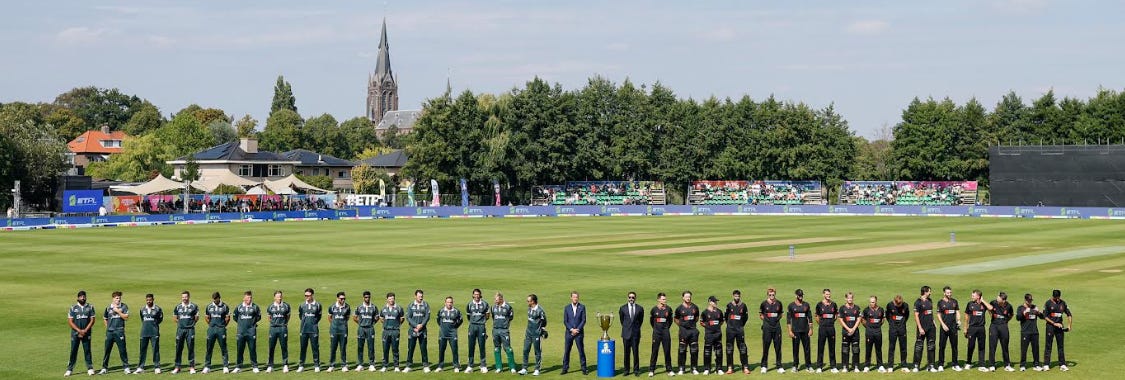
On the field, the league has likewise been an unambiguous success. The cricket was competitive and at times thrilling, the wickets were generally sporting, and even the weather could have been worse. A judiciously chosen format ensured the contest for the top spot and two play-off places remained keenly contested throughout the group stage, and while it quickly became clear that was a four horse race, there was not a single dead rubber across the entire competition.
The standard of broadcast was likewise top notch, far exceeding what Dutch, Scottish or even Irish fans are used to for their home internationals. The Sunset & Vine crew do not come cheap of course, nor does the ball-tracking required for the decision review system, and indeed one might argue that assembling a commentary team that was larger than most of the squads competing, at a cost estimated at close to half a million USD, might even be considered a tad excessive. Yet the overall effect of maintaining a production standard barely distinguishable from established elite leagues may be worth the price down the line, given the value of first impressions on potential future partners watching on.
That said, even in terms of surface presentation one can’t award the league full marks given the conspicuous shots of near-empty stands that marred most matches. Attendance overall wasn’t great. Though the opening game drew a decent crowd and the Voorburg curtain call was a full house (in part likely thanks to good weather and the adroit scheduling a second Amsterdam-Rotterdam derby to close out the Dutch leg) the mid-week fixtures in the Netherlands were sparsely attended, and the Irish leg was worse. To some degree this is an inevitable a consequence of the decision to limit the competition to two grounds, with each venue hosting a dozen match-days in succession – more than enough to exhaust demand in the most cricket-mad metropolis much less Dublin or the Hague, but it also points to genuine failures on the part of the organisers to understand or engage with the local cricket communities.
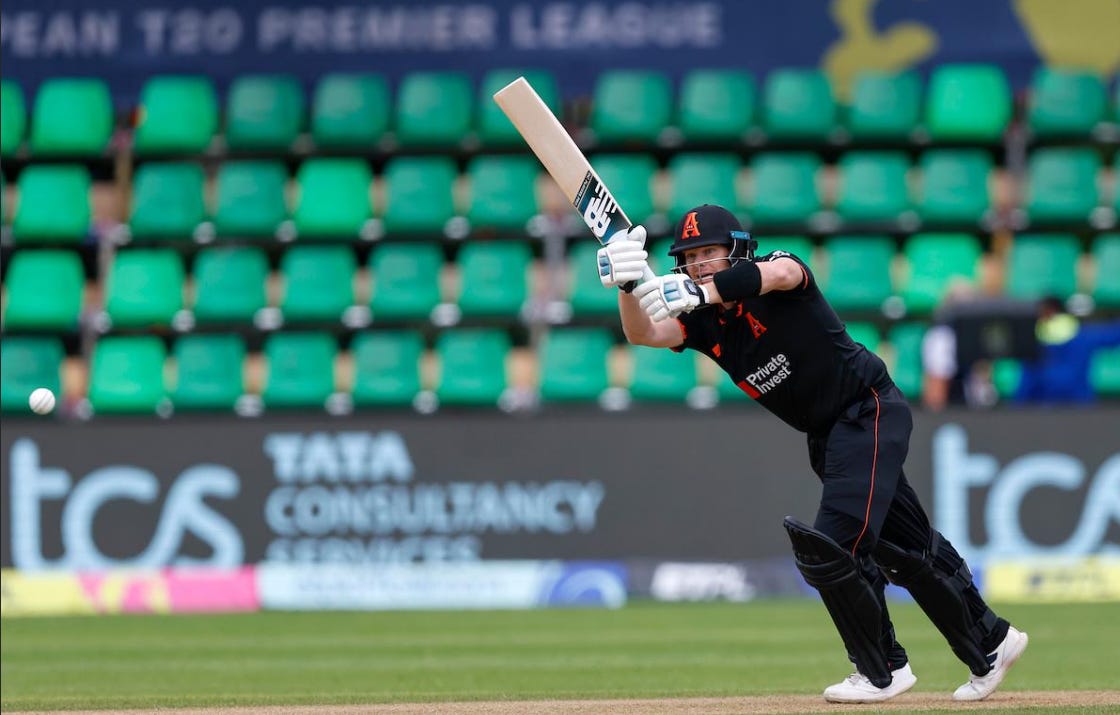
Unquestionably tickets were initially overpriced, needlessly so given that the League is never making its money back at the gate anyway. By the back end of the competition that realisation seemed to dawn, with the organisers effectively opting to open the gates for the Malahide leg. That call came a little late however, and understandably annoyed the few fans that had paid in advance, but ultimately the principal problem was promotion. Many in the Dutch cricket community were only vaguely aware of the league, and local marketing seemed at best an afterthought. Probably the organisers’ most substantial mistake was either wildly overestimating the inherent demand for tickets or underestimating the value of a packed (or packed-looking) ground – if only for how it looks on television.
Who is this for?
Even in little Voorburg itself most people on the street had no idea the competition existed, further afield there was next to no flyering ahead of time, not even a poster or two at other Dutch cricket clubs. Over in Dublin billboards were apparently to be seen at the airport, but amusingly only by departing passengers. In terms of digital promotion, Voorburg did run ETPL ads on their Topklasse livestreams, but that seems to have been on their own initiative rather than a central strategy. KNCB site did not sell tickets, the Topklasse match centre and live scores made no reference to the competition. We at TKcricket have a modest audience, but that audience is per definition entirely the target demographic. Yet nobody asked us to do any promotion, nor were CricketEurope across the seas roped in. Though the league’s social media output was impressive, the content was overwhelmingly done by Indians for Indians, a label that it’s consequently difficult to avoid applying to the League in general.
On air, the broadcast likewise did little to dispel this impression. The sweeping ignorance of the local cricket scene evinced by most (though certainly not all) of the voices speaking for the league again seems like something of an own goal here. Watching most games one might easily come away with the impression that the ETPL was the first and only serious cricket ever played in the Netherlands. Despite roping in some seventeen different commentators from across the globe, there was room for only three from Ireland, one from the Netherlands, none from Scotland. The consequence of the preponderance of full member voices, most of whom rarely work in Associates cricket, was generally patronising air that at times verged on sneering.
The local European connection is ultimately the League’s unique selling point, and too many of the on-air voices undermined it. It’s worth noting here too that League’s European broadcast partner, the Olympic Channel, was announced late and with so little fanfare that most potential viewers on the continent had no idea where to watch the league. Moreover in the event, for reasons that remain unclear, the channel streamed only a selection of matches. Many of these shortcomings are attributable to teething problems compounded by the first edition’s late go-ahead, but based on this first effort it difficult to escape the overall impression that the ETPL is in Europe, but not for it.
It should be said here that these criticisms of the central organisation do not necessarily extend to the franchises, some of whom made commendable (if at times understandably haphazard) efforts at local engagement. The Rotterdam Dockers made an unmistakeable effort to engage the punters on the ground, some smartly timed merch distribution ensuring they captured the crowd on day one, while ownership group figurehead Jonty Rhodes was regularly to be seen circulating outside the VIP zone throughout the Voorburg leg. The Amsterdam Flames local engagement was less immediately visible, but the organisation was on the ground early in the Netherlands to host their launch event at VRA alongside a well-attended clinic. Both sides roped in locals to assist with social media and the like, while the Flames scholarship initiative sponsoring young Dutch keeper-bat Noor van Rietschote for a stint at the Gary Kirsten academy this winter is exemplary, and also suggests the franchise is paying welcome attention to the women’s game, even if the prospect of a women’s ETPL remains a distant one. All told there’s a strong case to be made that the franchises have done a better job than the league organisers in terms of localisation, a sentiment which a few franchise investors have privately echoed.
It should of course be acknowledged here of course that the primary purpose of the League is not to take over responsibility for the development of cricket from any of the three boards. The ETPL is not a charity, and any such benefits are essentially incidental to the league’s baseline value to the hosts in the form of comparatively modest fees to the host boards (Cricket Ireland being the only on of the three with equity in the league itself), and of course the more substantial payments to the local players, for whom ETPL pay-cheques are potentially transformative.
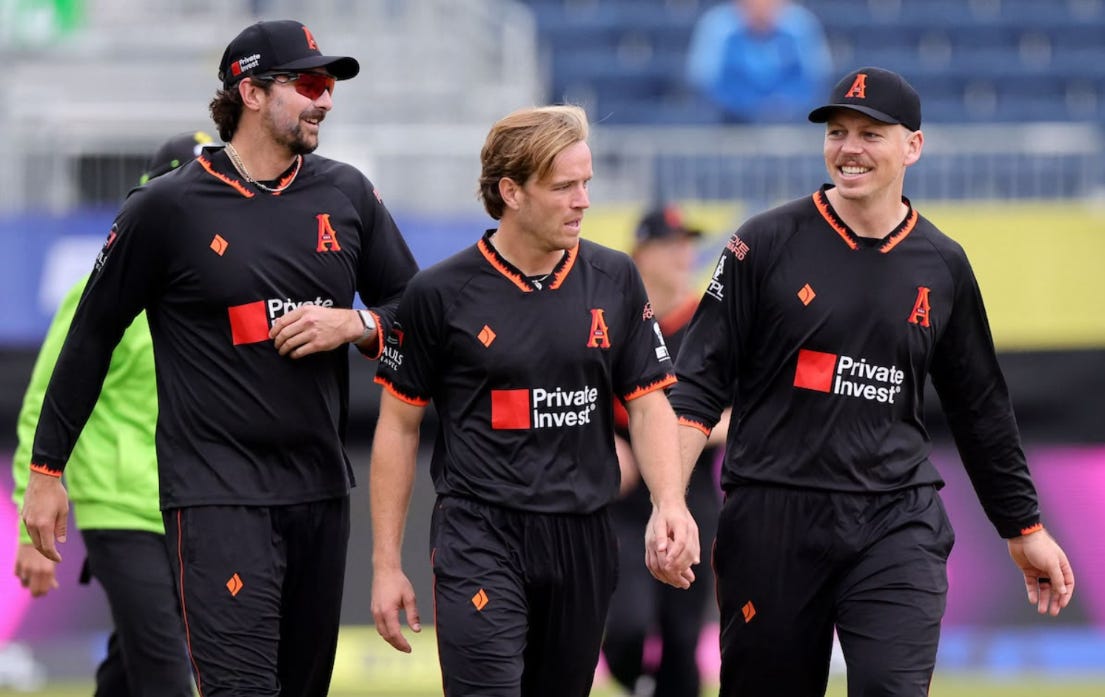
Thus far it appears that everyone has been paid more or less on schedule (and even early in at least one case). Now one might reasonably regard simply paying players on time as hardly worth celebrating, but it’s a hurdle that trips up plenty of franchise leagues. Last year the World Cricketers Association described the late- or non-payment of players in franchise cricket as an “epidemic” so it’s worth noting that the same organisation singled out the ETPL as a model of good practice. It is perhaps also worth noting here that the current WCA president is herself on the ETPL payroll, being one of the expansive squad of overseas commentators, but as conflicts of interest in cricket’s gig economy go that’s surely one of the least egregious and overall the broad sentiment currently seems to be that the players at least are all happy.
Regrettably, in the current environment just paying the bills on time has become a key benchmark by which to judge new competitions. That the ETPL and the franchises have thus far shown no signs of failing to meet this benchmark is encouraging, yet huge questions also remain around the medium term financial viability of the enterprise going forward. In short, while it is reasonably clear where the money is being spent, it is far from obvious how the ledger is to be balanced.
Who’s paying for all this?
Much of the initial spending will of course be covered by the franchise owners, not only player payroll but also substantial franchise fees paid to the central organisation. Long term, however, franchise owners are themselves investors presumably expecting a return, not a revenue stream for the league. As it stands the five franchisees are thought to be in the hole to the tune of three or four million dollars apiece. The sale of the Edinburgh franchise also fell through shortly before the competition began, leaving the league to cover the additional costs, though the Castle Rockers victory in the final does at least mean the organisers are able to offer the defending Champions for sale to potential 2027 investors.
If the competition is to become self-sustaining, however, the lion’s share of income will have to derive from sponsorship and the sale of broadcast rights. In this regard they face an uphill battle, and initial signs are hardly promising. Prior reporting on Outside the Circle suggested that the value of broadcast rights for new franchise leagues has been trending toward the negative, which the talk around the rope over the past few weeks corroborated. The exact details of the ETPL’s agreements with broadcasters are not public, but those in the know suggest the league is earning next to nothing on broadcast for the first season (and perhaps not even the right side of nothing once shared production costs are factored in). It was also notable that several of the teams sported shirt sponsors directly connected to the franchise owners, or none at all. Likewise the flashy digital advertising hoardings around the boundary were mostly displaying the league’s own logo or those of the host boards, and only occasionally those of sponsors. Estimates for just how much of a deficit the competition ran in its first season vary wildly, but they are all expressed in dollar amounts running to eight figures.
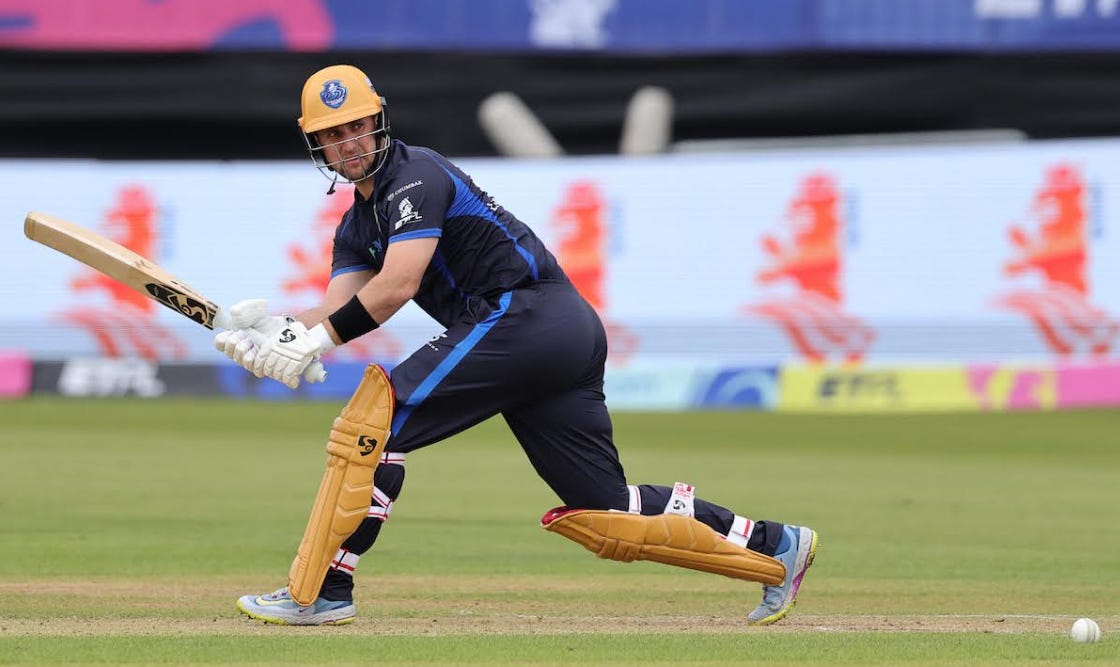
There is, nonetheless, good reason to believe that that figure will come down next year. With a largely successful first season to show as proof-of-concept (and a title-winning franchise to sell), the 2027 ETPL will be a more appealing prospect for sponsors and broadcasters both. While one or more franchises may still be looking for further outside investment to sustain their positions, it’s hard to imagine that any of them will have been banking on immediate returns in year one. Yet while there’s so far little to suggest that there’s any immediate shortage of liquidity, the long-term business case for the league and franchises both remains opaque, and the venture likely needs a fundamental change in the commercial environment if it is to shed a dependency on continued cash injections, be it from franchise fees or the owners themselves.
The future of the league may eventually come down to the question of how long it can be run at a loss, and indeed whether eventual profitability is even a “must-have” rather than “would-be-nice” for the league owners and/or franchise owners. It’s hardly inconceivable that some or all of the investors regard their stake in the competition as a passion project or status symbol, or see the league as essentially one great corporate box.1 They would hardly be the first to put money into a team or league primarily as means to promote other business interests, blurring the distinction between the logics of ownership and sponsorship.
Quo Vadis, ETPL?
For the time being, at least, it seems as though the ETPL is likely to remain a fixture of the European calendar, though the logistics and scheduling already look to be shifting for season two, with both the window and the venues likely to shift. While the stated intention remains to eventually play the league across all three of the titular hosts, the expectation is that it will remain a two-venue affair for the next edition with Scotland getting their turn for 2027, the Irish leg moving to Belfast, and the Netherlands missing out. The organisers are also looking at a July window for the competition in the expectation that the Hundred will be pushed later to accommodate the Ashes, though an expanding MLC season may shrink the available gap in the calendar there.
The switch to Scotland and Northern Ireland would simplify visa issues, removing the need for Schengen entry for overseas players. Meanwhile a July window may also help with the weather and the crowds (as well as making Edinburgh a feasible venue, which would not be the case in August due to the Fringe). The move would be a disappointment for the KNCB of course, who are still holding out hope for some sort of token Netherlands leg next year, if only an opening weekend or the like. But it’s hard to see how that could be accommodated without wiping out the logistical advantages and cost savings that make the two-venue option attractive.
Ye conversely, it’s difficult to see the league building a committed following in all three countries if it skips a host every edition. Despite the prevailing opinion in Dubai or Delhi regarding the format that “minnows” ought to prefer, the fact is that most Irish, Dutch and Scottish cricket fans have little inherent affinity for the T20 game. Securing genuine buy-in from local fans, already an uphill battle, will be even tougher from abroad. There is, moreover, a risk that disappointment in the Netherlands at being passed over next year may turn to resentment given the potential impact of early or mid-season window on the Dutch domestic season.
The fifty-over Topklasse was crammed into the early season to accommodate the ETPL this year, a move already raised hackles in certain corners. While a late July ETPL next year wouldn’t affect the top division on the current schedule, if it starts immediately after MLC it would clash with the climax of the season. Upending the domestic calendar again is unlikely to go down well with clubs, but nor is differential impact of unavailabilities on what remains for most Dutch fans the foundational competition of cricket in the country.
If the ETPL continues to pay its bills though, it’s hard to imagine any remonstrations from clubs having much impact. The Dutch have less riding on the success of the League than Ireland do, but looking forward none of the three boards can easily afford it’s failure. That said the ETPL is not going to be a panacea for the problems facing European cricket, and despite the qualified success of the first edition it would be deeply unwise for the three boards to count on it being around forever.
The most significant questions around the league remain on the financial side, and its most glaring failures primarily around localisation. Yet with the benefit of a season’s experience, a proven product to sell and a substantially longer lead-in period, the organisers are in a better position to address both for season two than they were ahead of the inaugural edition. Safe to say there is work to be done both on the ground and in the boardrooms over the winter, and it is perhaps too early for European fans to shed the franchise-scepticism that they have built up over the past decade of disappointment. There remains plenty of room for pessimism around the league’s prospects, but on the evidence of season one, it ought perhaps to be a more a cautious pessimism.
What to watch for:
- The champions going unsold, or worse still current franchise owners looking to pull out or sell up.
- Prolonged uncertainty regarding the 2027 window/venues.
- Players, commentators or contractors going unpaid.
- Quick confirmation of the ICC’s provisional NOC being renewed for next season, or better yet indefinitely.
- Details of arrangements for player retention, auction etc ahead of next season.
- Continued local engagement on the part of franchises, establishing or building on relationships with clubs and local bodies.
- Such motivation also might account for a particularly curious press release sent out on the second day of the tournament, announcing The GREAT Corporation as a strategic investor and co-founder in the league. Great Corp, incorporated in Singapore just six months ago, presents itself as a business dealing in rare earth minerals, specifically “building a fully integrated rare earth technology platform spanning resource development, advanced laboratories, recycling and the future of space-based resources.” Its activities in these sectors currently appear to be largely aspirational, however, and the expertise of its staff (several of them also colleagues of ETPL founder/director Saurav Banerjee at New York-based One Alpha North Capital and/or employees of Bangalore investment-pitch specialists SlydS and Craise) seems to lie primarily in securing venture capital rather than in mining, transmutation, or spaceflight. While the release was oddly walked back the same day, the firm’s vice president Sai Submaranian remains on the ETPL site as “co-founder and investor” on behalf of Great Corp. Similarly curious was the presence if a delegation of employees of Indian recording industry giant T-Series in Voorburg, all sporting Cosmic shirts and cheering loudly for the Glaswegians, though the precise connection (if any) between the music and YouTube behemoth and the Scottish franchise is not public. ↩︎

