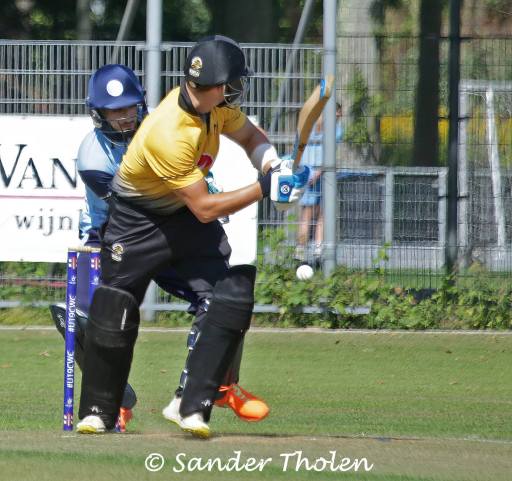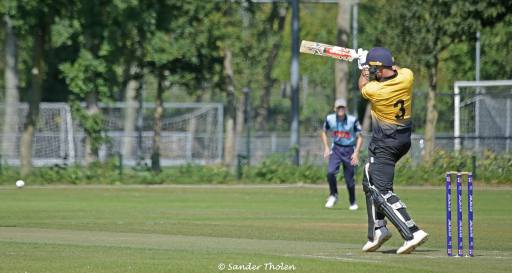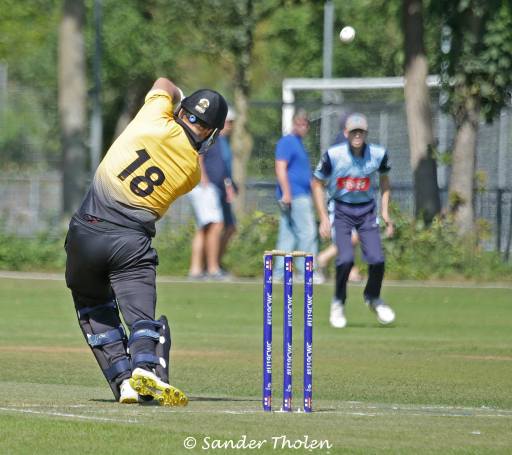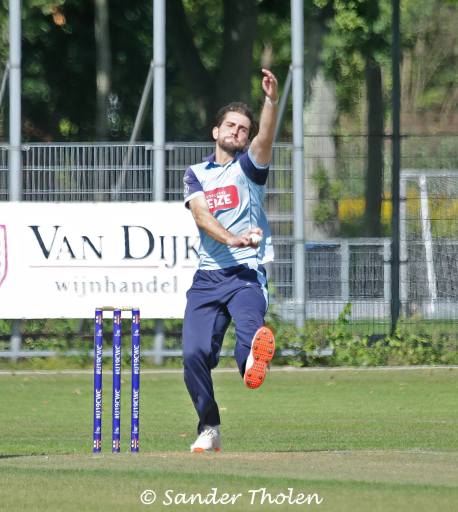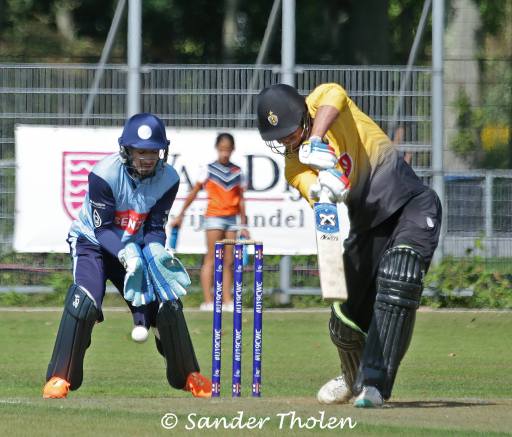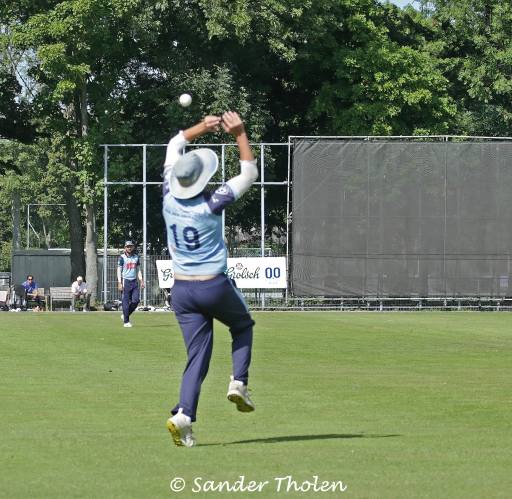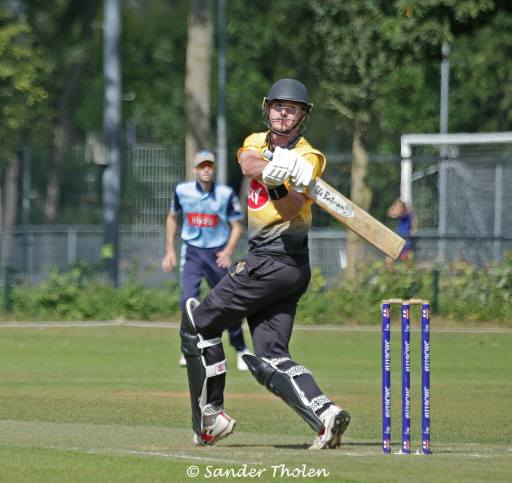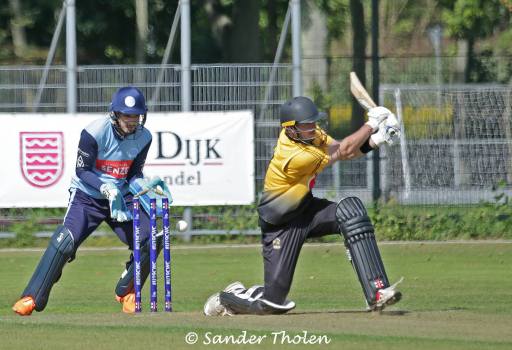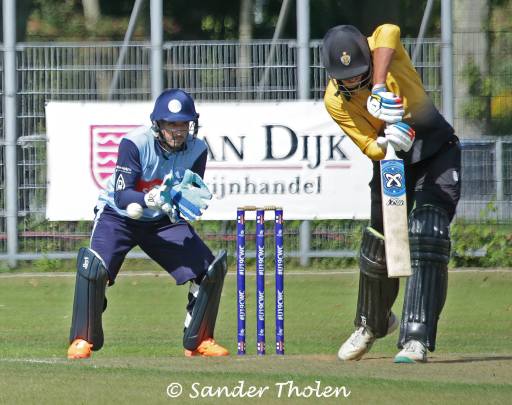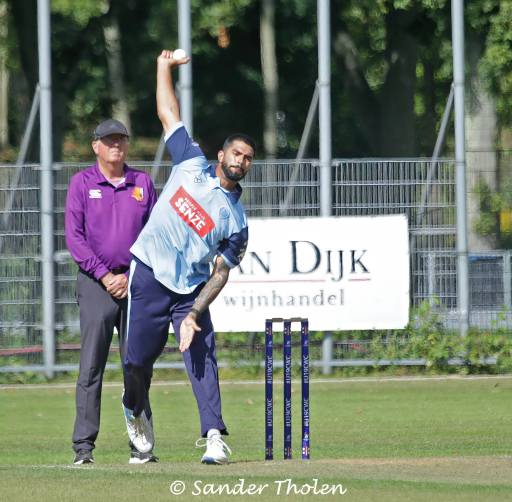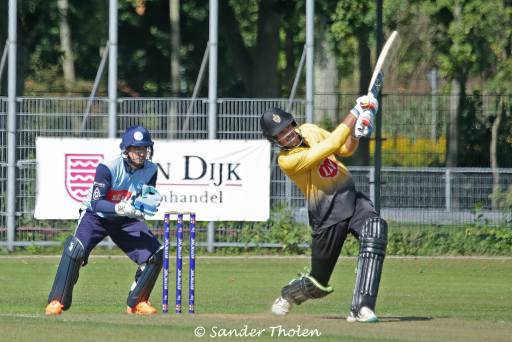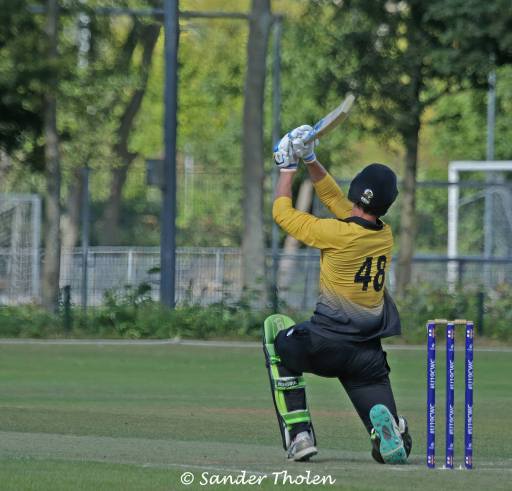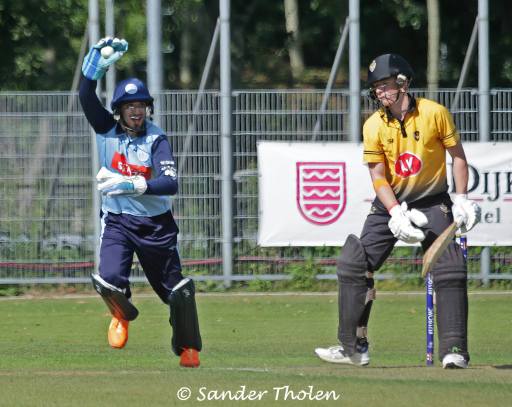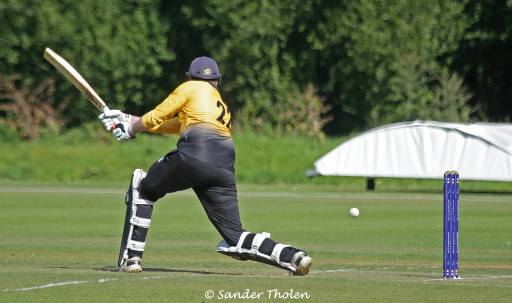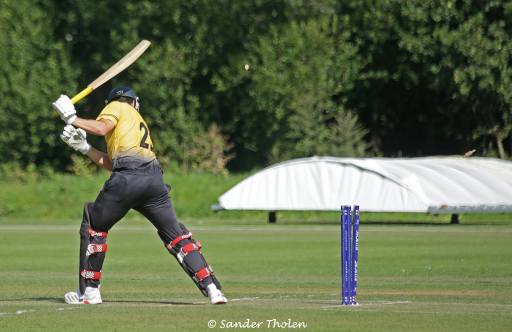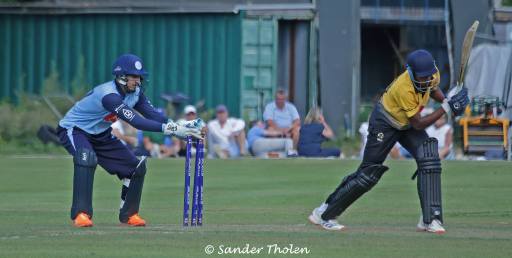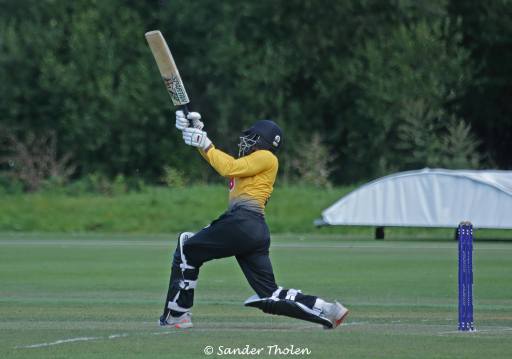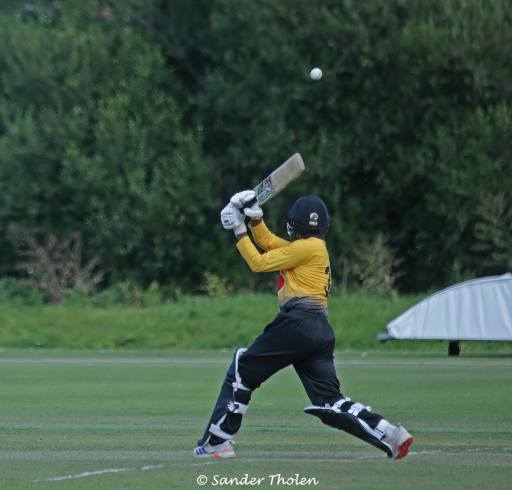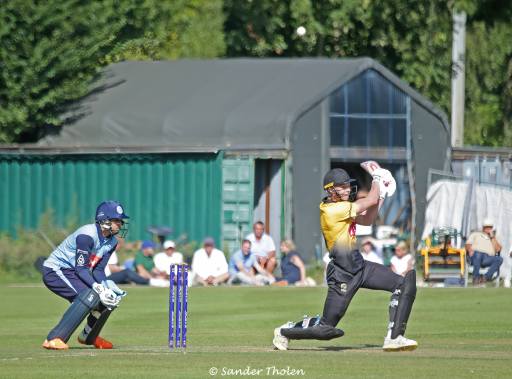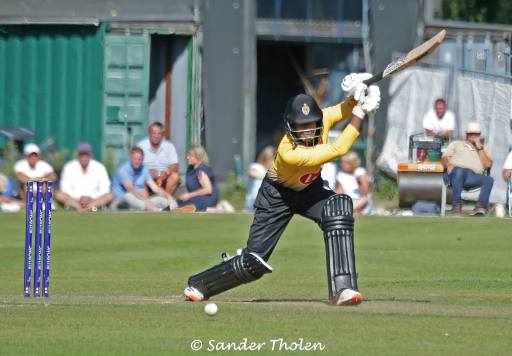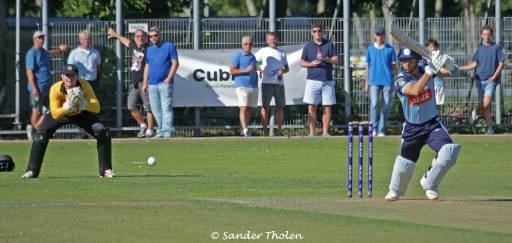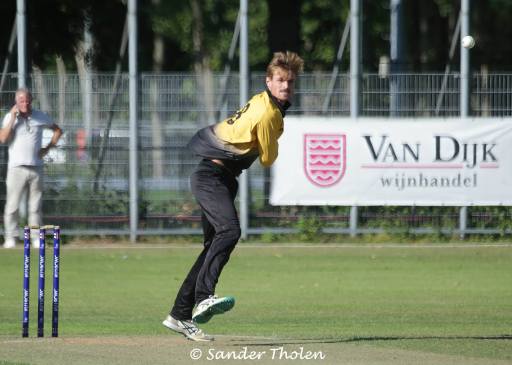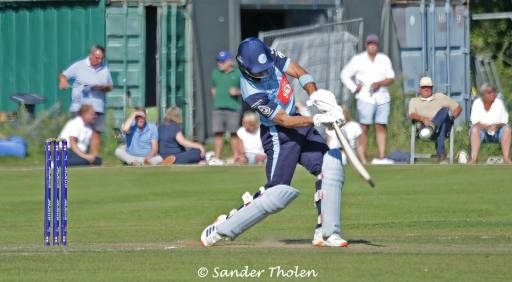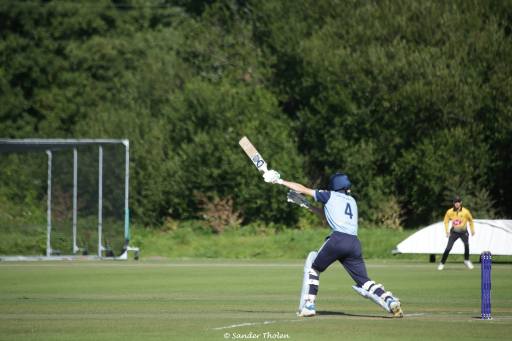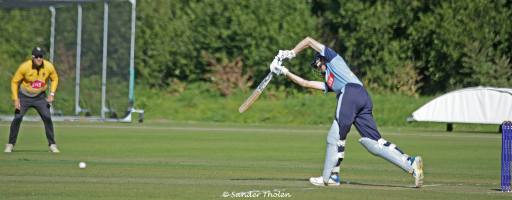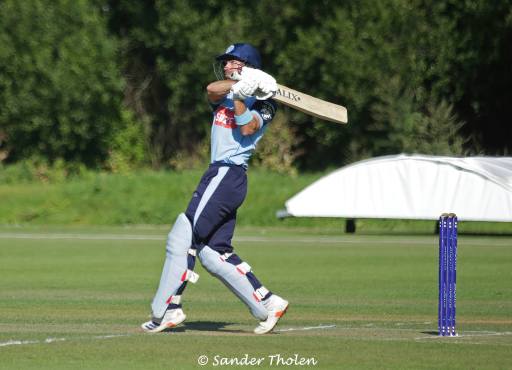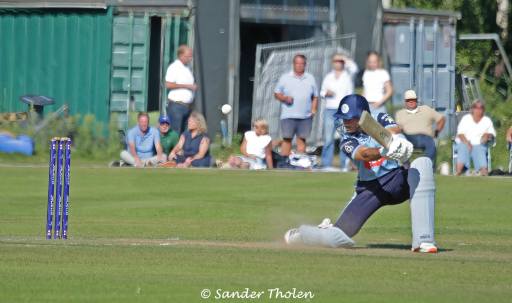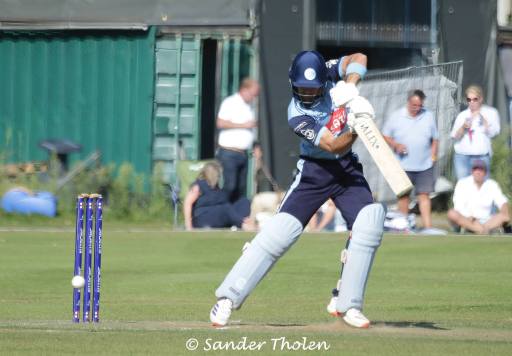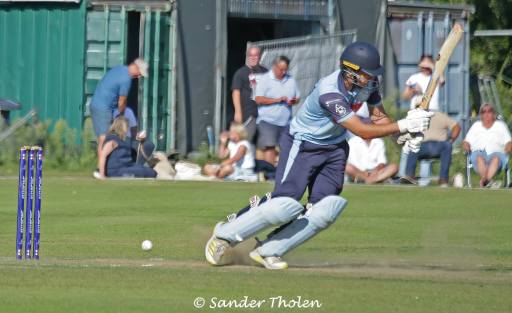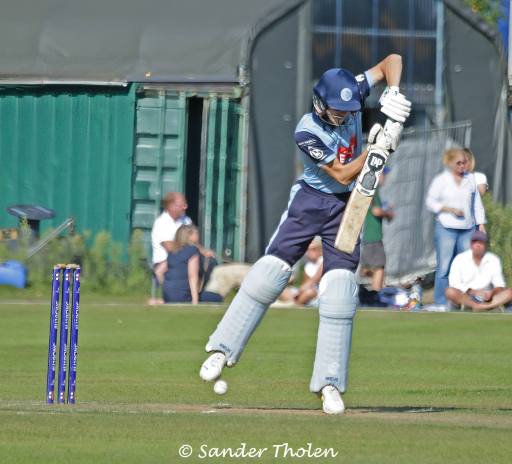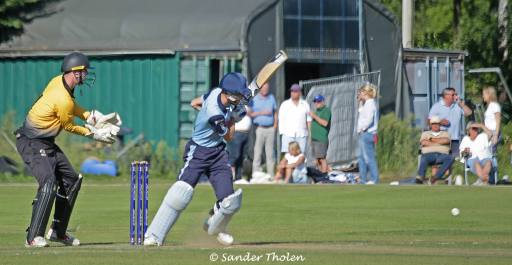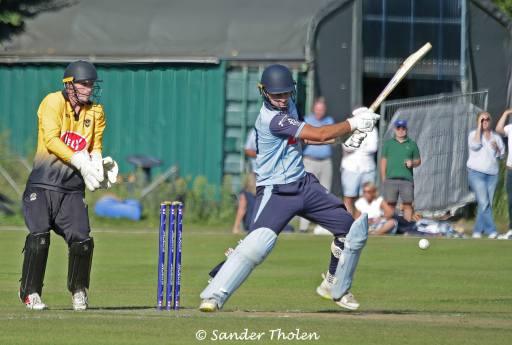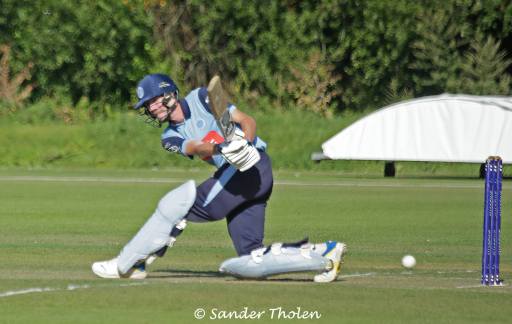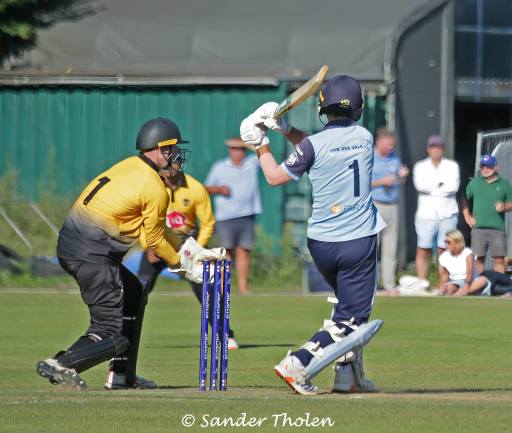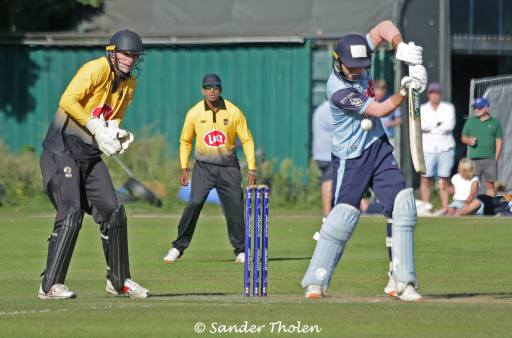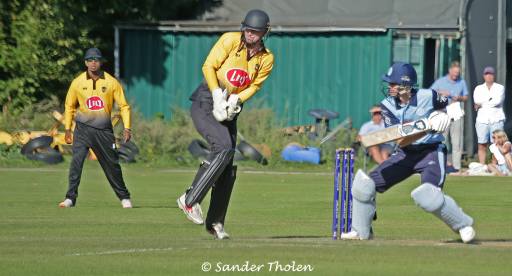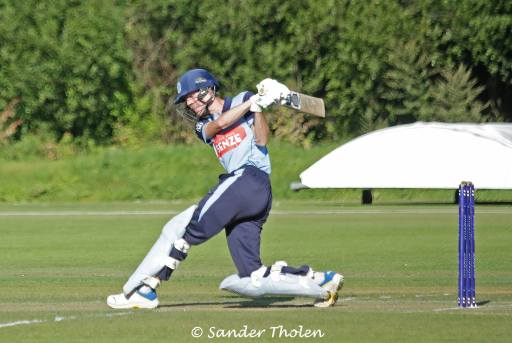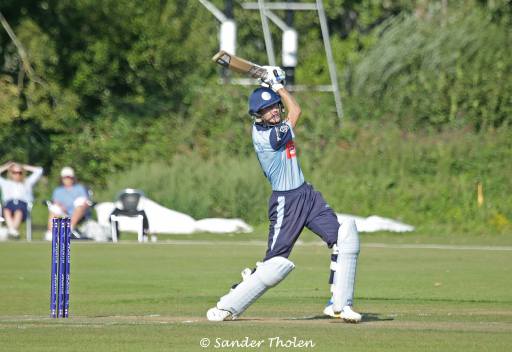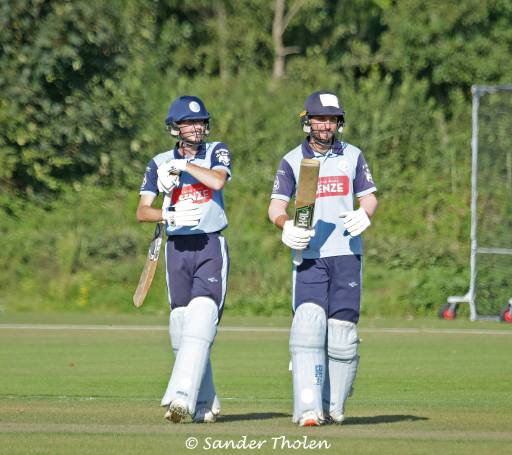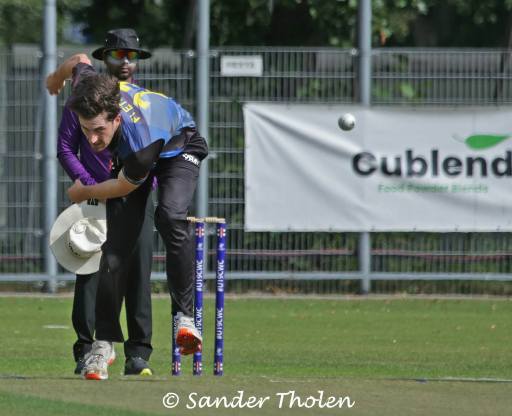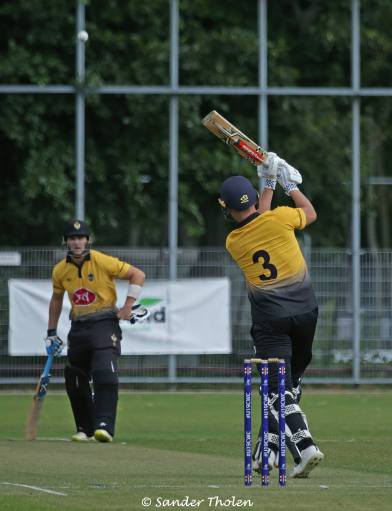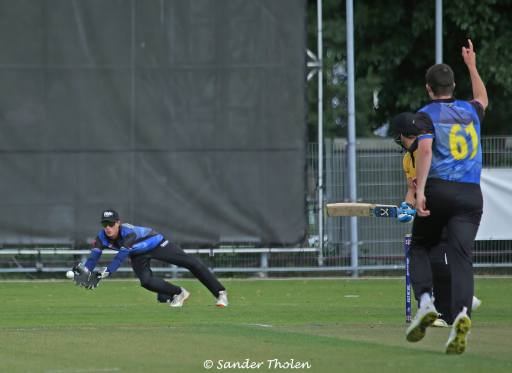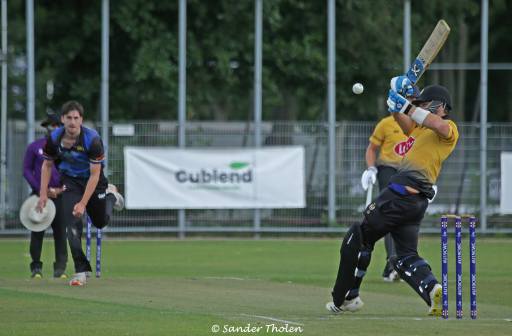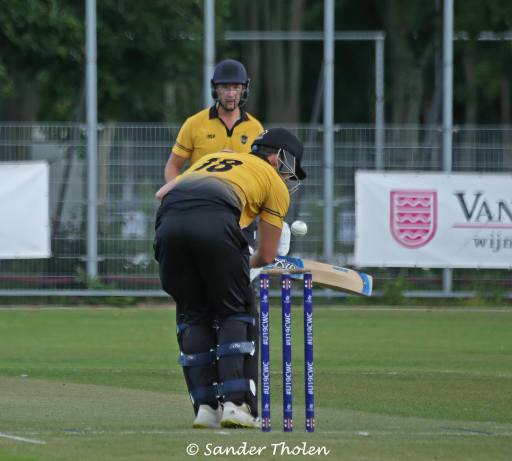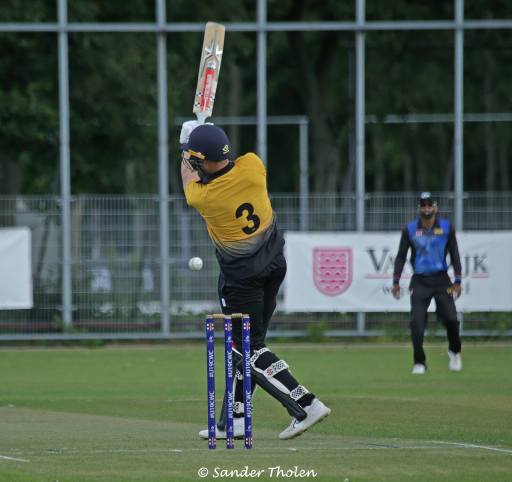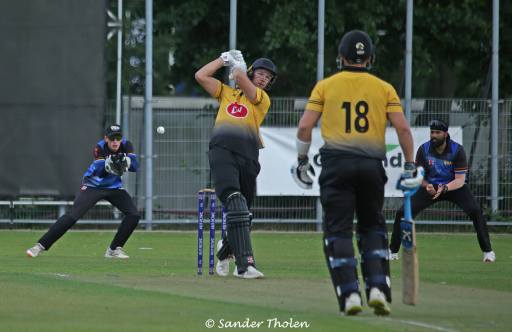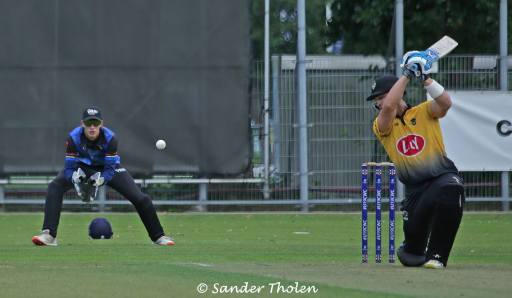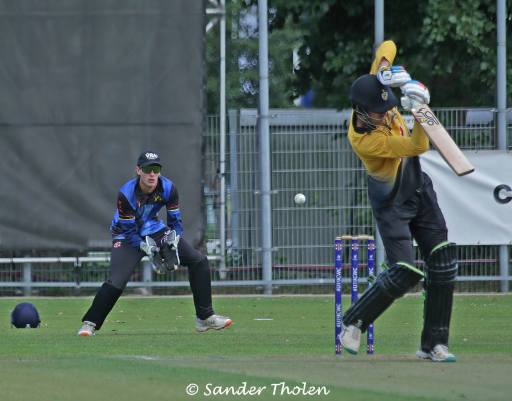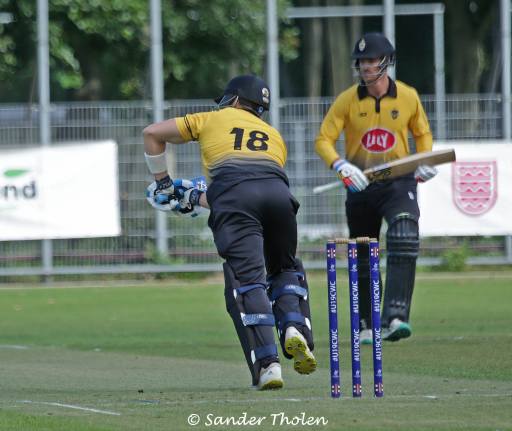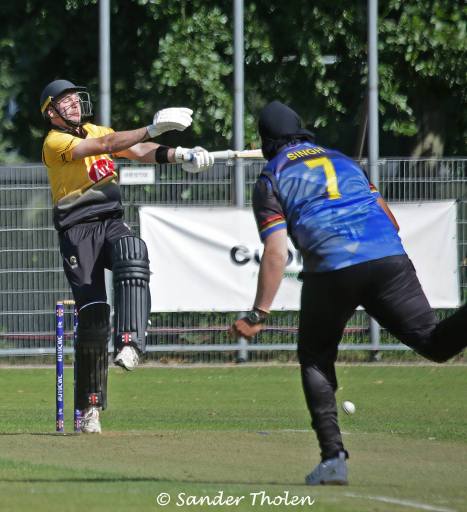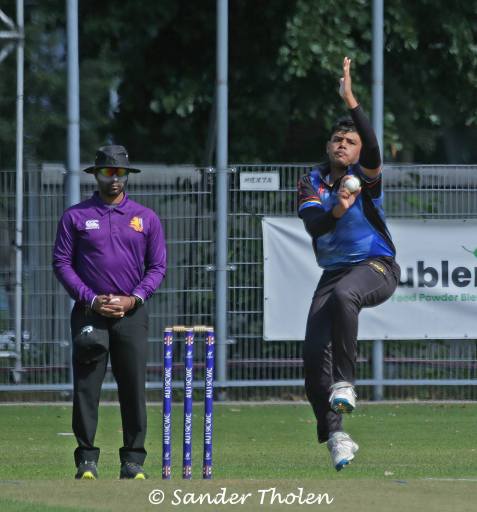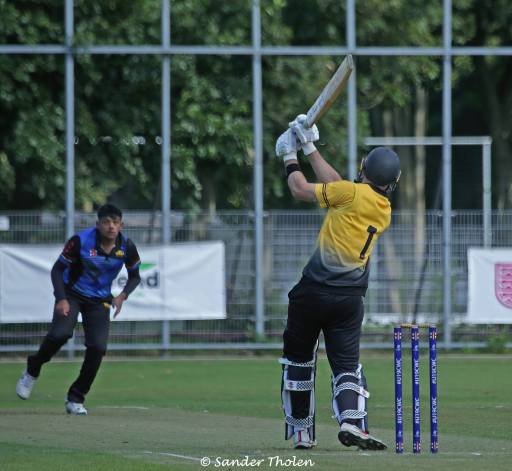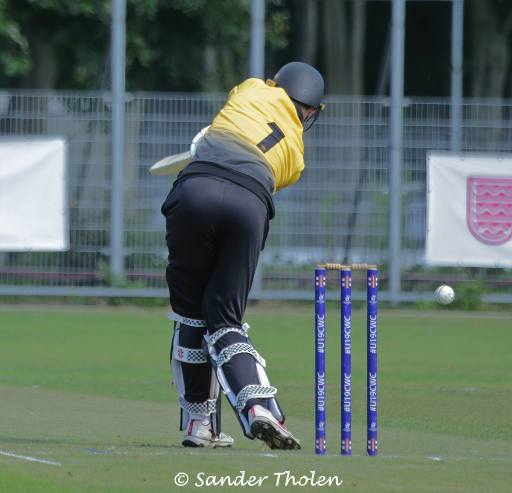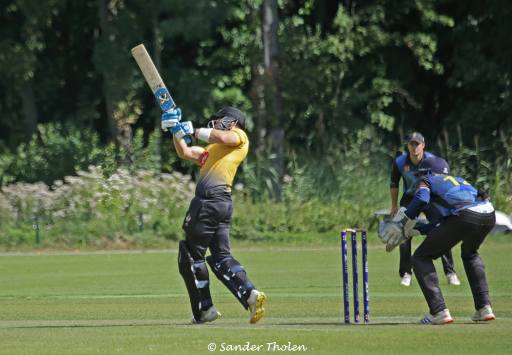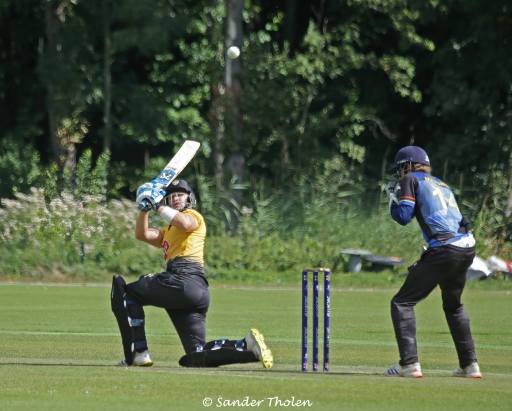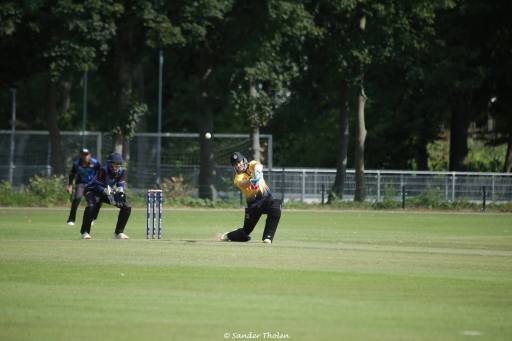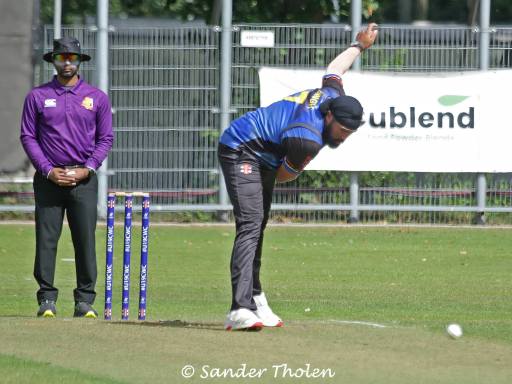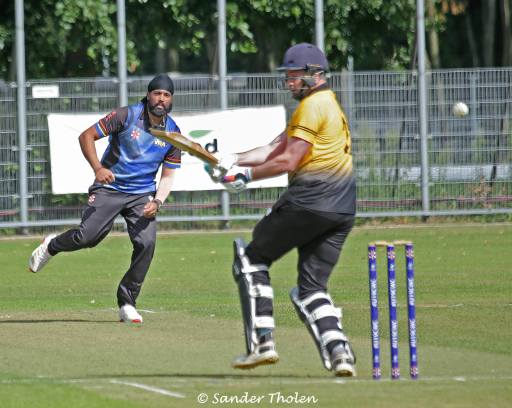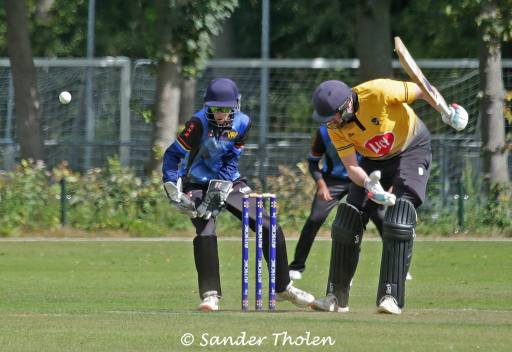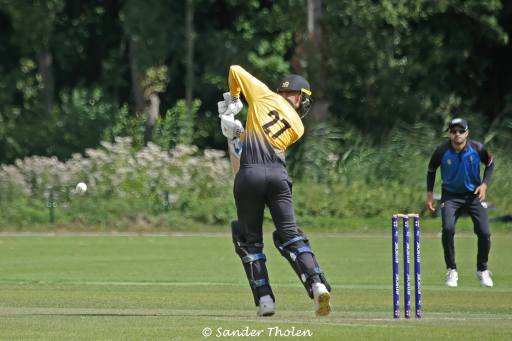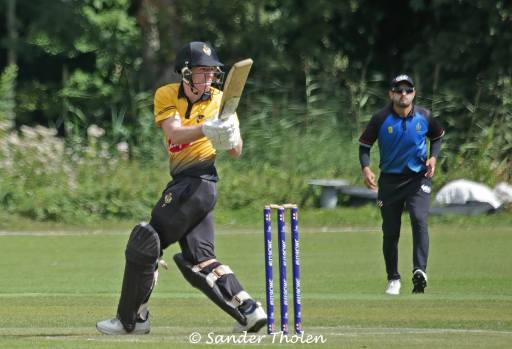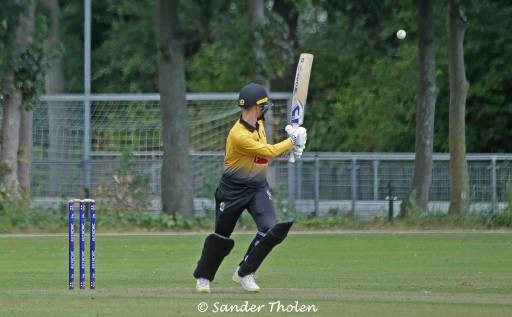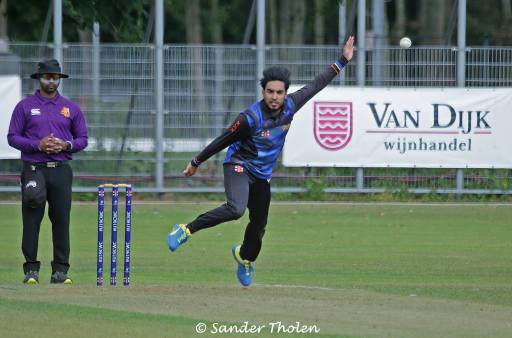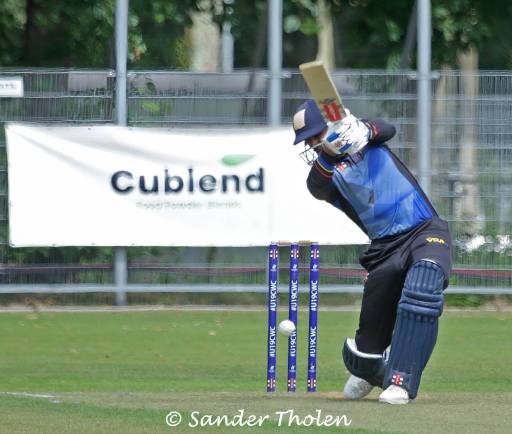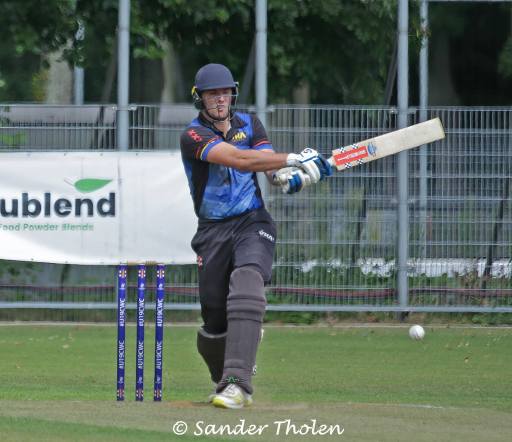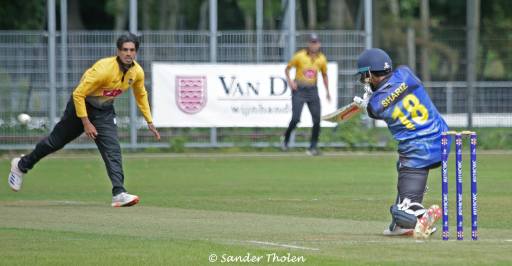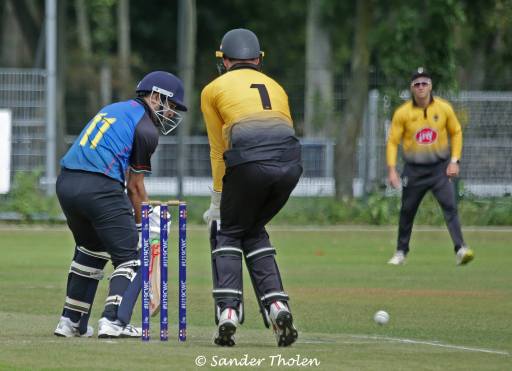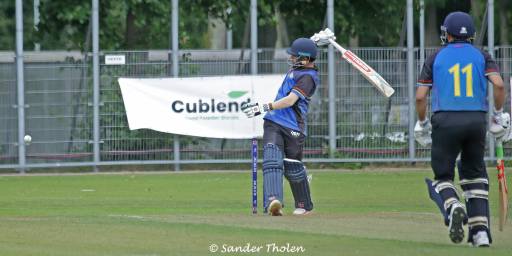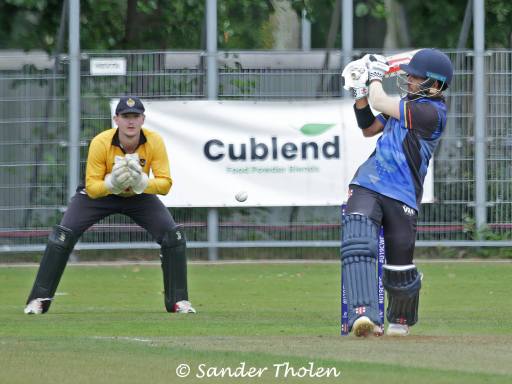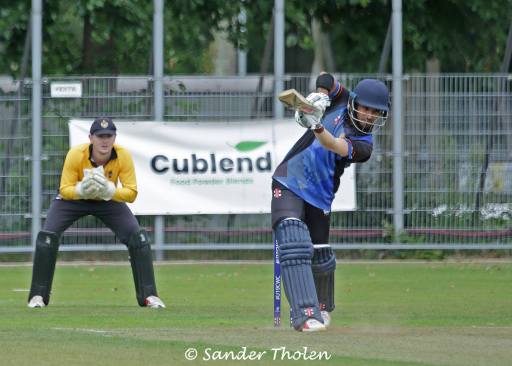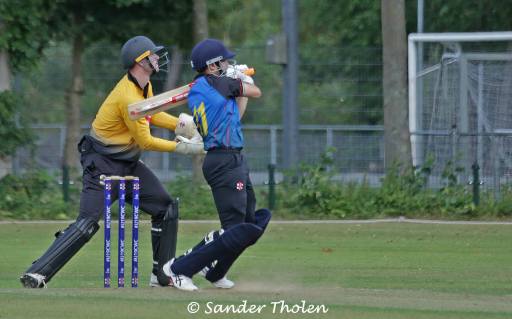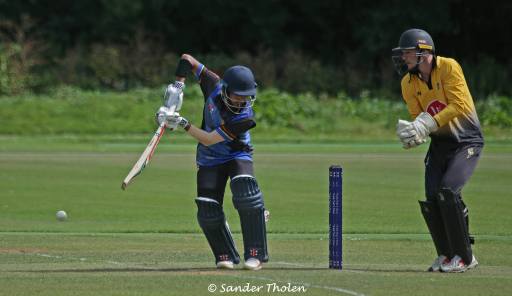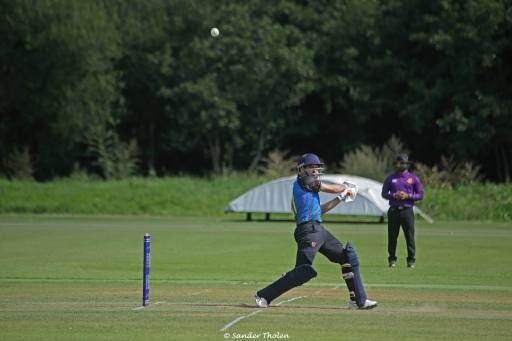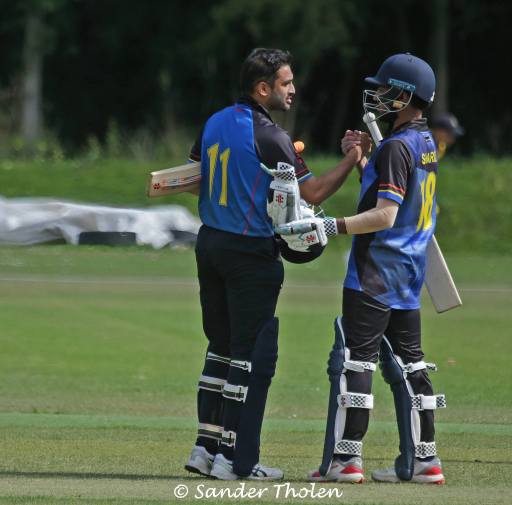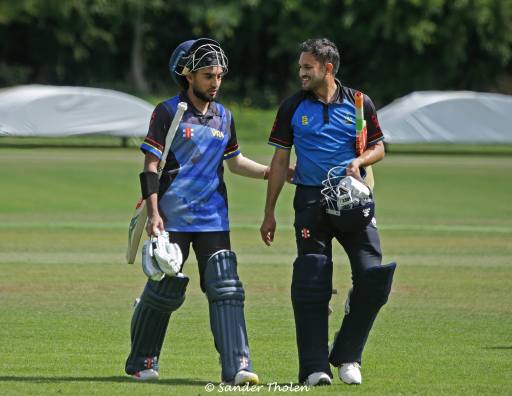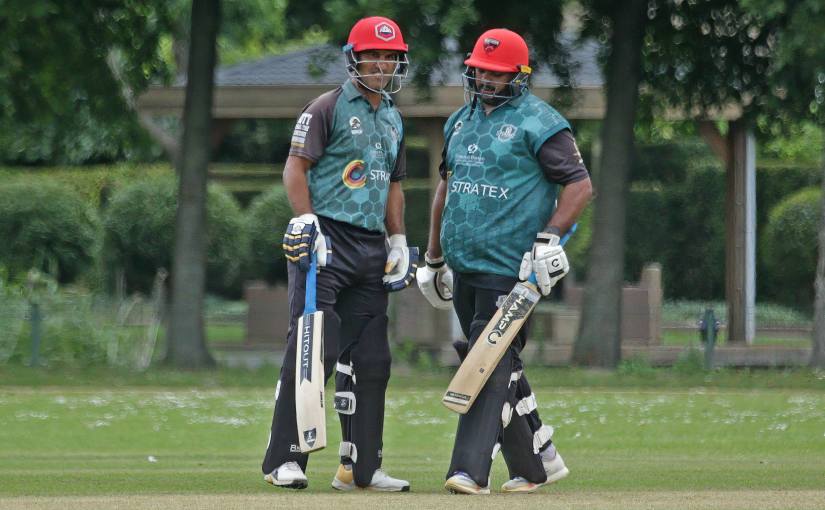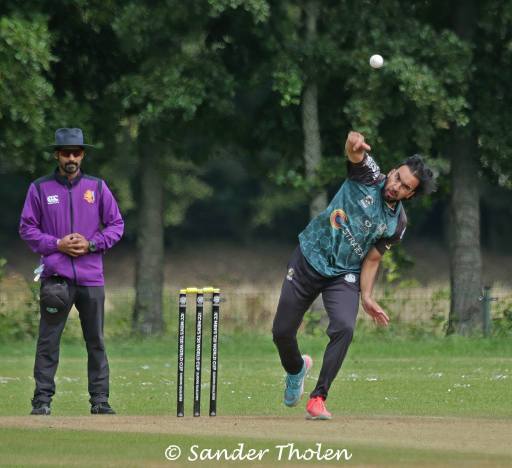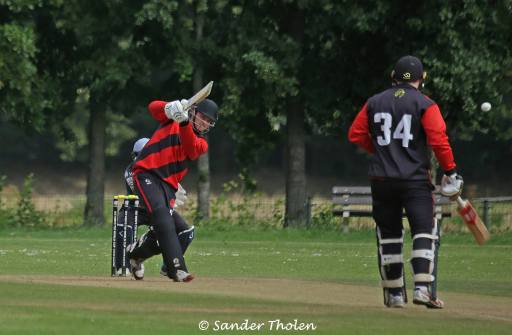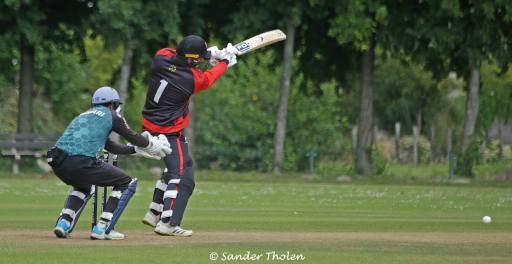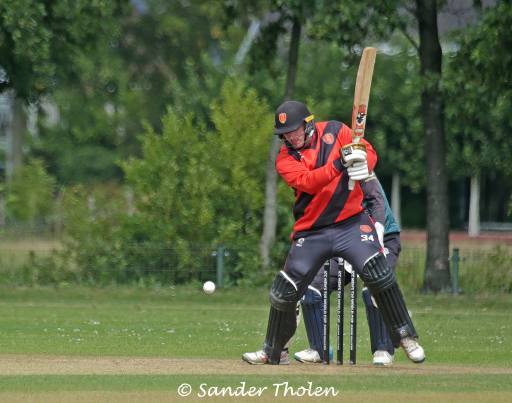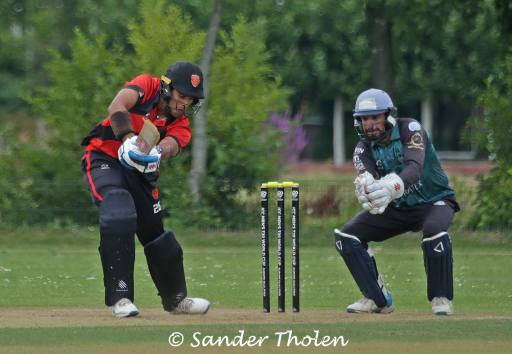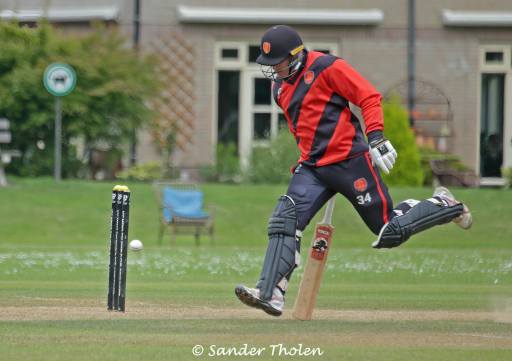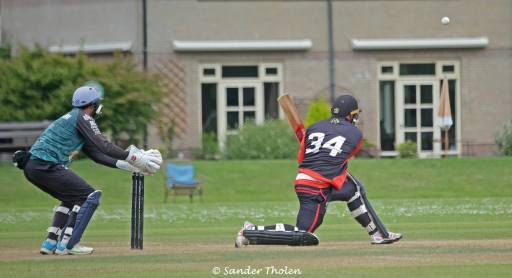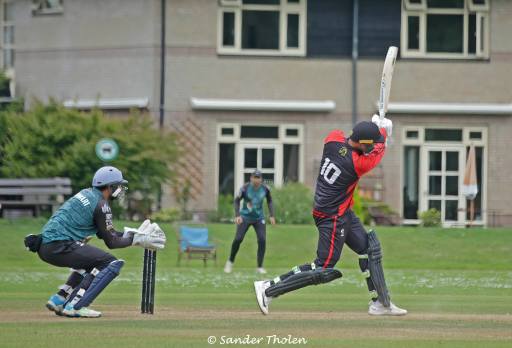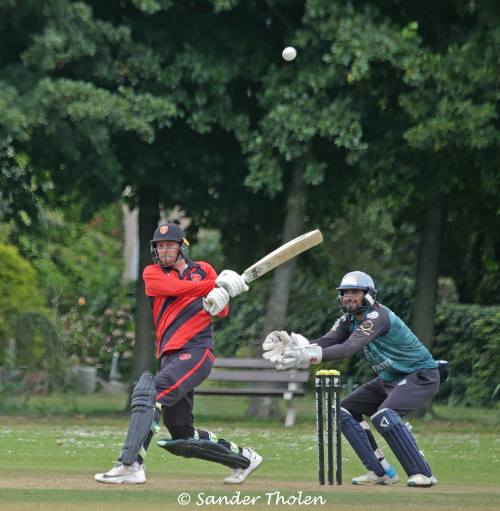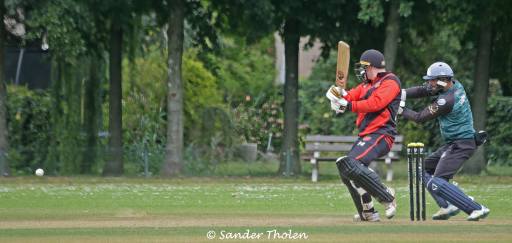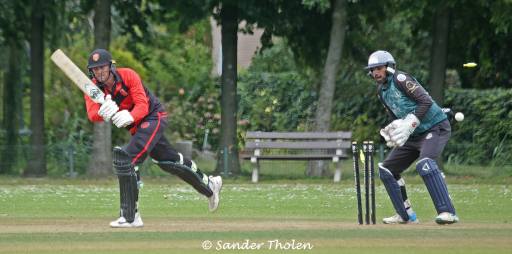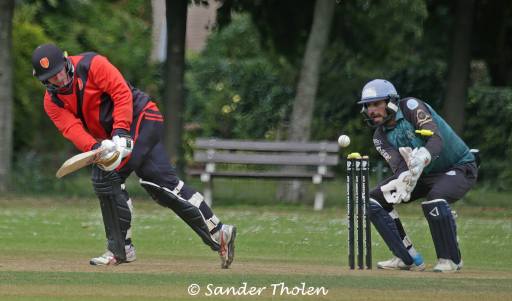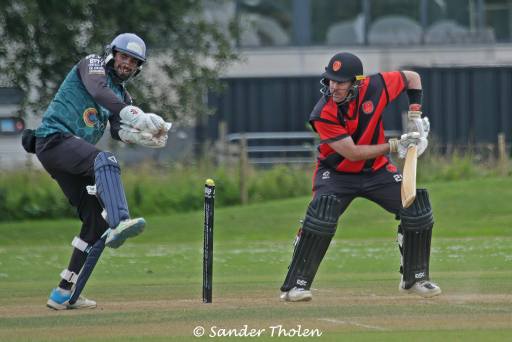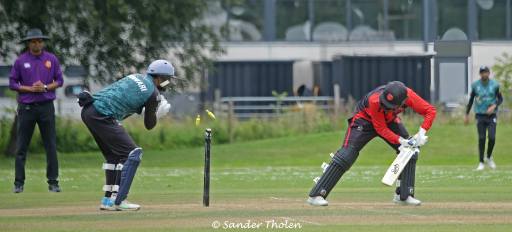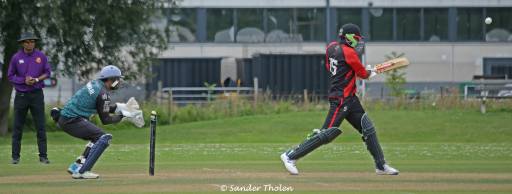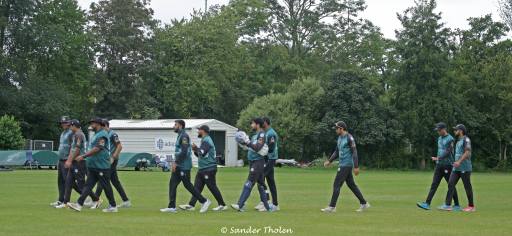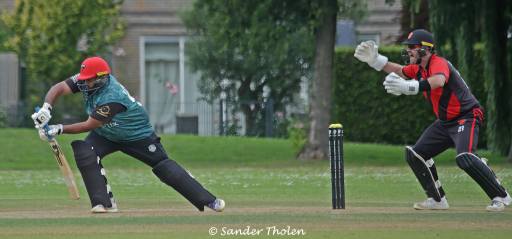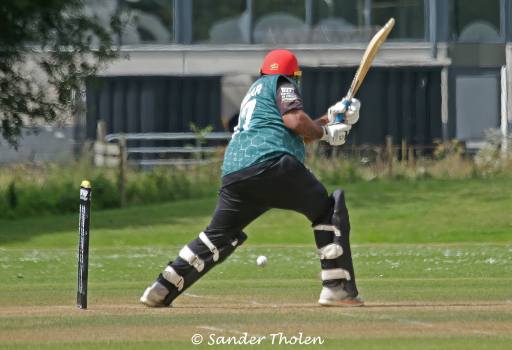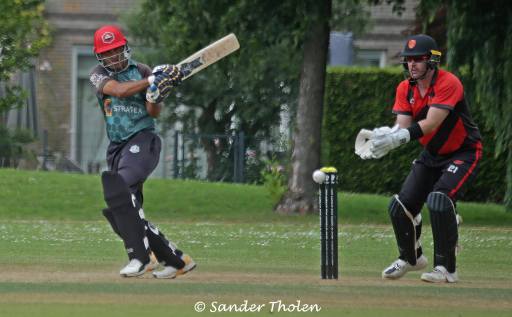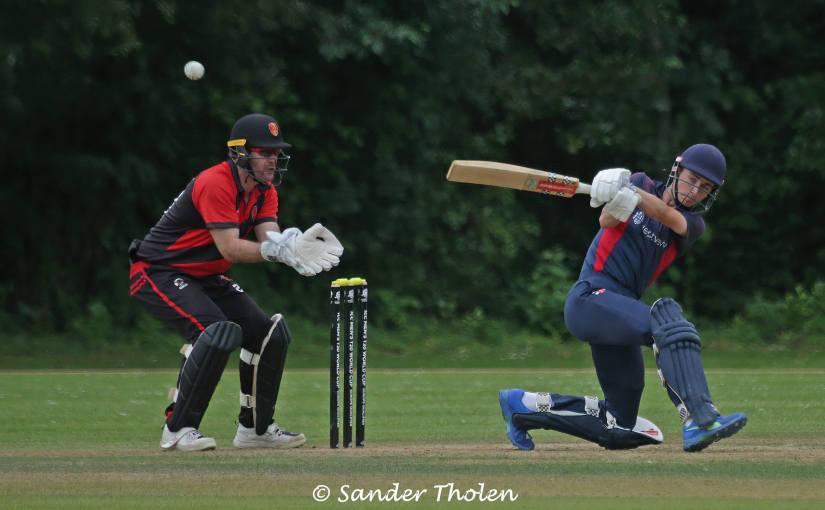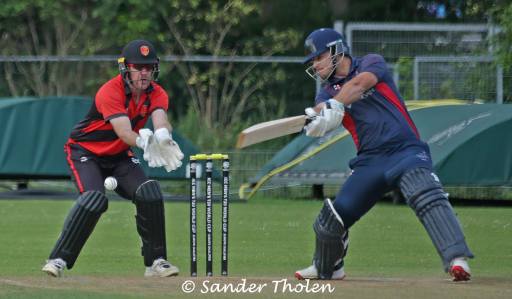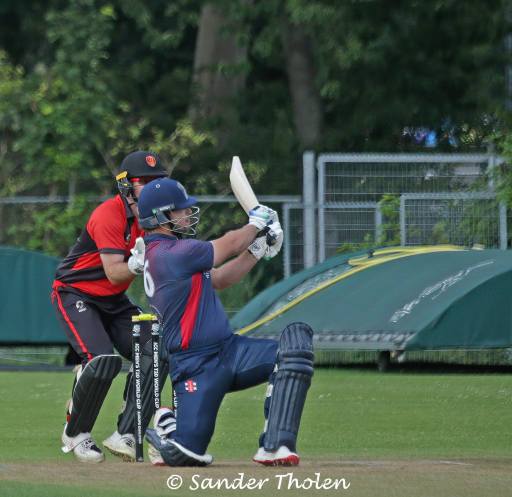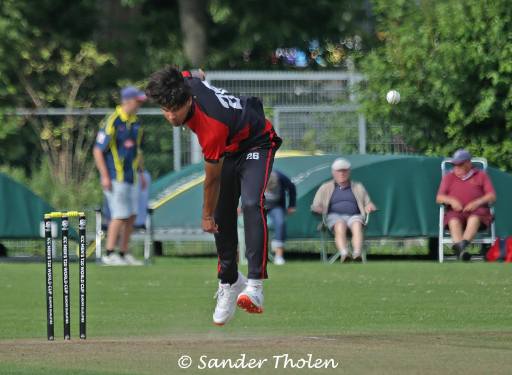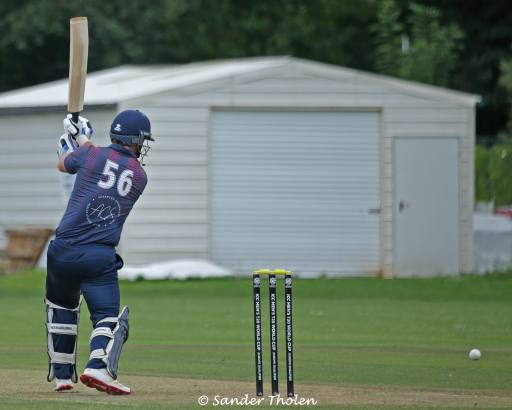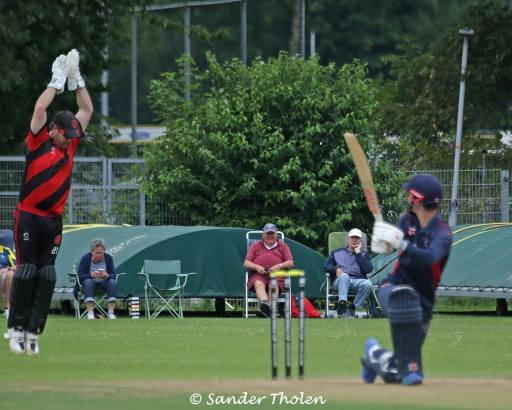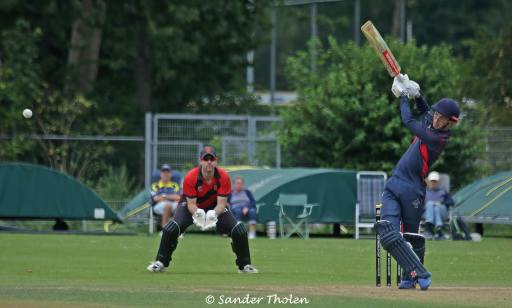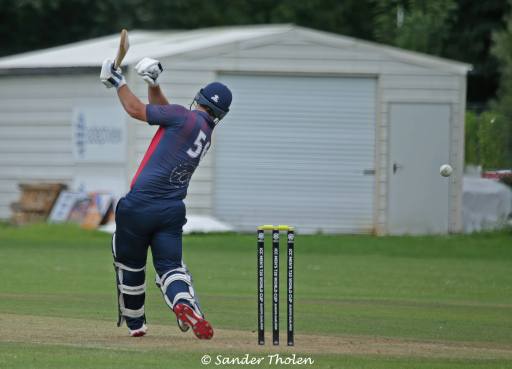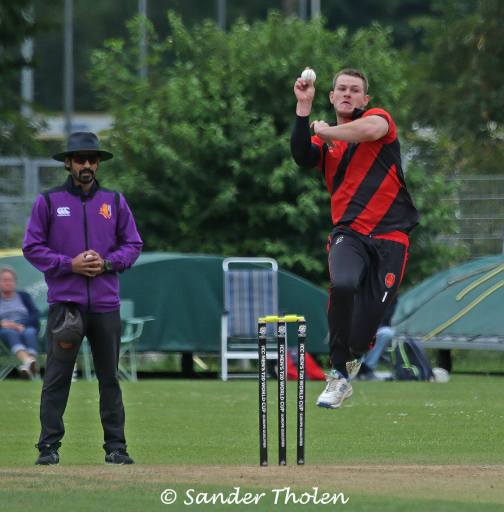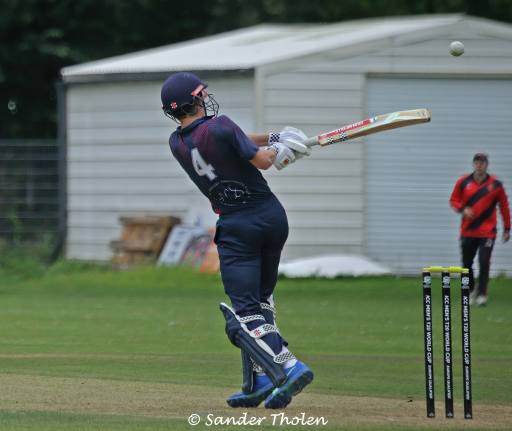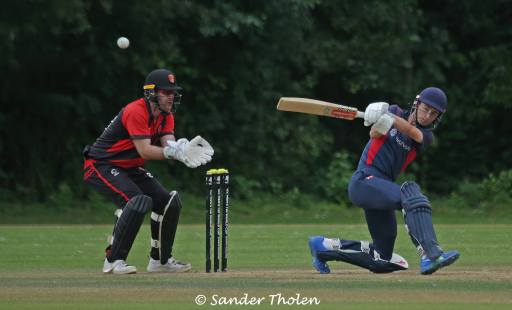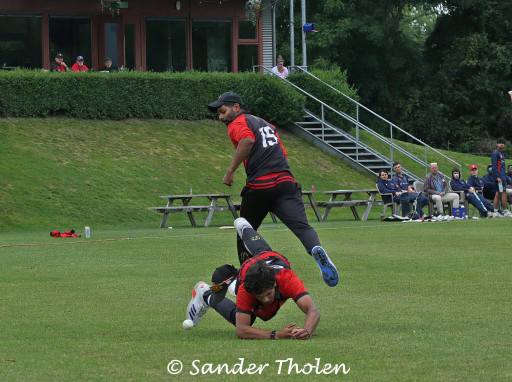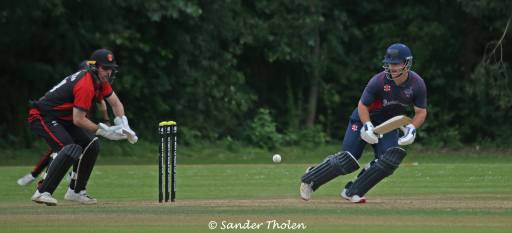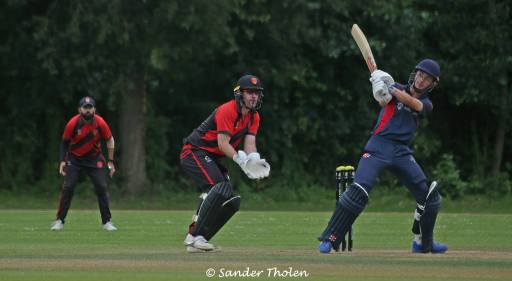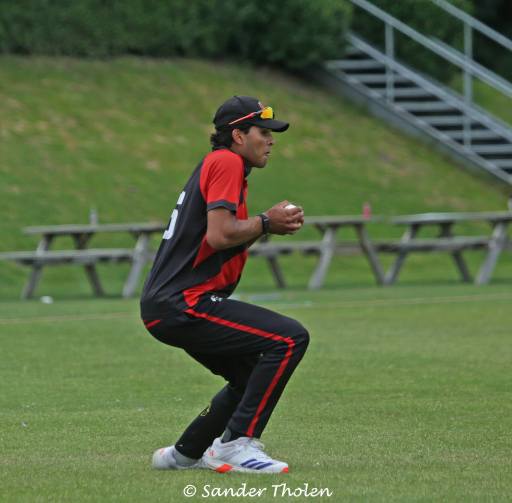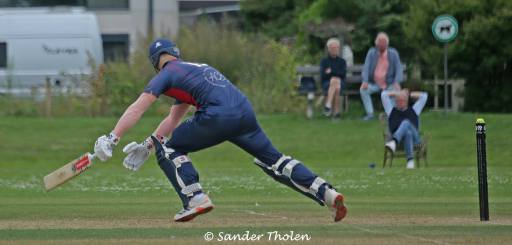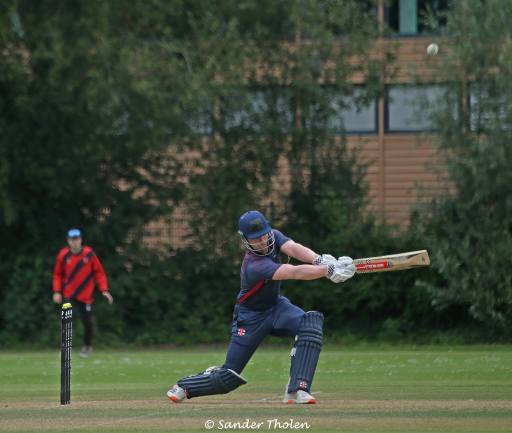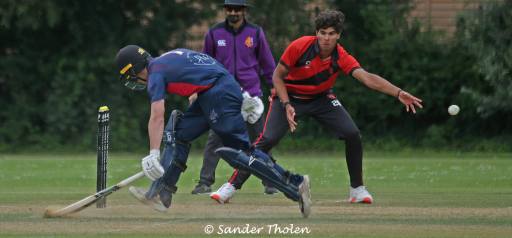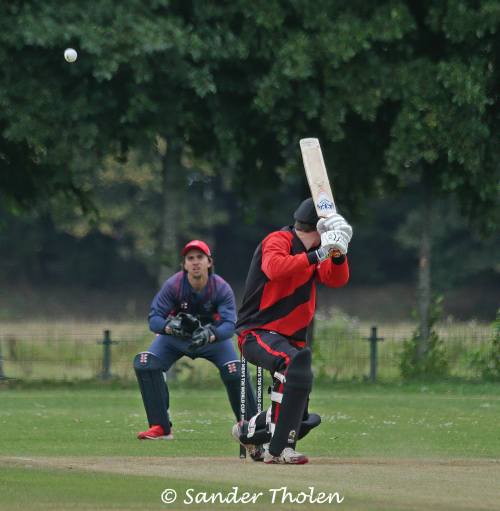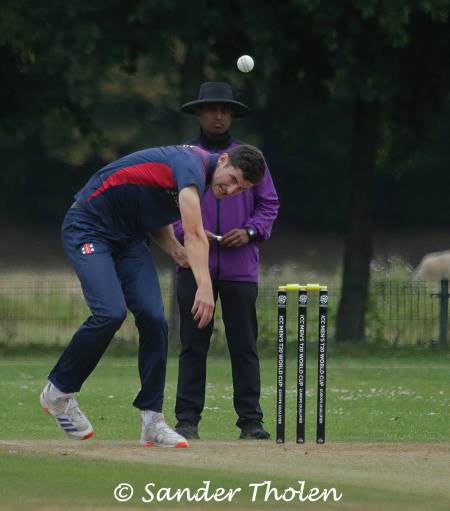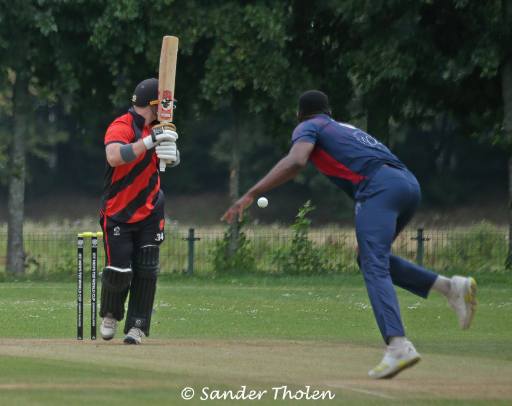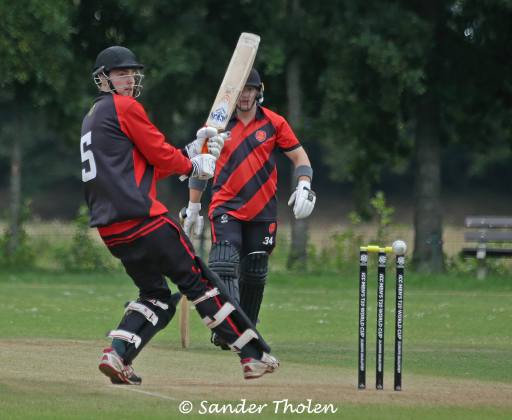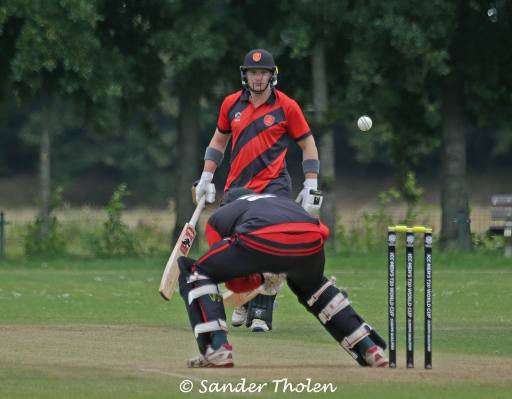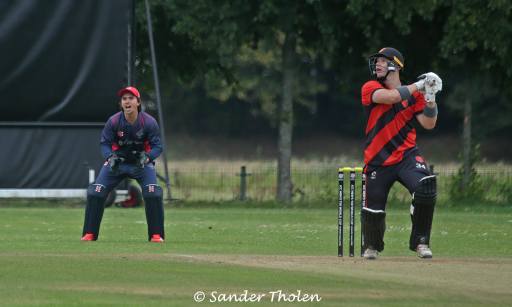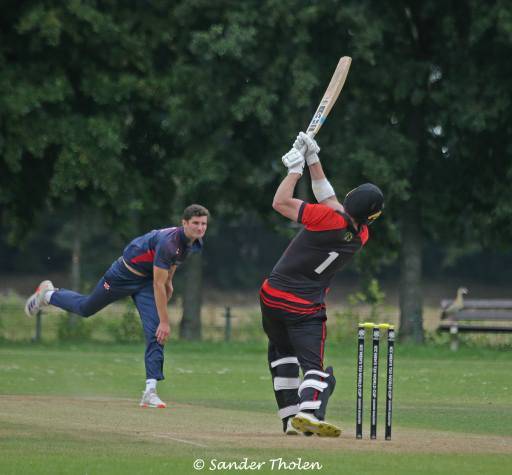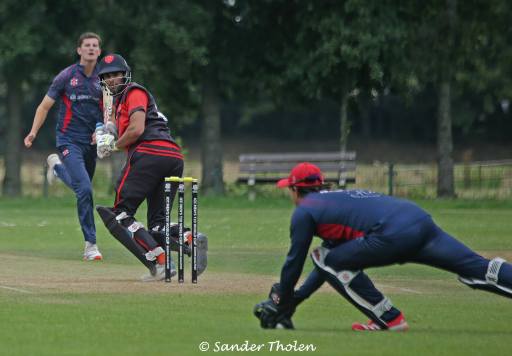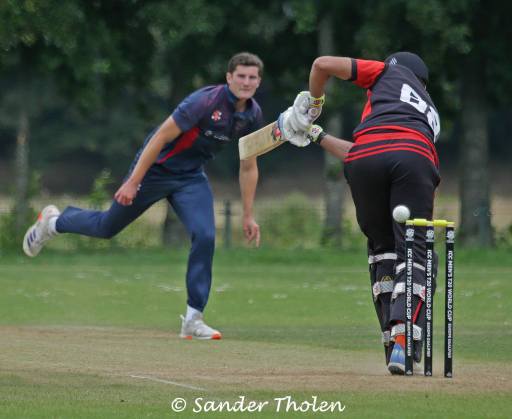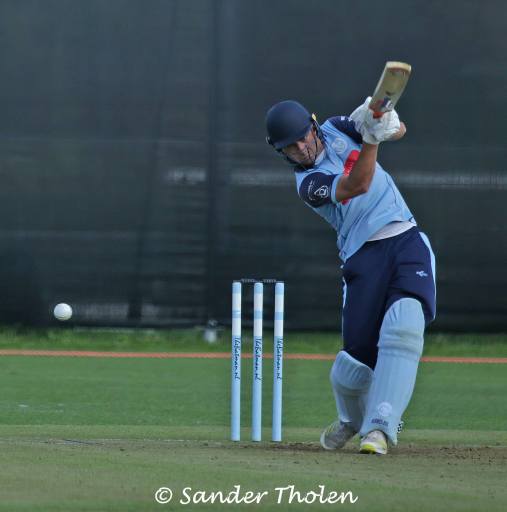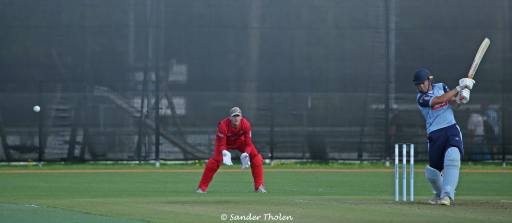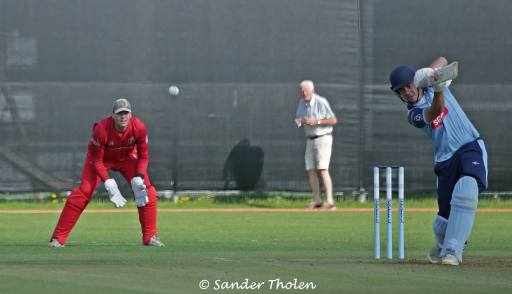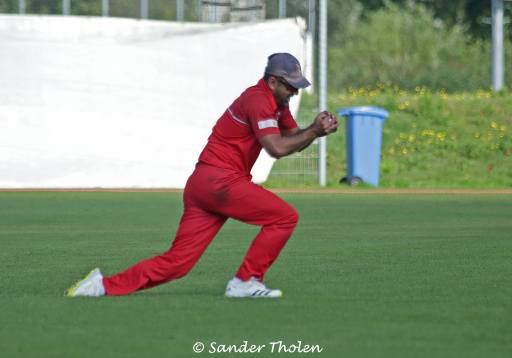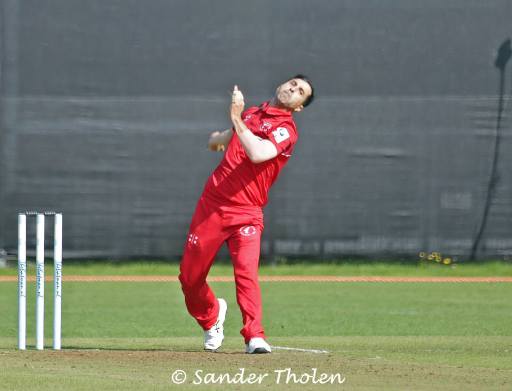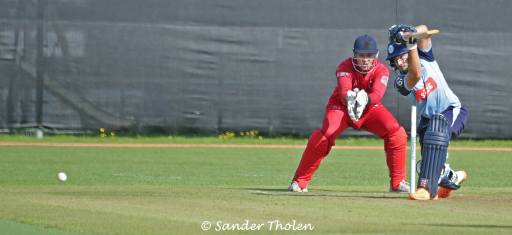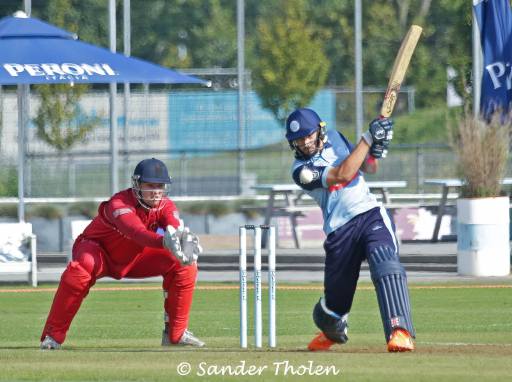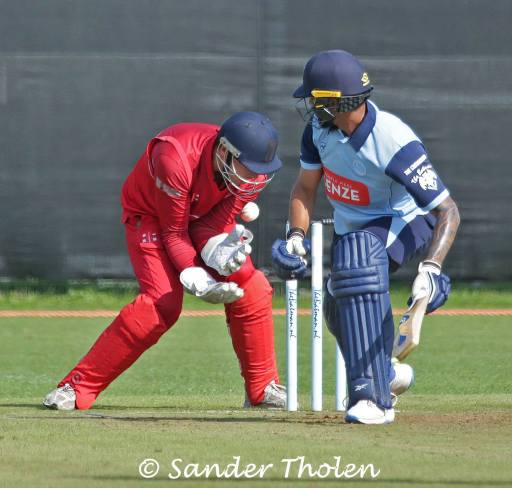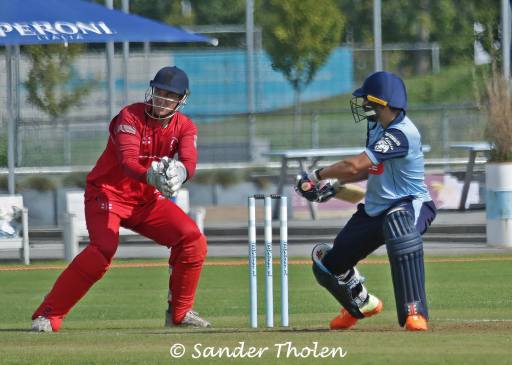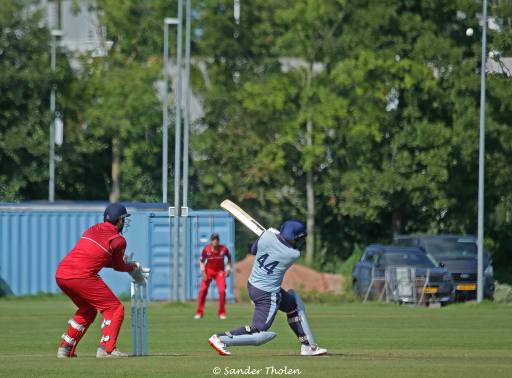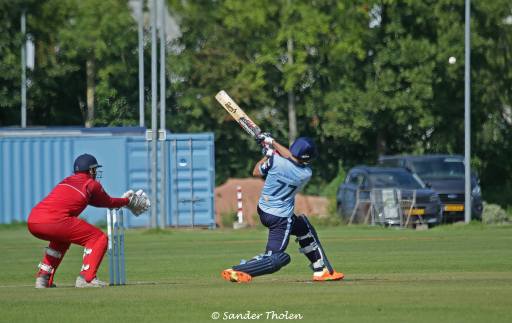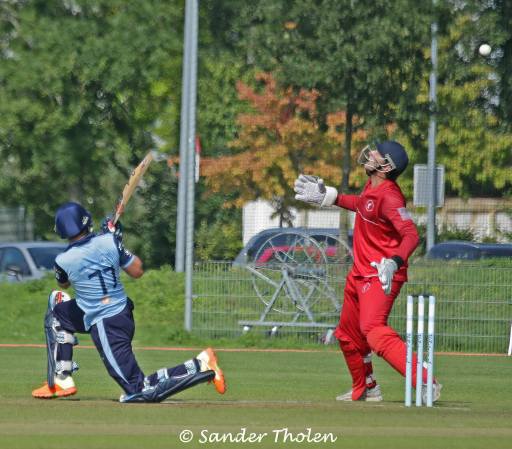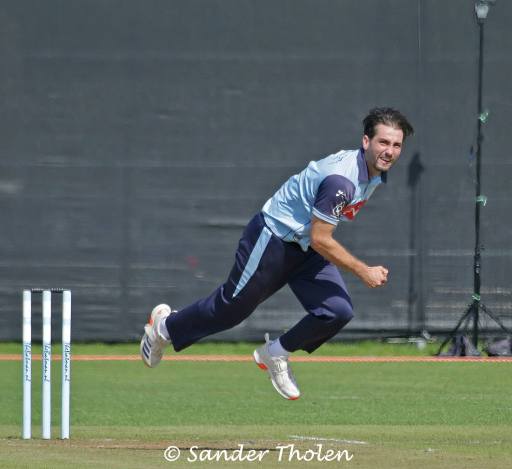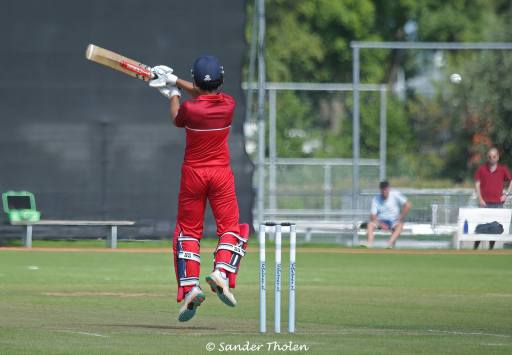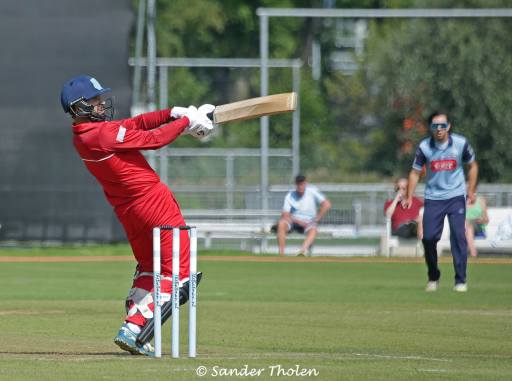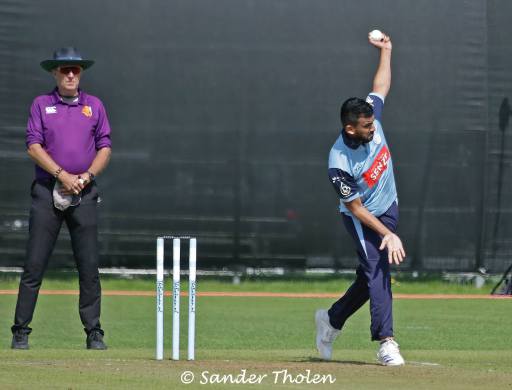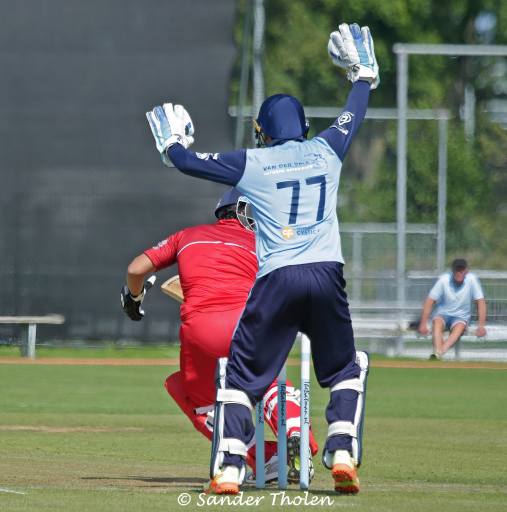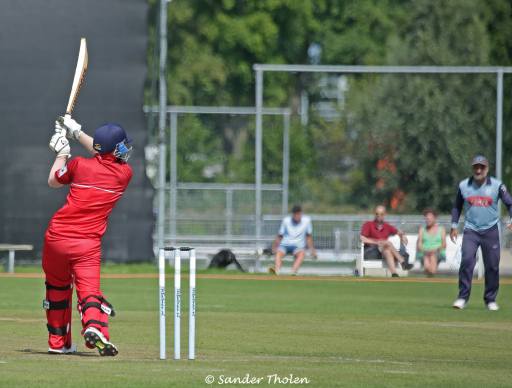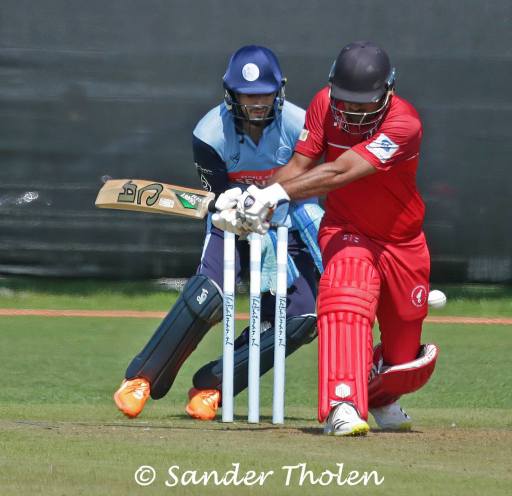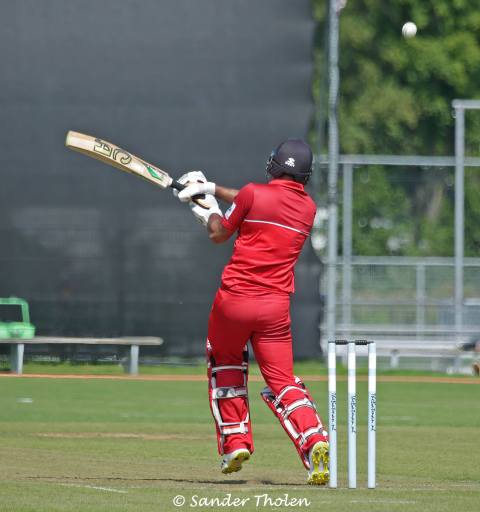
Having leapt from seventh in 2023 to runners-up last year, VRA Amsterdam will be keen to go one better this time round and claim their first championship since 2011.
Last season’s improvement was driven by a sustained campaign of recruitment, both locally and from overseas, contrasting sharply with the youth development policy which had been pursued by Peter Borren during his time in charge in the Amsterdamse Bos.
One of those recruits, left-arm spinner Clayton Floyd, has now returned whence he came, while one of the most promising of the younger brigade, Udit Nashier, has gone to pursue his development with Voorburg; on the other hand, Shreyas Potdar has joined the squad, transferring across Amstelveen from relegated ACC.
The Amsterdammers have also signed three new overseas: New Zealanders Peter Ruffel and Jack Cassidy, and, unusually, Jersey’s Patrick Gouge.
Ruffell, a pace bowler who replaces Elijah Eales in the attack, has played for Auckland Under-19s and hails from Westlake Boys’ High School, which also produced Max O’Dowd and brothers Daniel and Ross ter Braak.
Wellington-born Cassidy, a wicketkeeper-batter who will succeed Demari Prince behind the stumps, plays for the illustrious Cornwall club in Auckland.
22-year-old Gouge has played for several English clubs, and has appeared eight times for Jersey across two formats, his best score 52 in a T20I against Spain in April last year; in addition to his batting, his leg spin will be useful to his new club given the departure of Floyd and Nashier.
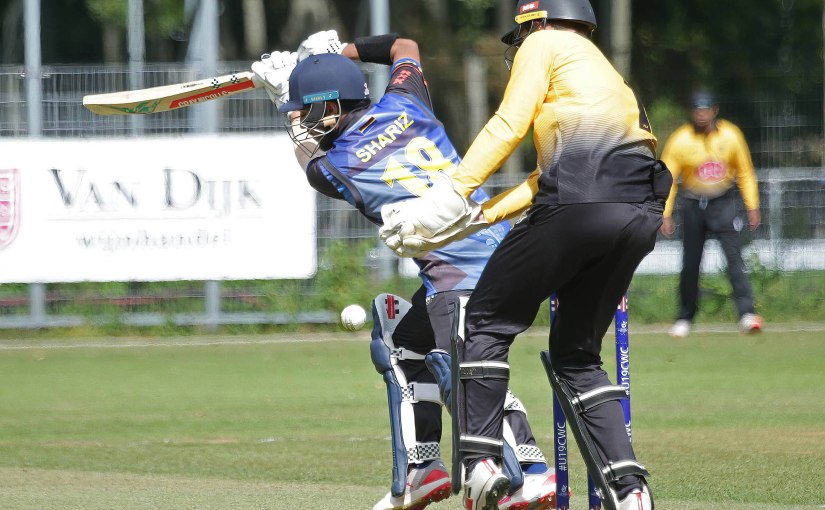
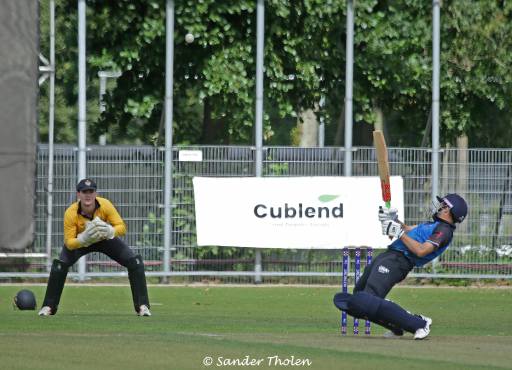
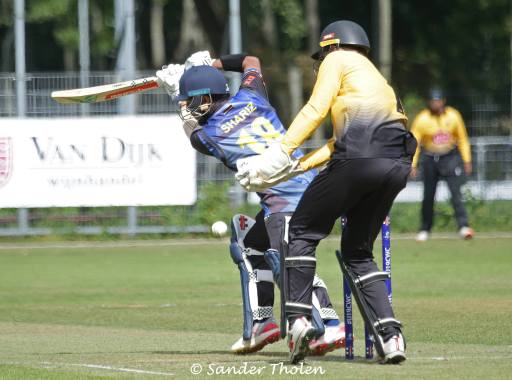
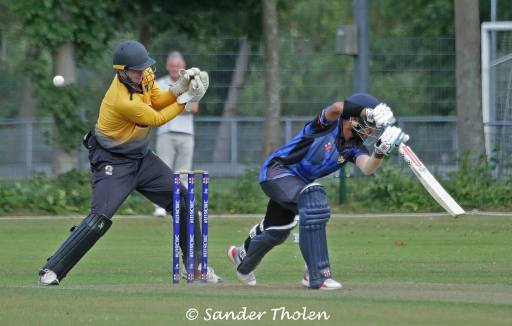
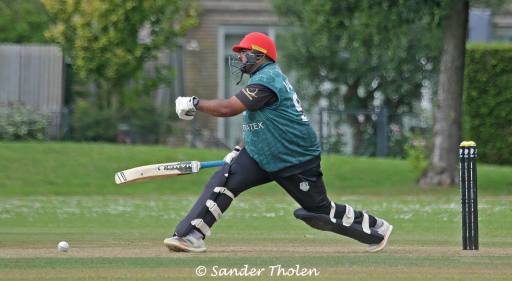
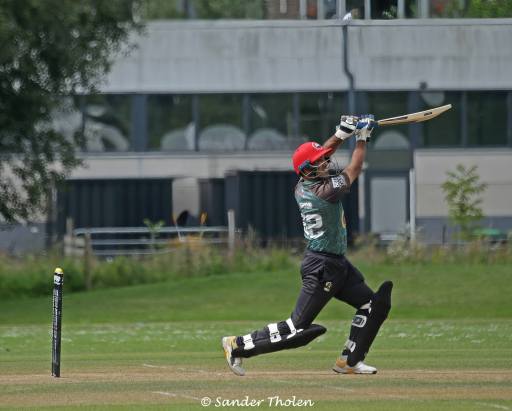
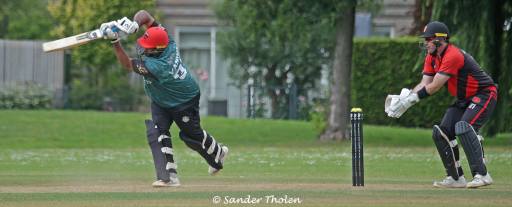
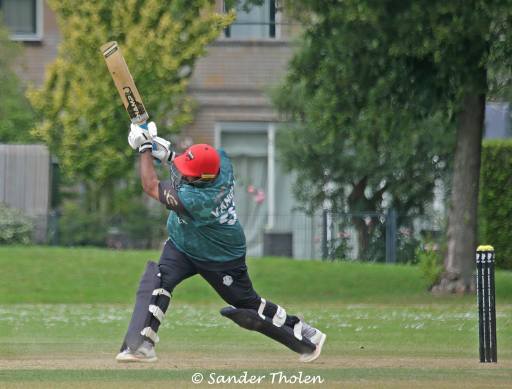
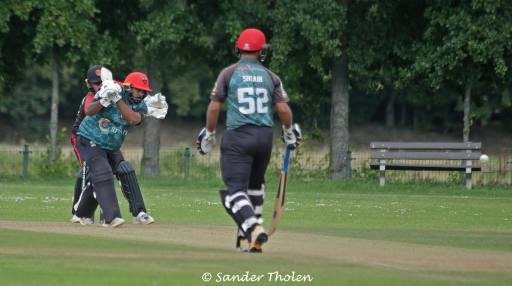
They do, however, still have the services of Dutch international wrong’un specialist Shariz Ahmad, who has also developed into a valuable middle-order batter; he topped VRA’s batting averages last season with 323 runs at 46.14.
The Amsterdam club will also be delighted to see the return of Teja Nidamanuru, who missed all but two matches of the 50-over competition last season through injury. He will resume the captaincy, and will be an important factor when national team duties permit his availability.
The same applies to opener Vikram Singh, who seldom showed his best form with the bat in 2024 after a mercurial season the year before.
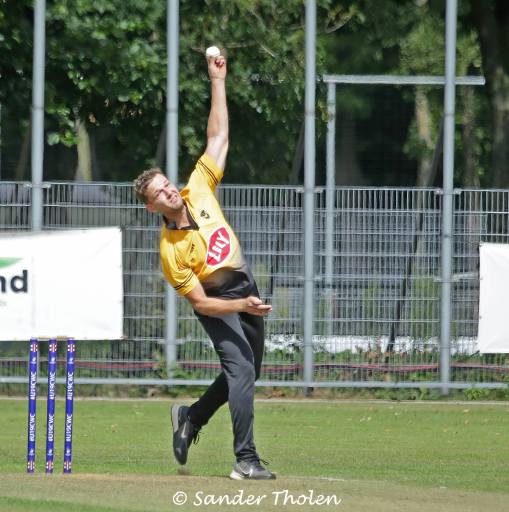
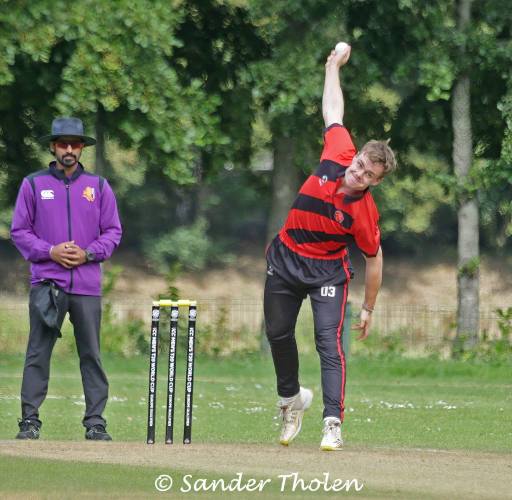
The squad has plenty of bowling options, with left-armers Ben Fletcher and Ashir Abid alongside Ruffell and Sharad Hake, who broke into the Topklasse side towards the end of last season and bowled some useful spells.
Nidamanuru sees an increased role this year for youngsters Ibaad Zaidi and Darsh Abhinay, who have made considerable progress over the winter.
‘We definitely want to go one better this year,’ he says, and we believe we have the squad to do that.’
‘If it ain’t broke, don’t fix it’ seems to have been the watchword for Punjab-Ghausia Rotterdam over the winter, and the defending champions have opted firmly for the mixture as before.
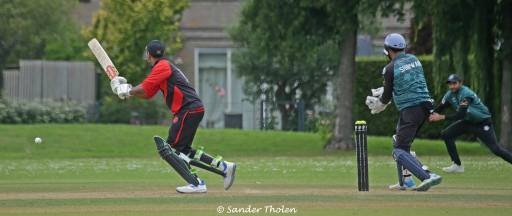
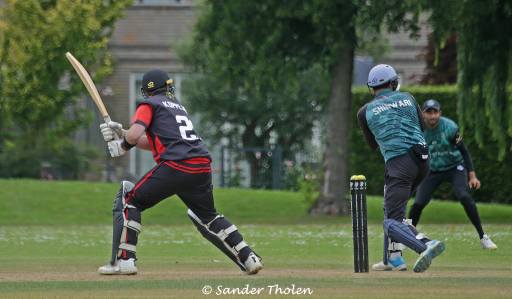
The only real change is the departure of Asad Zulfiqar to Hermes, but he had played much less frequently in the first team following the arrival of Belgian-based wicketkeeper Fawad Shinwari at the Zomercomplex.
Shinwari warmed up with a century against Excelsior in the side’s first game a couple of weeks ago, and adds another dimension to a batting line-up which also includes, among local players, Musa Ahmad and the remaining Zulfiqars, Saqib and skipper Sikander.
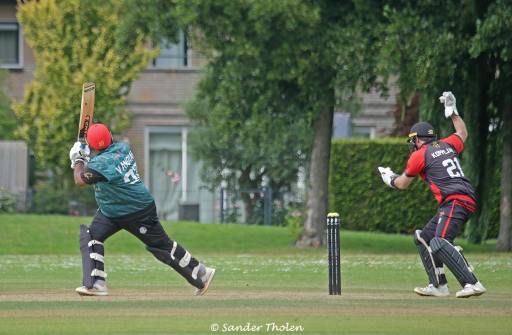
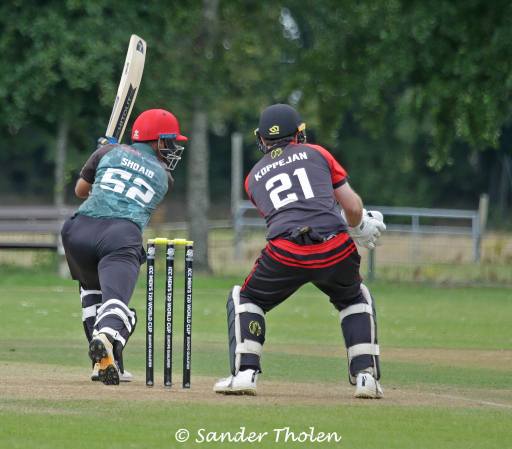
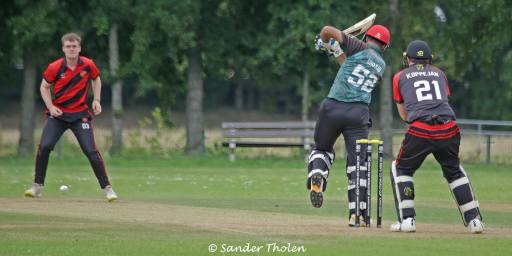
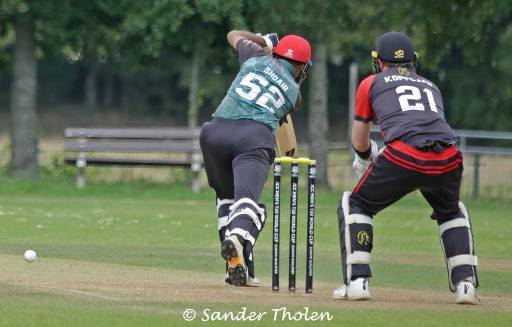
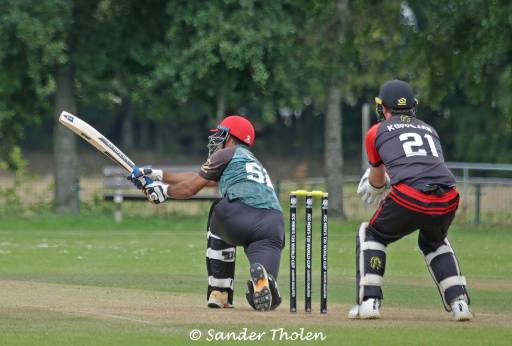
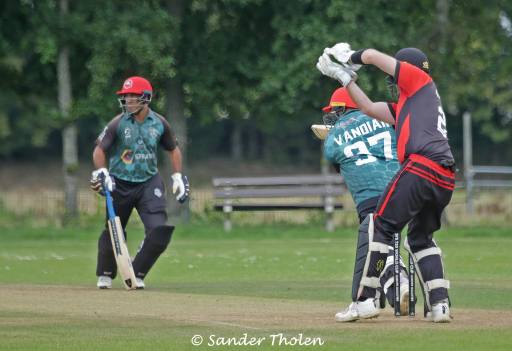
But the real power was provided last year by Musa’s opening partner Shoaib Minhas, the enormously destructive Jonathan Vandiar, and Mohsin Riaz, all of whom are back this season.
Together they make an extremely solid top six, probably the most consistent in the competition, and few sides will relish the trip to the Zomercomplex.
But equally, the well-balanced attack has the knack of strangling opponents’ batting, with evergreen Suleiman Tariq often bowling ten extremely testing overs of seam first up, overseas Ahmad Shafiq providing accurate spin from the other end, and then Kamal Sajjad and Sikander Zulfiqar continuing the pace attack and Saqib Zulfiqar contributing teasing leg spin.
Should they be needed, Mubashar Hussain, Burhan Niaz and Minhas can all chip in with some useful overs, while Khurram Shahzad stepped up towards the end of last season after the departure of Shafiq and played an important part in Punjab’s taking the title.
Musa and the brothers Zulfiqar are, of course, all former internationals, and one or more of them might well receive a call-up during the summer, especially given the likely unavailability of the national side’s county-contracted players.
And if strength in depth should be needed, the Rotterdammers claimed the championship last year without calling on the reserves they acquired through their merger with Ghausia Feijenoord, although Danish Ateeq, Aon Mohammad Cheema and Bilal Saleem, among others, all played significant roles in the Second XI’s successful season in the Eerste Klasse.
All in all, then, Punjab look in good shape to defend their title, and they should be there or thereabouts when the competition reaches its denouement at the start of August.
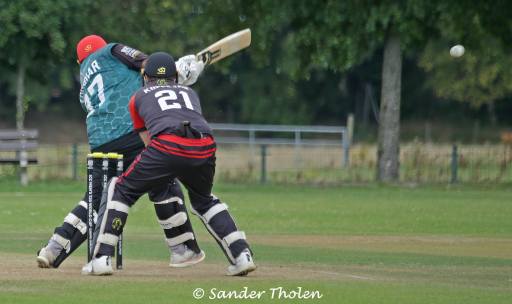
Champions in 2024 and defeated semi-finalists last year, Voorburg will be delighted to welcome back South African Gavin Kaplan, who topped the season’s batting averages with 701 runs at 77.89, hitting four centuries and three fifties in just ten innings.
Given that he also chipped in with 15 wickets at 18.67, he had a strong claim to be the overseas player of the year, and there is no doubt that the Westvliet club missed him sorely in their last five games, when he had returned to South Africa.
He will be joined this year by two Zimbabweans, 30-year-old international Carl Mumba and former Under-19 international Patient Charumbira, the latter making the short journey from HCC.
Mumba, who played 19 times for Zimbabwe across the three formats between 2016 and 2021, will reinforce an already strong Voorburg pace attack, which includes Viv Kingma – whose appearances may well be limited by national team commitments – and the steadily-improving Mees van Vliet, even if fitness problems continue to make Ryan Klein a useful off-spinner rather than one of the competition’s most effective pace bowlers.
Charumbira, too, is a more than useful medium-pacer, as well as a hard-hitting lower order batter.
Another acquisition is 20-year-old Australian Henry Melville, who plays for Melbourne University in the Victorian Premier competition.
A wicketkeeper and useful middle-order bat, Melville will perhaps be competing for the gloves with young Cedric de Lange when skipper Noah Croes is absent on national team duty; gifted behind the stumps, De Lange’s batting showed signs of growing maturity last summer, and with a maiden Topklasse half-century behind him he will be looking to establish his place in the side.
Voorburg have also picked up former national Under-18 captain Udit Nashier, who moves to Westvliet from VRA, where he only bowled six overs of spin in the Topklasse last season and, notably, posted his maiden half-century against the club he is now joining.
The only departure is Stijn de Leede, who has decided to try his luck with Hoofdklasse club Quick Haag this season.
With Michael Levitt (when fit and available), Nehaan Gagani and Nirav Kulkarni in the batting line-up, and Laurens Boissevain and youngsters like Alejo Nota and Tom de Leede also in the squad, Voorburg have enviable strength in depth, which will likely be a crucial factor given the club’s strong representation in the national set-up.
Skipper Croes recognises that restricted availability creates uncertainties, but believes that his squad is strong enough to challenge for a place in the top four, and possibly even head the table in this year’s playoffless competition format.
‘It will be a really interesting year with a format which is very positive for Dutch cricket,’ he says, ‘and the exposure which our younger players gained last year will stand us in good stead.
‘It’s really cool that Gavin Kaplan is coming back, and Henry Melville is a genuine problem-solver, who will adapt well to changing playing surfaces.’
There are big changes at HCC, with none of last year’s three overseas back this year, and an influx of locally-based players to join a new brace of imports.
One of the latter is New Zealander Oliver White, who had the tricky task of replacing Kaplan at Voorburg at the end of last season, but is now back for a full campaign at De Diepput.
Now back with Northern Districts, where he started his career, the left-arm spinning allrounder will be joined at HCC by another member of the Northern Districts squad, South African-born pace bowler Josh Brown.
Brown has broken into ND’s Plunkett Shield side over the Southern Hemisphere summer, and will doubtless slot into the new-ball spot vacated by Adam Leonard.
Equally significant for HCC’s prospects, though, is likely to be the return of Clayton Floyd and Henrico Venter from VRA and HBS respectively: Floyd had a relatively quiet season with VRA last year, but HCC will be hoping that he can return to the sort of form which saw him claim 37 Topklasse wickets in 2021 at a cost of 7.32 apiece.
Venter, who last played for HCC in 2023, has accumulated 60 Topklasse wickets for his three clubs, but had limited opportunities at HBS last year and will be looking for a more significant role following his return to De Diepput.
Other arrivals include youngsters Mark Wolfe and Dinand van Hommel, transferring from ACC and Hermes-DVS respectively, and South African Jayden Peskin, who was Western Province CC’s Most Improved Player for the 2023/24 season.
These seven join the club’s established players, again led by Boris Gorlee, who like Tonny Staal enjoyed only intermittent success last year. Both will be looking to recover something of the form which took them into the Dutch national side a couple of years ago, and which contributed significantly to the side’s Topklasse championship run in 2023.
The same applies to the middle-order contribution with the bat by allrounder Hidde Overdijk, although he remains a very effective member of the pace attack, having claimed 15 wickets last year at 15.88.
Among the younger brigade, Teun Kloppenburg, after a very productive introduction to the top flight in which he hit three successive half-centuries, had a poor run towards the end of last season and will be looking to get back into his best form, and Shirsak Banerjee will also hope to consolidate his place in the top order.
Seamer Teun Leijer’s 17 wickets in his first season at De Diepput was a very promising start, and he will again form part of a traditionally-strong HCC seam attack, alongside Brown, Overdijk and Daniel Crowley, the leading wicket-taker last year with 22 at 25.27.
Newly promoted last season, Hermes-DVS Schiedam could be thoroughly satisfied with their position in the top six, and will be looking to consolidate that achievement in the new campaign.
They will be aided in that endeavour by the acquisition of wicketkeeper-batter Asad Zulfiqar from Punjab-Ghausia – thus splitting up the triplets for the first time since they made their debut for ACC at the age of 15 back in 2012 – and seamer Sahil Kothari, back after a season with ACC.
The arrival of Zulfiqar at Sportpark Harga might mean relatively few games this season for 50-year-old Nick Statham, who kept wicket regularly last year and who needs just three more matches to become the second player to post 500 in the top flight – only René Schoonheim, with 583, has played more.
Kothari, who claimed 18 wickets last year in ACC’s unsuccessful battle to stay up, joins a seam attack which also includes skipper Sebastiaan Braat, brothers Olivier and Ralph Elenbaas, and Niels Woermeijer
Of last year’s overseas, CP Klijnhans will not be returning, but Ashley Ostling is back to resume his prolific opening partnership with Spanish international Daniel Doyle Calle.
Ostling’s 526 runs last season at 43.83 was a big factor in the side’s success, while Doyle’s strike rate of 121.43 put him at the top of the table of quick-scoring batters.
National team commitments will presumably again restrict the appearances of Aryan Dutt, who only played four 50-over matches for Hermes last season, but the spin department will be strengthened by the advent of 24-year-old leg-spinner and Belgian international Dewald Dumon, who played ten T20Is for Belgium last year.
Dumon had a successful season with Eerste Klasse (third-division) club Hercules Utrecht in 2023, claiming 34 wickets at an average of 17.00, and he could form a useful partnership with Dutt when they are both available.
Others who will be vying for a place in the side include another Belgian-based player in Abdul Jabar Jabarkhail, joined this year by leg-spinner Hikmat Jabarkhail, youngsters Sam van Giezen and Rinck van Dam, both of whom made a couple of appearances last year, and such seasonedcampaigners as Zaffar Chaudhary and Roy Numair.
Captain Braat is optimistic about the new campaign: ‘Having gained sixth place in our first year back,’ he says, ‘we’ll be looking for a top-four place this time, although we realise that other clubs have been building their squads over the winter as well.
‘It will be a tough competition, but we have a broad choice of players and we are certainly hoping to build on last year’s achievements.’
HBS Craeyenhout, too, can look back on a relatively successful 2024, but like Hermes will doubtless be conscious of this season’s expansion of the relegation zone.
Tayo Walbrugh, who often skippered the side last year in the absence of Wesley Barresi, takes over the captaincy on a regular basis, and be supported by a strong contingent of fellow South Africans on and off the field.
Lehan Botha returns after making a valuable contribution last season, and will be joined by countrymen Jayden Rossouw and Sellin de Beer, the latter a late replacement for the injured Ruan Terblanche.
Rossouw is a tall off-spinner who has played for both Loughborough University and the Ashby Hastings club in Leicestershire, while de Beer, a graduate of Mpumalanga’s cricket academy, is a young allrounder.
But perhaps the most striking feature of the Crows’ team list is the presence of both Heino Kuhn and Roelof van der Merwe, who bring enormous coaching experience, not to mention quite a bit of the on-field variety to their new roles.
Kuhn, who played four Tests and seven T20Is for South Africa, averaged 56.34 with the bat in four seasons with ACC between 2011 and 2023, and although at 41 he may not appear regularly in the Topklasse side, his presence behind the scenes will be invaluable, not least for promising young wicketkeeper Martijn Scholte and his rival for the gloves, Lucas del Bianco.
And the same is true of Van der Merwe, a few months younger than Kuhn, whose international career with the Proteas extended to 13 ODIs and the same number of T20Is, followed by 18 ODIs and 47 T20Is for the Netherlands as well as very successful stints with Somerset and a dozen T20 franchise teams around the world.
Famously competitive, he has had a hand in several of the Dutch men’s most significant victories, and he is likely to be a powerful force at Craeyenhout.
The attack will again be spearheaded by Botha and, subject to national team commitments, Kyle Klein, whose outstanding start to his international career may well make him one of the first names on Dutch coach Ryan Cook’s team-list.
They will be backed up by De Beer, Benno Boddendijk and, possibly, by Del Bianco, who shed the gloves towards the end of last season and revealed some lively pace and genuine aggression with the ball.
With the spin of Rossouw and Julien de Mey the Crows will have a well-balanced attack, while the top order, with new captain Tayo Walbrugh and his predecessor Wesley Barresi, looks to be good for plenty of runs.
Walbrugh is delighted that he can look for greater involvement of several of Craeyenhout’s old hands, like explosive opener Tobias Visée, seamer Ferdi Vink, and middle-order batter Navjit Singh, all of whom are likely to be available more regularly.
‘The boys are really excited to get going, and it’s an honour and a privilege to have Heino and Roelof as part of the set-up.
We know that they, like Kyle Klein, will have big commitments with the national side, but they will really make a difference.
‘We want to play a quality, positive brand of cricket, and we will need to strike the right balance of youth and experience to make HBS a force, not just this season, but for five or ten years to come.’
No club, perhaps, has undergone as great a transformation over the winter as Sparta 1888, who may find themselves facing an even sharper battle than usual against a return to the Hoofdklasse.
Last year’s leading overseas, Riley Mudford, is not returning, while Will Clarke has moved to Kent club side Bromley and Cameron Fraser, who took 29 wickets last year, has also departed.
Among local players, Faizan Bashir has moved to lower-division club Royal Punjab, and Sandeep Sardha has decided to call it a day.
On the credit side, the Capelle club has signed 30-year-old South African Kyle Klesse and 18-year-old Australian Lukas Boorer; both are wicketkeepers and hence may be vying for Mudford’s place behind the stumps, but Boorer in particular has had a great season with Tuggeranog Valley in the ACT League, including a recent, unbeaten 111 against Western District, and both are likely to command a place in Sparta’s all-too-often fragile top order.
They will also continue to enjoy the services of New Zealander Sam Ferguson, back for a third season, and South African Juandre Scheepers, who topped the side’s run-scoring last year with 419 at 52.38 as well as bowling some useful spells.
Ferguson, moreover, will be joined by elder brother Tim, since both are now living and working in the Netherlands.
Having greatly missed former internationals Mudassar Bukhari and Ahsan Malik from the attack last season, skipper Joost-Martijn Snoep is delighted at the prospect of Malik being more regularly available this time round.
His ability to claim early wickets will add cutting power to a pace attack which also includes Snoep himself, who has now claimed 105 Topklasse wickets at a very respectable 21.92, and the dangerous Khalid Ahmadi, not to mention brothers Max and Tom Hoornweg.
Spin will again be provided by Umar Baker and Manminder Singh, both useful lower-order batters into the bargain.
It is, however, the batting which has often been Sparta’s Achilles heel in the past, and Snoep will be looking for more substantial contributions from Shaquille Martina and young Prithvi Balwantsingh.
Snoep remains optimistic: ‘There’s no team we can’t beat on our day,’ he says, ‘and we’re going to try to win every game.
‘If we play a whole season of good cricket and end up in the bottom two or three or whatever it is now, we’ll be at peace with that.’
VOC Rotterdam similarlycontinue to be something of an enigma, a team which consistently contrives to be less than the sum of its parts.
Compensating for the loss of Edwards and O’Dowd last year by signing four overseas players, they again failed to make it into the top six, although their overseas foursome did top their batting averages and they were handicapped to a degree by a mid-season injury to allrounder Jock McKenzie.
Of the four, only Dutch passport holder Jason van der Meulen is back this season, and he will be looking to build on a promising first season with the club.
He will be joined by 21-year-old New Zealander Scott Janett, who has just broken into the Canterbury side, and the South African Christiaan Oberholzer, who had an outstanding season with Walton on Thames in the Surrey Championship last year.
Both bat right-handed and are leg-break exponents, so the Bloodhounds will be looking to their local talent to supply an effective seam attack.
They will hope for further progress from Aaditt Jain, still only 17, and Roman Harhangi, both of whom did enough last year to suggest that they are genuine prospects, Harhangi’s 5-33 against Sparta one of the side’s best performances of the season.
The two youngsters were well backed up by the veteran Jelte Schoonheim, who has the knack of breaking partnerships as well as playing useful knocks in the lower middle order, while spin is again provided by Aadditt Jain’s elder brother Arnav, just back from captaining the European Under-23 side at Lord’s, Asief Hoseinbaks, last season’s leading wicket-taker for the Bloodhounds, and Ramdas Upadhyaya.
But with Janett and Oberholzer both purveying their leg-spin, skipper Tim de Kok will not be short of options once the shine has gone off the ball.
As with Sparta, though, the real need is for more consistency from the locally-based batters, and De Kok, who had a very disappointing season by his standards, will be looking to raise his own game as well as hoping for more regular contributions from opener Francois Fourie.
Coach Pierce Fletcher, joined this year by former international Stephan Myburgh, also has a cohort of other players he can draw on, including Mussayab Jamil, who showed some promise in his limited opportunities last season, Rohan Malik, and back-up opener Pieter Recordon.
There is no question that if they can put it all together VOC have the potential to move well clear of those two or three relegation spots.
Back in the Topklasse after a two-year absence, Kampong Utrecht will be keen to ensure that their stay in the top flight lasts longer this time than their single, Covid-related season in 2022.
Since then, of course, they have acquired the services of internationals Scott Edwards and Max O’Dowd, and if their commitments with the national side are likely to mean that their appearances for Kampong are limited, they will provide plenty of star quality when they do turn out for their club.
The Utrecht side will also have the benefit of the allround skills of Lorenzo Ingram, who has ended his 11-year, 171-match relationship with Excelsior ’20 Schiedam, in which he contributed 5912 Topklasse runs at 44.79 and claimed 221 wickets at 18.21.
Few overseas players have given such long service so profitably, and he is likely to make a significant contribution to Kampong’s drive to stay up; with two automatic relegation spots this year thanks to the KNCB’s reorganisation of the competitions and the side finishing eighth facing a play-off against the Hoofdklasse champions, the safety of a mid-table position will be every club’s first ambition.
The Maarschalkerweerd club will also welcome Western Australian Lane Berry, who had a very successful season with VOC Rotterdam in 2023, when Edwards and O’Dowd were his team-mates, and Kampong will be hoping he can replicate the form which earned him 674 runs at 51.85 for the Bloodhounds.
Also coming from Australia is 25-year-old allrounder Lachlan Bangs, whose left-arm pace will add some fizz to an attack which includes captain Alex Roy, last year’s leading wicket-taker Shashank Kumar, Kirtan Nana, Saurabh Zalpuri and youngster Gert Swanepoel.
Another important contribution to their batting, alongside those of Berry and Ingram, will likely come from South African-born opener Damien van den Berg, whose 566 runs at 35.38 last season made a significant contribution to their Hoofdklasse title and earned him call-ups for the Pro Series and the Dutch A side.
He and O’Dowd could form a strong opening partnership, with wicketkeeper Ratha Alphonse, who returned from HCC last season and also played a significant part in the side’s promotion, a potential stand-in when O’Dowd is on international duty.
With Pierre Jacod and the improving Tushar Sharma providing spin options the core squad looks more than strong enough to challenge for that mid-table spot, and in a season in which reserve capacity is likely to be a crucial factor Kampong have enough talent and experience to go into the campaign with a fair degree of confidence.
With the loss of not only Ingram but also of Victor Lubbers, who returns to Salland after one season at Thurlede, Excelsior ’20 have made two of the most attractive signings of the winter in the person of former South African Test opener Raynard van Tonder and the 25-year-old Belgo-Zimbabwean Antum Naqvi.
Van Tonder, now 26, has had a great first-class season with North West, hitting a century and three fifties in eight innings, and he should bring greater solidity to an Excelsior line-up which showed a disturbing tendency to crumble last year.
The only issue facing the Schiedam club is whether his availability will be affected by his possible selection for South Africa A.
Few players have a more intriguing CV than Naqvi, who was born in Brussels but who grew up in Australia before moving to Zimbabwe, where he made his first-class debut for the Mid West Rhinos in January 2023, scoring centuries in his first two first-class innings.
A right-handed bat and off-break bowler, his allround skills should be invaluable, and Excelsior will be hoping that he proves an outstanding replacement for the departed Ingram.
The attack will again be spearheaded by Australian James Ralston, whose 38 wickets at 14.84 last season was a crucial factor in the side’s avoidance of relegation; not only did his ability to rip the top off opposing batting line-ups give Excelsior a vital edge, but his new-ball partnership with the rapidly-improving Jens Blankestein made a real contribution to the Schiedam club’s future.
Excelsior, too, have joined the movement towards a larger cohort of overseas players, a fourth member of their squad being the South Australian Sam Rahaley.
Part of the Kensington side which has just won the state’s first-grade competition, Rahaley will slot into the middle order at Thurlede, while his off-breaks will provide another option once Ralston, Blankestein and left-armer Niels Etman have exploited the new ball.
The locally-produced contingent is not greatly different from that which brought the trophy to Thurlede three times in four seasons between 2016 and 2019, but it’s fair to say that that youthful cohort has not lived up to the promise its showed back then, and they have greatly missed the leadership of Tom Heggelman in the middle.
The news, therefore, that he will be more involved in coaching this year will be welcomed on Excelsior’s side of Schiedam.
With a plentiful supply of Kroesens – batter and leg-spinners Joost and Luuk, and pace man Gijs – and Van Troosts – pace bowler and useful lower middle-order batter Rens, and emerging batter Stan – there will be some strong competition for a spot in the first-choice eleven.
Skipper Roel Verhagen and his fellow-opener Tim Etman had modest seasons last year, but with less pressure on them given the rejigged top order they will be looking to reassert themselves this time round, and with likely few disruptions from international call-ups Excelsior should have a decent crack at one of those coveted mid-table positions.
Following feedback on its plans from the KNCB Special General Meeting on 13 March, the Board has made a number of adjustments to the reorganisation of the domestic competitions.
The destination – Toplasse and Hoofdklasse divisions of eight teams, two Eerste Klasse divisions, each of eight teams – remains the same, but the path towards it has been changed in order to make it more palatable to those who feel unduly threatened by the possibility of relegation.
The most immediate is that whichever Topklasse team finishes eighth this season, a position which under the original proposal would have led to automatic relegation, will now have a partial reprieve in the form of a play-off against the Hoofdklasse champions.
This is a measure which has been used in the past when there have been reductions in the number of teams in a division, and seems a logical way of ensuring that the eight best-qualified teams take part in the Topklasse in 2026.
A more substantial change, although it will only take effect next year, is that in 2026, for one season only, there will be two eight-team sections in the Hoofdklasse.
The effect of this will be, For One Year Only, to bring four teams up from the Eerste Klasse, giving a total of 16 teams a chance to claim one of the eight places in the 2027 Hoofdklasse.
The other eight will drop down into a two-section Eerste Klasse, settling the total number of teams in the top three divisions at 32, compared with the 30 which have that status at present.
It should be noted that this process will play out independently in the 50-over and T20 competitions, which might well mean that by 2027 there will be greater differentiation between the rankings in the two formats: a strong T20 side could in theory reach the Topklasse in that format while the same club’s 50-over side was still playing in the Eerste Klasse.
Already, after just two seasons of independent promotion and relegation, eight teams from the top three divisions will be playing at different levels in the two formats, and this can only be expected to develop further over the coming years.
The beleaguered KNCB board headed by Guido Landheer will face further tribulation tomorrow, as they look to face down opposition to the overhaul of the domestic one-day competition structure that was announced in January. A number of clubs from various divisions, including Sparta 1888, VRA, Dosti, Hercules, Rood en Wit, Salland CC, VVV, Quick 1888 and Qui Vive among others, moved last month to request a Bijzondere Algemene Ledenvergadering (Special General Members Meeting) to reconsider the proposed changes, and that meeting has been duly scheduled for tomorrow (March 13th).
Perhaps unsurprisingly Hoofdklasse clubs comprise a substantial proportion of the remonstrants, more than half the current competitors in the second division adding their voices to the call. Under the current proposal the Hoofdklasse will see fully half of the current field relegated at the end of the coming season, with five teams dropping down to an enlarged Eersteklasse for 2026, to make room for three relegated Topklasse teams and the promotion of the 2025 Eersteklasse champions.
Speaking on behalf of the clubs appellant, former national team captain and sometime KNCB vice chair Steven Lubbers stressed that the appeal for a BALV was a move of last resort, but the group saw no other option. Lubbers, who has long advocated a broader pyramid with expedited promotion especially at the lower end of the ladder, told TKcricket that the remonstrant clubs felt there were significant deficiencies both in the process and that led to the new structure revealed in January, as well as the outcome.
Lubbers argues that the relegation of half of the Hoofdklasse would leave those clubs in an appreciably weaker position vis-a-vis local councils and rival sports when it came to Topsport subsidies and competition for facilities. Lubbers also echoed an observation which several commentators have raised regarding the board’s proposed promotion/relegation scheme for 2025/26, namely that the absence of any relegation playoffs means that sides in lower divisions enjoy a perverse advantage in jockeying for position for 2026. A team now in the Eersteklasse, for example, need only win that division (effectively placing 21st on the ladder) to win promotion to the Hoofklasse for 2026 while a team starting in the Hoofdklasse would have to place in the top five (essentially 15th in the full rankings) to retain their place.
Lubbers had previously championed and alternate plan which had come to be known as Voorstel Salland, which envisioned broadening the pyramid structure substantially all the way up to the Hoofdklasse, which under the Salland plan would be split into two pools and expanded to 16 or more teams, while lower divisions would also be expanded and slip into more pools – a format which Lubbers argues would both alleviate competitive pressure on clubs while allowing for expedited promotion.
Former VRA chair John Wories, who has played a leading role in the opposition to the new structure, observed in a memo circulated to clubs early last month that “expanded relegation will increase the pressure on clubs for extra reinforcement with foreign players/coaches” further crowding out homegrown youth talent on the field while limiting other expenditure “if only because financial resources would be used for [overseas recruitment] rather than for improving facilities (including grass wickets), strengthening participation and developing (young) players.” Indeed while early indications suggest that we may be on course for record spending on overseas talent for the coming season, at least in the Hoofdklasse. That in and of itself may however generate resistance to the remonstrants’ proposals from clubs that have already invested heavily ahead of what is currently slated to be a cut-throat season.
The remonstrating clubs are arguing for a postponement of any substantial restructure, either maintaining the same format as 2024 for the coming season or, in deference to the difficulty of overhauling the calendar at this late stage, at least postponing the envisaged transition to the planned 2026 structure and the numerous relegations that it would entail. Pointing to perceived deficiencies in the consultative process followed by the KNCB, which saw a nine-member working group headed by Reinout Scholte and Adriaan van der Dries arrive at the current restructure plan, the dissenting clubs propose a new committee be set up to consider the question.
Scholte, KNCB board member with the High Performance portfolio who has acted as point-man for the board on the issue, stepped down last month citing in part the increasingly fractious nature of the controversy, but the board shows little sign of throwing in the towel. Regretting the departure of Scholte, KNCB chair Guido Lanheer said in a previous statement, “The reasons for his departure give rise to thought and reflection on the way we deal with each other within cricket Netherlands. Differences of opinion will always exist, but the way we currently deal with each other and with these differences of opinion does not lead to the best result for cricket Netherlands in our view.”
Speaking to TKcricket, Landheer defended the process that produced the restructure plan, which included wide consultation with clubs across various divisions. While conceding that it was regrettable that the subject could not be discussed at the December ALV (which was busy with other matters), an extra virtual meeting was scheduled in January to address the issue specifically. “There were 45 clubs represented at the January (8th) meeting, and all clubs were afforded the chance to comment up until January 24th.” Landheer said, observing that neither Salland nor VRA did so at the time.
Referring to the alternate proposals first tabled two years ago, Landheer insists they were not dismissed out of hand. “The so-called Voorstel Salland was considered in depth, and several aspects of it have been incorporated into the new structure.” Landheer told Tkcricket, “a broader pyramid, and regionalisation at lower levels, for example, the latter especially has been made easier by the new scheduling software.” Landheer explained. “We’ve sought to give more attention to T20 and recreational cricket, while providing for more predictable and stable scheduling compared to the previous system.” The board is not entirely blind to some of the problems the upheaval expected at the end of the 2025 season may throw up, and aspects of the “Big Bang” transformation are less than ideal as Landheer concedes. “Transition is difficult but it is a necessary investment in the future.”
Following several bruising meetings focusing on the KNCB’s now well-documented financial woes, the board may even be relieved to be back on the familiar ground of wrangling about domestic structures, and it has been noted that the ALV’s role in questions of domestic structure is, constitutionally speaking, purely advisory. Nonetheless it is doubtful that the board will be afforded an easy time of it tomorrow, though with the first ball of the season now just weeks away it is late in the day to be changing course…
The KNCB today confirmed a substantial overhaul of the Dutch domestic one-day competition structure, with both the Topklasse and Hoofdklasse to return to an eight-team divisional league format from 2026 onwards.
The coming 2025 edition will dispense with the play-off system, reverting to a simple double round robin format, with the ten teams playing each other home and away. At the end of the season the bottom three Topklasse teams will be relegated, with the Hoofdklasse champions promoted to join the remaining seven for an 8-team competition in 2026. The crowded calendar precludes the possibility of a finals day or relegation play-off, meaning both the title and promotion/relegation will be directly determined by the final standings on the table. Similarly, the crowded schedule leaves no room for replays or reserve days during the competition.
The Hoofdklasse will likewise be returning to an 8-team format from 2026, with the consequence that no less than five teams will face relegation to the Eersteklasse at the end of the 2025 season, while the 2025 Eersteklasse champions will join the three relegated Topklasse sides and the four surviving Hoofdklasse sides for the 2026 Hoofdklasse season. As with the top division, there is no provision for a relegation play-off.
Conversely the Eersteklasse will be expanding from the current 10-team format to a two-pool 16-team leaguev (similar to the current Overgangsklasse) from 2026 onwards. The champion of the 2025 edition, also played as a straight ten-team double round robin, will win promotion to the 2026 Hoofdklasse, while the bottom two sides will be relegated to the Overgangsklasse, the latter to be renamed “Tweedeklasse”. A similar numerical naming scheme is to be applied to lower leagues, which remain otherwise unchanged.
The one-day season for 2025 is set to begin on the 26th of April and run until the 6th of August, with matches again played on Saturdays until the switch to Sundays in mid-July. The T20 competitons look broadly similar in format to last season, albeit switch to the other end of the Summer, commencing on August 13th and culminating in a finals day a month later.
In May I posted an article about the delicate future of our beloved Game in The Netherlands. The vast majority of the feedback I received was positive. In this polarised digital world and a quite tribal Dutch cricket community, that is a remarkable thing. It stands to reason that there are several ways to solve the issue I tried to address. The most important thing is that we acknowledge the problem and try to formulate a strategy to face it.
You might think that I, as a lawyer, would propose strict rules and regulations. That is only partly true. Sure, I salivate by the thought of drafting such documents, but rules are more effective if they are broadly supported, are seen as ‘obvious’ and, finally, reflect an internal moral belief. The reason one does not steal is -hopefully- not that it is illegal, but that is ‘not right’. It goes against your moral fabric and would make your mother very very disappointed in you.
Breaking the trend
A rough estimate by ‘those-in-the-know’ is that we collectively, as clubs, might have spent as much as half a million Euro’s this year on players. If true, and I am afraid it might be, that is a shocking amount of money. At best one would hope that this money was spent on a lot of junior coaching hours…. if there were any juniors to coach.
I would suggest that it is time to start the (long) process towards addressing our unhealthy habits that have crept into our top leagues. We must stop spending resources on things that not evidently ensure the long term survival of the Game as a whole. A club will truly survive a relegation. Trust me, I have been there. Healthy clubs that invest in their home-grown stock and the health of their own club organisation and culture, will survive and return. Take VCC as an example, they went through a major lean patch some years ago but now they were (again) in contention for a championship. Good on them!
Only if the club does not have a strong foundation, the players might move on. That is the risk of those clubs who are ‘a bank account with a first team’. Mercenaries follow the money.
If we are to survive, a collective action is needed to stop ‘stupid money’ and encourage ‘smart money’. In my very humble opinion, a points based system as suggested by me in May, would stimulate that and see to it that clubs are forced to make the right choices. We must break the arms-race.
Let’s have a look at our semi-finalists in the Topklasse of this year: Punjab Ghausia (Punjab), VRA, VCC and HCC.
When I speak of local players, I mean those players that are either home-grown players or are players that are here for other reasons than cricket. This last group are those that moved here for work, study or other non-cricket related reasons like marriage/relationships/family reunion or refugee status. Home-grown players are players that learned their cricket here. Overseas players are players whose main reason for being in The Netherlands is to play cricket.
In this piece I will add the distinction between home-grown players by the club itself and home-grown players that came from other clubs. Why keep things simple?
Semi-finalists
On 1 September 2024 I partly watched VCC 1 beat my beloved HCC 1. No complaints there: they were the better side, especially on the day. If one breaks down the makeup of the teams, HCC fielded 3 home-grown HCC players, 2 home-grown players that moved from other clubs, 3 local players (players who live here but are not home-grown) and 3 overseas players. VCC fielded 4 home-grown VCC players, 3 home-grown players that moved from other clubs, 1 local player and 3 overseas players. The home-grown players on a whole were quite influential, so cheers all round!
Punjab, a powerhouse in the last years, was in the Grand Final. Again, good on them. VRA had a sniff at victory but fell just short. A breakdown of these teams is as follows. Punjab fielded 0 home-grown Punjab players, 4 home-grown players that moved from other clubs, 3 local players (if Belgium is deemed local / plus a player I could not place in the other columns) and 4 overseas players. VRA fielded 3 home-grown VRA players, two home-grown players that moved from other clubs, 3 local players and 3 overseas players.
The differences between the clubs are not extreme.
The main reason Punjab does not have Punjab home-grown players is their recent rapid rise to prominence. Their efforts in junior cricket will reap benefits in due time. VCC fielded 4 VCC home-grown players on Sunday and 3 home grown players that came over from other clubs (two HCC raised and one ACC). 7 home grown players in total. Well done. Fair play!
Breakdown of relative influence of types of players in last Sunday’s games:
This is only one game but it should be interesting to make a broad analysis over the whole season. Certain retired CBS statisticians might be interested to have a go at this…
Second teams
In the Eerste Klasse VRA 2 beat Punjab 2 in the Grand Final. Punjab 2 beat HCC 2 in the semifinal. The fact that all-but-one player in HCC 2 are HCC home-grown players, delights me. They beat Qui Vive 1 in the elimination final and are clearly a tight group that have a boat load of fun together. That is what it is all about.
VCC 2 might have relegated to the Eerste Klasse, but that might only be healthy for the team as a whole so that they can rebuild and play at a level that might be more fun for younger players. I would say that VCC and HCC, for now, have a bright future. The strength of VRA 2 and Punjab 2 is very promising as well, albeit that the latter team contains not a lot of home-grown players and even overseas players.
The point that I am trying to make here is that the second teams of all the semi-finalists in the Topklasse are vibrant as well. That shows a broader basis of playing talent than just the flagship team. These second teams are usually not stacked with ringers, albeit that they might have potential first team players that were pushed out by overseas players acquired for the first team. If you would add to that picture the line up of these clubs in the U17 and U15 leagues, these Topklasse semi-finalists are largely healthy clubs. They are not an empty shell.
Points system
field competitive teams with the back up of strong second elevens and talented youth. VCC survived a drain from the Dutch XI and pro’s leaving home by fielding a slew of home-grown players; so did VRA. Again, cheers all around. The four finalists had enough depth in their selection to fill the gaps.
I would say all potential champions this year were clubs with a role to play in the future of our local Game.
If we would be able to reduce the amount (and influence) of overseas players in these (and other) teams, the further development of home-grown players could be stimulated and create a more level playing field for all clubs with good intentions. I am sure that these four clubs would support that idea (as they live in relative luxury). Others might be more reluctant, but it has to be done!
Clubs have limited resources that could and should be used wisely. The club members should demand transparency from their committees regarding the finances surrounding players. Depending on sugar daddies and non-recurring donations (even in kind) is no basis for long term policy. If they suddenly leave, you are done for.
The introduction of a points system results in a reduction of overseas players, this would reduce the need to spend money on everything surrounding overseas players and could free up resources for other, more productive, causes.
I hope that this autumn and winter will provide us with ample time to develop ideas to improve the future of or local Game.
So, that time rolls round again when we at TKcricket nominate our Topklasse Team of the Year. It’s all a bit different this year, since the influx of overseas players recruited by the clubs changed the character of the competition (once again, we’re only concerned here with the 50-over version) to a significant degree.
RL: Whatever the clubs may have done, I think we should confine our choice of overseas players to two, as we have done in the past. There is, of course, a large field to choose from, but for my money the first name on the sheet has to be that of Voorburg’s Gavin Kaplan, who went past fifty no fewer than seven times in just ten innings in compiling his 701 runs, going on to three figures on four of those occasions. Add to that the fact that he proved a useful change bowler, and his selection is a no-brainer. The second overseas is trickier: pace spearheads Jason Ralston (Excelsior) and Cameron Fraser (Sparta) claimed 38 and 29 wickets respectively for teams in the lower reaches of the table. Ralston has a strong claim, but my choice would probably be ACC’s Izhaan Sayed, who not only had the knack of grabbing early wickets but also topped his struggling side’s batting averages.
BdJ: While I do appreciate the high-minded sentiment on the overseas question, I’d be inclined to take a Jeffersonian approach and stylishly swim with the current on this one rather than risk principled petrification. With the influx of overseas showing no signs of slowing, if we stick to our guns here we may struggle to even pick a competitive XI in a few seasons’ time. Close to half the players in the competition already hail from abroad, accounting for more than half the runs and wickets this season, so I say who are we to blow against the wind?
Nowhere is that case more convincing than at the top of the batting card. The majority of clubs went with overseas at the top of the order this season, and of Dutch-produced or Netherlands-qualified players nobody averaged over 30 opening the batting. VCC’s Michael Levitt was the best of a bad bunch with 260 runs at 28.9, a disappointing season by his own standards, followed by HCC’s Tonny Staal with 300 runs at 27.3. If one had to pick an opening pair from among the local players one would probably go for Vikram Singh and Musa Ahmad, though both had more consistent success down the order. Ahmad’s sometime opening partner and near-permanent fixture in Dutch club cricket Shoaib Minhas arguably has a stronger case for his efforts against VRA alone, hitting the match-winning century in the first qualifying semi at the Zomercomplex that secured a home final and two half centuries against the same opposition earlier in the season making sure would be played there in the first place. Jonathan Vandiar also deserves a mention as an occasional opener albeit a committed overseas, and it’s notable that Punjab are the only side with two bats in the 500-club this season. Hermes’ overseas opening combo of Ashley Ostling and Daniel Doyle Calle were the most prolific pairing at the top of the order this season, Ostling the only opener to hit 500 runs from the top of the order during the League Phase.
RL: I can’t argue with m’colleague’s analysis of the problem, but my view is pragmatic as well as ‘high-minded’: if the competition continues on its present course, it will become almost impossible to produce young Dutch players capable of holding their own on the international stage. The clubs were unhappy when the Dutch-produced contingent in the national side withered to one or two, and it’s true that some progress has been made under the two Ryans (Campbell and Cook) to restore the balance. It’s really a topic for a different discussion, but I am personally convinced that the KNCB will need to act to curb the current arms race. That way, madness lies.
Another structural problem, of course, is that some of the leading players were absent for much of the second phase, so averages are probably a better guide to performance than aggregates. I’d certainly want to go with Musa Ahmad (420 at 30.00) as one of the openers, and Singh’s 367 at 40.78 make him a credible partner, even if neither of them had the sort of season they might have wanted.
As for the rest of the top order, if we have Kaplan at three, there are three more places available in the top six, or perhaps four, depending on what we decide about a keeper. Punjab’s Saqib Zulfiqar, for instance, finished seventh in the averages behind six overseas players, and his 326 runs at 46.57 give him a strong claim. He would slot in well at four, while I’d be inclined to include Voorburg’s Noah Croes (466 at 38.83) at five, thus filling the wicketkeeping spot at the same time. That would leave room for two more batters, or batting allrounders (it’s notable that apart from Croes, all the Dutch-qualified players we’ve named so far are more than useful change bowlers). The leading contenders would be Shariz Ahmad (VRA, 331 at 41.38) and Ryan Klein (Voorburg, 356 at 39.56), both of whom have greatly improved their batting and have played crucial innings for their sides.
BdJ: While I’m inclined to agree that Something Must Be Done about the proliferation of overseas players in the league, I still feel our Team of the Year ought to reflect the competition as it is rather than as we’d like it to be. Perhaps as a compromise we could make room for those overseas now permanently based in the Netherlands and intent qualifying for the national side. That would allow us to pick the soon-to-be-Dutch-eligible Tayo Walbrugh, whose 596 runs for HBS at an average of almost 60 make him a strong runner-up to Kaplan in the batting stakes this season. A case might also be made for VRA stand-in skipper Johan Smal, who missed out on the 500 club by just five runs and was indispensable to his side’s making their run to the final despite Teja Nidamanuru’s season-ending injury early in the summer and the regular absences of Singh, Ahmad and Floyd.
Johan Smal
Croes has little competition for the keeper slot, with none of the other glovemen in the league coming close to matching his 466 runs. Nonetheless some honourable mentions can be made, Luke Scully did some fine work in the handful of games he played for VRA 1s this season, averaging 44.3 across 4 innings in the Topklasse as well as playing a crucial role in the second team’s successful promotion campaign in the Eersteklasse. In terms of pure glovemanship, it’s worth noting that Sparta’s Riley Mudford gave up just three byes over the course of the season, even if he wasn’t able to replicate his short-format form with the bat. HCC’s Yash Patel also had a fine season behind the poles, effecting five stumpings and taking 21 catches to top the dismissal tally table.
RL: An hon. ment. also for Fawad Shinwari, whose 27 victims in 14 matches took him to the top of list and helped Punjab to their title. He also raises the thorny question of where Belgian-based players fit into our discussion of the overseas issue.
Whether or not we agree that Shariz and Saqib earn a place as allrounders, both have a strong claim as wrist-spinners, especially the former, whose 21 wickets at 21.52 may have been a smaller tally than last year but came from just 14 matches. Not many slow bowlers feature prominently in the averages, but Mahesh Hans (ACC) and Leon Turmaine (VRA) both averaged a shade over 16, the latter once he’d forced his way back into the first team. Neither, perhaps, has an overwhelming claim, but if we really wanted to include a finger spinner both could be relied upon to produce a decent performance.
BdJ: It has indeed been a remarkably lean summer for the slow-bowlers, with seamers occupying the first eight spots on the wicket-taking table, with Ahmad’s 21 the best tally for a spinner. The indefatigable Lorenzo Ingram was the only finger spinner to break 20 wickets this season, though six of those came in succession running through a hapless Sparta lower order. With two slow bowlers already penciled in on the strength of their batting, I’d be inclined to make room for an extra quick given the weight of wickets this season has heavily favoured them.
On that front it’s hard to look past Jason Ralston’s 38 for Excelsior, whose 14-wicket lead over Cameron and Sayed outweighs the latters’ ability to chip in an average 20-odd runs in my book. Among Dutch and Dutch-qualified seamers the stand-out this season was newcomer Ben Fletcher with 29 wickets at under 15 for VRA, the tall left armer already attracting the attention of national selectors. Hermes’ Ralph Elenbaas also had an excellent season, eclipsing his more-celebrated brother with 25 wickets at 15.4. Sajjad Kamal also enjoyed a fine first season for Punjab picking up 24 scalps, though they came at a comparatively hefty price in terms of runs conceded. Mees van Vliet, charged with leading the VCC attack while national duty or injury kept Kingma and Klein out of the side, is next on the wicket-taking table with 23 across 16 matches, but was similarly expensive, going at an economy rate of 5.65 an over. If one were to prize miserliness over penetration in our second seamer three names jump out. The first is that of Ryan Klein, who sent down 48 overs at the cost of just 142 runs, but then of course he spent much of the season bowling off-spin rather than his usual medium pace. HCC’s Adam Leonard was the most economical of the dedicated quicks, his 19 wickets coming at 16.9 runs apiece at the rate of 3.4 per over.The last is that of last year’s TK Team of the Year skipper Martijn Snoep, who had another quietly effective season for his side picking up 18 wickets at 16.4 while going at 3.5 an over.
RL: That about covers the field, I reckon. A shout-out, though, for Kyle Klein of HBS, who claimed 18 wickets despite playing only seven matches, at an economy rate of 4.05. And in a season in which young home-grown players had regrettably few opportunities, or who seemed to have gone backwards when they did, two young seamers who enhanced their reputations were Aaditt Jain and Roman Harhangi of VOC. I still have a strong preference for picking Dutch (or at least Dutch-qualified) players over out-and-out incomers, which would lead me to give the nod to Fletcher – who also offers the bonus of being a left-armer – and Elenbaas minor over the rest of the contenders. That gives us three front-line seamers plus the incidental contributions of Kaplan and Singh, and two spinners.
Plenty of bowling, so we can afford to go back and add one more batter. Here the choice lies between adding an opener, who would have to be an overseas like Punjab’s Shoaib Minhas (see above), and including another batting allrounder, which which case the strongest claim is arguably that of Ryan Klein.
As for the captaincy, the only regular captains we’ve included are Croes and Walbrugh, and for my money the nod should go to the former, who led Voorburg with authority whenever he was available.
BdJ: The matter of the armband is a tricky question this year, with several clubs switching captains through the season and few full-time skippers having stand-out seasons. The field-promoted captain Smal is the notable was the notable exception there, probably the unluckiest to miss the cut this year and would have taken the armband too had he made it into the XI. But I’d agree that Croes is a sound second choice to lead our 2024 TK Topklasse Team of the Year…
The Team: Musa Ahmad (Punjab-Ghausia), Vikram Singh (VRA), Gavin Kaplan (Voorburg), Noah Croes (Voorburg), Tayo Walbrugh (HBS Craeyenhout), Saqib Zulfiqar (Punjab-Ghausia), Shariz Ahmad (VRA), Ryan Klein (Voorburg), Ralph Elenbaas (Hermes-DVS), Ben Fletcher (VRA), Jason Ralston (Excelsior ’20).