ETPL Previews | Belfast Wolves & Dublin Guardians

Bertus de Jong | 25-08-2026


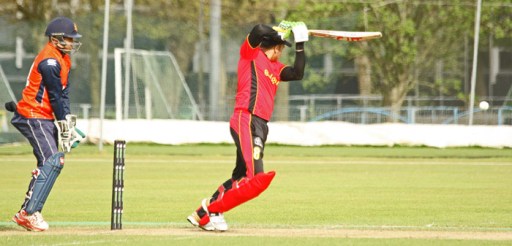
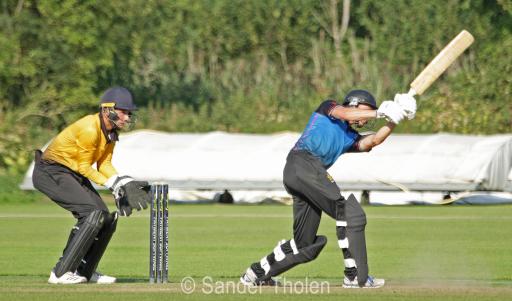
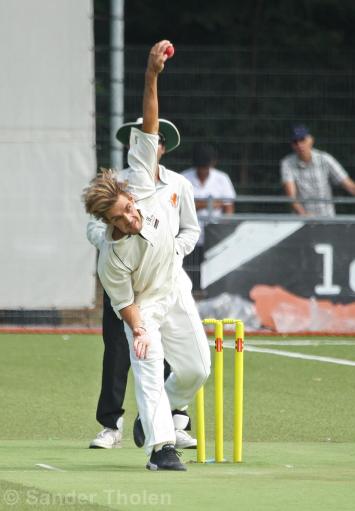
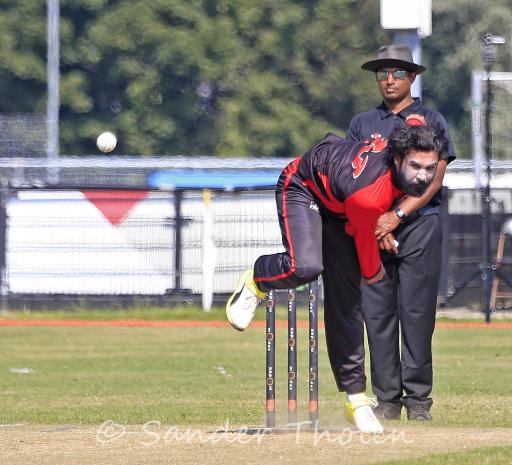
So on then to the final instalment of out ETPL team previews, where it’s time to take a look at the two Irish sides; the Belfast Wolves and the Dublin Guardians. As primus inter pares among the three host boards, Ireland will have the privilege of hosting the back end of thee league phase and finals at Malahide, meaning the two Irish teams will enjoy the advantage of familiar conditions at the business end of the tournament. They’ll be looking to hit the ground running at Voorburg first though, and Westvliet isn’t entirely unfamiliar territory for much of the Irish contingent (nor even for half their overseas).


Belfast Wolves

The Belfast franchise, initially dubbed the Irish Wolves, are fronted by Australia all rounder Glenn Maxwell and backed by Rohan Lund’s Floodlight Capita. The Wolves played their cards fairly close to their chest in the lead-up to the tournament, only announcing their overseas signings late last month, along with head coach Kevin O’Brien. Besides co-owner/captain Maxwell, the full member overseas contingent comprises New Zealanders Devon Conway and Mark Chapman alongside England quick Chris Jordan and South Africa stalwart David Miller. O’Brien also brought in two of his Italian charges in Harry Manenti and Krishan Kalugamage, with former USA skipper Saurabh Netravalkar the third Associate signing.

Current Ireland T20 captain Lorcan Tucker was snapped up ahead of the draft along with Mark Adair and Gavin Hoey. The Belfast selectors then bagged left arm spinner Matt Humphreys as their first draft pick, followed by Netherlands seamer Fred Klaassen, home batters Tim Tector and Paul Stirling, teen Scotland quick Zainullah Ishan and finally recent Dutch debutant Alex Roy.

The Wolves prioritising Tector over his senior Ireland opening partner in Stirling at the draft might imply that the youngster could start ahead of the veteran, paired with Conway at the top of the order, though it would be a bold move to bench the former Ireland skipper even if his recent form has been poor. His successor, Tucker, will doubtless take the gloves and, barring all of the above starting, in all likelihood also his usual spot at three. Chapman, Miller and Manenti will likely be competing for the next two slots in the batting order, though the latter has the advantage of not taking up a full member overseas slot.

Maxwell himself will presumably play at six or seven, as has been his wont of late in both franchise and international cricket. Ross Adair has played a similar lower order punisher role for Ireland (most notably finishing top of the run-scoring tables on Ireland’s most recent series at Westvliet) and given the paucity of genuine bowling all-rounders in the side the Wolves will likely try to make room for both.

Of the remaining bowlers Jordan alone boasts significant batting pedigree at the top level, and his value both at eight and in the field make him a very probable starter. The Wolves eagerness to lock in slow southpaw Humphreys and leggie Hoey suggest that the pair are their first choice spin options, though O’Brien is also known to rate Kalugamage’s legspin highly, while Chapman is also a more useful left arm spin option.

The competition for spots will likely be fiercest among the remaining seamers, Klaassen arguably having the edge as he provides a left-arm option, while Netravalkar’s canny death bowling would come at the cost of an Associate overseas spot. Given the length of the competition both Roy and Ihsan will likely rotate in at some point, though it would be something of a surprise to see either take the field for game one.

Depending on how they balance selection, the Wolves may find themselves with a comparatively long tail (by franchise standards) though the explosive menace of the lower order arguably makes up for it. There’s plenty of depth in the spin section, though Maxwell himself is the sole frontline offie, meaning opposing left handers may pose a problem in the middle. The stable of quicks is plentiful and varied however, and Maxwell should have a tool handy for any job that crops up.

Belfast Wolves squad: Glenn Maxwell (c)[OS-AUS], Devon Conway [OS-NZ], Mark Chapman [OS-NZ], David Miller [OS-SA], Chris Jordan [OS-ENG], Harry Manenti [AP-ITA], Krishan Kalugamage [AP-ITA], Saurhab Netravalkar [AP-USA], Lorcan Tucker (wk)[IRE], Gavin Hoey [IRE], Matthew Humphreys [IRE], Fred Klaassen [NED], Tim Tector [IRE], Paul Stirling [IRE], Zainullah Ihsan [SCO], Alex Roy [NED]


Dublin Guardians

The final* franchise sale was also the one to make the most waves around the world, with news that Ravi Ashwin and Rahul Dravid (previous linked to one of the Scottish franchises) would be co-owners of the Dublin Guardians. Ashwin himself will captain the side, while Vikram Rathour takes up the reins as coach (ably assisted by Ed Joyce). Much like Belfast, Dublin held off on announcing overseas signings until fairly late in the day, with James Vince, Chris Wood, Daryl Mitchell and Vijay Shankar announced just a few weeks out. The Guardians have also signed up a total of four Associate overseas, picking up Americans Sanjay Krishnamurti and Harmeet Singh along with former UAE skipper Waseem Khan and the Greece-affiliated (though as yet uncapped) Peter Hatzoglou.

Josh Little and vice-captain-designate Harry Tector were signed ahead of the draft, and gloveman Ben Cailitz bagged first up in the draft to cover keeping duties. The next picks went on George Dockrell, Matthew Hollard and Craig Young, followed by Dutch deputy keeper Noah Croes and finally Scotland’s Chris Greaves.

Vince and Waseem are the opening pair apparent, assuming the latter isn’t called away to the ACC Premier Cup on national duty. Mitchell has also opened in the past, but he’s been coming in down the order of late and a hip strain picked up in the West Indies last month leaves his initial fitness in doubt. Vice captain Tector is assured of a spot in the top four regardless, and with Cailitz likely taking the gloves the Candian-Irish keeper can probably be pencilled in at five or six. There’s certainly a strong case for also including Croes in the XI however, the Voorburg skipper’s form and local knowledge already militating in his favour, as does his near-faultless slip fielding. If all six play that would likely crowd out Krishnamurthi, though the American could fill most any top order role should any of the above sit out (or drop out).

Shankar has been playing as a lower order pinch hitter it the LPL, a role that will likely fall to George Dockrell in this side, especially given the lack of an equivalent impact sub rule in the competition. Harmeet Singh is another left arm spin option with an excellent (if limited) record at Westvliet, bagging 3 for 8 in 4 in his last visit to Voorburg. Legspinner Hatzoglou has a still stronger local pedigree though, having played for Voorburg on several occasions and contributing heavily with bat and ball. That probably puts him ahead of Greaves for the wrist-spin slot (if there is one) for the Dutch leg of the competition at least.

Shankar’s chief value remains his role as the sole proven seam all-rounder in the side, even if he hasn’t bowled much at elite level this year. The Guardians’ stable of seamers is not to be sniffed at, but playing all of Wood, Hollard, Little and Young would leave the Guardians with an alarmingly long tail. Wood looks all but indispensable, especially at the death given Little’s dubious form since returning from injury. Playing both Wood and Shankar would push out a full member overseas bat however, leaving the top order looking somewhat underpowered and untested at elite level.

All told, for a travelling team the Guardians boast a remarkable amount of local pedigree for the Voorburg leg, a solid battery of local seamers and a selection of spinners that can all contribute contribute down the order. Nonetheless their selection dilemmas are arguably more acute than those of any of their rivals, and getting enough staying power with the bat and firepower with the ball into the same eleven looks a problem positively Gordian in its complexity.

Dublin Guardians squad: Ravichandaran Ashwin (c)[OS-IND], James Vince [OS-ENG], Chris Wood [OS-ENG], Vijay Shankar [OS-IND], Daryl Mitchell [OS-NZ], Muhammad Waseem [AP-UAE], Peter Hatzoglou [OS-HEL], Sanjay Krishnamurthi [AP-USA], Harmeet Singh [AP-USA], Harry Tector (vc)[IRE], Josh Little [IRE], Ben Cailitz [IRE], George Dockrell [IRE], Matthew Hollard [IRE], Craig Young [IRE], Noah Croes [NED], Chris Greaves [SCO]


*barring Edinburgh of course, which has since been de-sold.


Previous ETPL Previews: Amsterdam Flames & Rotterdam Dockers, Edinburgh Castle Rockers & Glasgow Cosmic

ETPL Previews | Edinburgh Castle Rockers & Glasgow Cosmic

Bertus de Jong | 24-08-2026


Though Europe’s newest franchise league is formally co-hosted by the Irish, Dutch and Scottish boards, in the case of Scotland the title of host is purely honorary, at least for the first edition. The Two Scottish franchises – dubbed the Edinburgh Castle Rockers and (eventually) Glasgow Cosmic – will be playing all their matches on foreign soil, first at Voorburg in the Netherlands and then at Malahide across the Irish Sea. Both Franchises have had some notable changes in the backroom and the boardroom ahead of the League, and a few late changes to the squads too. At press time there’s still room on the Glasgow roster for some surprise late additions, but with just two days to go before the first ball is bowled, here’s how the two travelling Scottish outfits are shaping up…


Edinburgh Castle Rockers

Arguably the most notable late shake-up in the League played out at the Edinburgh franchise, after the ownership group led by veteran Sports executive Rachel Wiseman backed out just weeks ahead of the tournament, and the team reverted to central ownership. The League organisers were always prepared to go ahead with five of six sold, but one imagines the late withdrawal won’t have been exactly welcomed. Trevor Bayliss was also a late appointment as head coach, announced as replacement for James Foster only yesterday, but the on field leadership group has stayed constant despite the changes in the back room.

New Zealand skipper Mitchell Santner will lead the side on the field, while his compatriot Trent Boult also stays on board. There’s been a few switch-ups elsewhere in the overseas section however, with Shadhab Khan opting for a CPL stint after running into visa difficulties, while putative Rocker Liam Livingstone has somehow wound up at the rival Glasgow franchise. England pair Laurie Evans and Tom Curran come in as replacements, with Australia quick Andrew Tye rounding out the full member section.

The Associate and local pre-signed group has also seen some shake-ups, with the USA’s Rushil Ugarkar replacing the Emirates’ Khuzaima bin Tanveer, while Tom Bruce also withdrew owing to domestic commitments in New Zealand. US keeper-bat Dries Gous will be available however, having ducked out of the CPL early, with Sean Solia of Samoa and JJ Smuts (now affiliated to Italy) completing the four-man Associate contingent.

Scotland stalwarts Brandon McMullen and Mark Watt were locked in ahead of the local draft, though the Rockers notably spent two early draft picks on Irishmen, snapping up Gareth Delaney and Ross Adair in the first two rounds. Jack Jarvis, Safyaan Sharif, Finlay McCreath and Oliver Jones round out the roster, the latter a late replacement for Charlie Tear, who will remain with Sussex.

The early pick of Adair suggests the Irishman is a safe bet to take on of the opening slots, with Gous likely to take the second slot along with the gloves. Solia is another option at the top, and Evans habitually opens for Surrey, though the latter is in lacklustre form and may face less competition down the order, where he comes in for Birmingham Phoenix. Pushing Gous down a rung would also disturb McMullen from his accustomed slot at number three, where the all-rounder has been prolific for Scotland. That said, Santner may well be tempted to push himself up the order, as he did to great effect when last he captained a side at Voorburg, making a personal best 77* against the Netherlands, and doing so would alleviate the lack of other left handers in the top four.

Smuts, Solia and Evans are the other overseas top order options, though there will likely be room for two of the three at most, with Finlay McCreath the local option. Tom Curran could find himself in competition with Delaney for the finisher role, though there could be room for both at six and seven if Evans sits out. With at least two and potentially all of Santner, Watt and Smuts likely to start, the Rockers won’t be short of slow left armers, though notably late arrival Ollie Jones is the only dedicated right arm finger-spinning option, and with Shahdab Khan pulling out the Rockers are currently devoid of any wrist spin.

One would expect Boult and Tye both to start if fit and available, at least early in the competition when Westvliet is expected to favour the seamers. Ugarkar’s chances of a place in the eleven may be dictated by selections up the order, as the American will be competing with locals Jarvis and Sharif for the third seamer slot, with the latter bringing the benefit of experience and the former a potential middle order stop-gap with the bat.

In sum the Edinburgh squad is arguably the most unconventional in the league in terms of balance. Going for big name bowlers over top order bats could well pay off big at the top of the programme at Voorburg, though the southpaw-dominated slow section could prove somewhat one-dimensional if and when spin comes into play at the back end of each leg. The associate/local top order looks solid enough however, and the lower middle order potentially explosive. One can expect some dramatic see-saw performances from the Rockers both match to match and across the tournament, though they’ll have to find their rhythm quickly if they’re to prove title contenders.

Edinburgh Castle Rockers squad: Mitchell Santner (c)[OS-NZ], Trent Boult [OS-NZ], Tom Curran [OS-ENG], Laurie Evans [OS-ENG], Andrew Tye [OS-AUS], Andries Gous (wk)[AP-USA], Rushil Ugarkar [AP-USA], Sean Solia [AP-SAM], JJ Smuts [AP-ITA], Mark Watt [SCO], Brandon McMullen [SCO], Ross Adair [IRE], Gareth Delaney [IRE], Safyaan Sharif [SCO], Finlay McCreath [SCO], Jack Jarvis [SCO], Oliver Jones [SCO]


Glasgow Cosmic

Glasgow Cosmic, briefly known as the Glasgow Mugafians, have already have a remarkably storied history for a side yet to play a match. Backed by Indian AI-assisted entertainment conglomerate the Mugafi Group, the team was initially named for its owners’ mountain namesake before being rechristened “Cosmic” presumably in honour of Chris Gayle, the soi-disant Universe Boss, who has since parted ways with the franchise. The Cosmic kept the name and welcomed former Australia opener Matthew Hayden as coach/co-owner/frontman for the franchise.

Unique among the six sides in designating a local skipper, George Munsey will captain the Cosmic, taking the armband ahead of established Scotland skipper Richie Berrington, who was the Glaswegians’ second Scottish pre-signing. The overseas contingent has seen a remarkable turnover since the early announcements of Finn Allen, Kamindu Mendis, Josh Phillipe, Gerhad Erasmus, Duan Jansen – all since withdrawn – with the latter two set to face off at Windhoek for the upcoming Namibia-South Africa series. In their place come Proteas pair Keshav Maharaj and Lungi Ngidi (both given the above series off), along with Englishmen Jason Roy and Liam Livingstone and late announcement Jimmy Neesham, while USA’s Ali Khan and newest Portugal captain Moises Henriques make up the Associate overseas detachment.

Scotland spearhead Brad Currie was their first pick in the draft, swiftly followed by keeper Matt Cross. Dutch quick Paul van Meekeren was the only non-scot picked up in the local draft, followed by spinners Michael Leask and Oliver Davidson, and finally Chris McBride, the latter later replaced by Liam Naylor. With no further signings announced thus far, the Cosmic thus currently have a rather streamlined roster of just fifteen.

As it stands, barring last-minute signings or very left-field line-ups, the Cosmic’s default and only plausible opening pair looks certain to be Munsey and Roy (though it’s worth observing here that two very capable openers in erstwhile Ireland skipper Balbirnie and Voorburg prodigy de Lange are still available, having both been overlooked in the draft). The number three spot is a trickier question, as the Cosmic have something of a surfeit of fours and fives but few bats that have played much at first drop of late. Berrington and Cross have both played the role for Scotland in the past though, while Henriques hit his maiden T20I ton from three for Portugal just days ago.

Should Livingstone play ahead of Neesham or Maharaj then one imagines one of Berrington or Henriques will sit out, but at least early on in the tournament the former looks the most likely of the full member overseas to be left on the bench, with Maharaj and Leask offering left/right slow bowling options while Neesham takes the role of number six and fourth seamer. Switching Maharaj out for Davidson would free up a full member slot for Livingstone, which would diversify the spin options and add depth to the batting, but it’s likely that the Glaswegians will opt to field a full pace battery for the first match at least.

There are a wealth of options when it comes to quicks, with Ngidi a banker to take the spearhead role, supported by some combination of Currie, Khan or van Meekeren. That’s unquestionably an enviable seam roster, but a potentially brittle one. Van Meekeren has only just come back from a stress fracture, while Currie and Khan have both had injury troubles in the past, and the need for rotation alone suggests Naylor will likely get a look-in at some point.

If the Cosmic’s battery of glass cannons can keep firing it will likely prove a potent weapon, while there’s enough flexibility in numerically modest roster to adapt to potentially changing conditions even without any further additions. The lack of cover for openers Roy and Munsey is a potential concern given the tournament’s fairly gruelling schedule, and it may take some time before they hit on the best combination for the rest of the top five. The lower order has plenty of firepower, even if the tail may start a slot earlier than for some of their rivals. There’s plenty of explosive elements in the Cosmic line-up, but given the limited and potentially fragile roster, an eventual implosion cannot yet be ruled out.

Glasgow Cosmic squad: George Munsey (c)[SCO], Jason Roy [OS-ENG], Liam Livingstone [OS-ENG], James Neesham [OS-NZ], Lungi Ndisdi [OS-SA], Keshav Maharag [OS-SA], Moises Henriques [AP-POR], Ali Khan [AP-USA], Brad Currie [SCO], Matthew Cross [SCO], Paul van Meekeren [NED], Michael Leask [SCO], Oliver Davidson [SCO], Liam Naylor [SCO]


Previous ETPL previews: Amsterdam Flames and Rotterdam Dockers

Preview Hoofdklasse Final

Bertus de Jong | 10-07-2026


The main business of the 2026 Topklasse may be settled, but there’s still an issue regarding the 2027 edition to be answered; namely who will be replacing the relegated VOC Rotterdam in the top flight. That last question will be decided on the field on Sunday, when the two table toppers from the twin 2026 Hoofdklasse groups, Excelsior ‘20 and Salland CC will meet in the Hoofdklasse final at Thurlede.

The final was originally slated to be played at de Diepput, but the two grass wicket clubs agreed between them that they’d prefer to settle the matter on a natural turf surface, so Schiedam will play host and Excelsior enjoy the privilege of playing at home. They’ll also have the notional advantage in that, by virtue of accumulating more points in the league phase, they will claim the title and promotion in the event of a washout. The forecast suggests that eventuality is vanishingly unlikely however, with clear skies and temperatures touching 30 expected at the weekend.

Having lost only twice over the course of the season, Excelsior finished fully 8 points clear of Group B runners-up Rood & Wit Haarlem and sealed a spot in the final with weeks to spare. A positive net run rate of 2.66 over the season illustrates a comparatively dominant run through the league phase, and the Schiedammers will carry a fair bit of momentum into the final as they look to bounce directly back from last year’s relegation.

The lion’s share of those runs have been provided by overseas all-rounders Jack Wood and Riley Ayre, as well as returning Excelsior legend Alex Ross early in the season and newcomer Charl Prinsloo at the back end. That said skipper Roel Verhagen has also had a fine season with the bat, as has Matthijs Schewe across his admittedly limited appearances.

Ayre’s left arm spin has also been instrumental to Excelsior’s success, delivering 38 wickets at a single-figure average, more than filling the sizeable boots of the departed Lorenzo Ingram. Young seamers Jens Blankestijn and Karson Edward have also reliably delivered top-order wickets, Gijs Kroesen has looked increasingly solid at first change, while Verhagen (having relinquished the gloves a few seasons back to Stan van Troost) has done solid work as second spinner along with Joost Kroesen. All told Excelsior have put together a well-balanced squad, and have looked a cut above in their first season back down in the second tier – especially on home turf. Of the two games they have lost only one was at home, and that was played on the artificial.

Salland, for their part, have a similarly unblemished record on turf. Their perfect record at home has been crucial to their topping the Group A table depsite arguably the tougher draw, having had to face down recent relegatees Sparta, Quick and ACC. They dropped points to all three of the former Topklasse sides, notably losing their season opener against Sparta, skittled by sometime Excelsior spinner Umar Baker. At home they’ve looked a class apart however, and the lure of playing on grass might go some way toward explaining their willingness to generously (some might say courageously) gift Excelsior hosting rights for the final.

Their success has been built on a combination of judicious acquisitions, substantial contributions from stalwarts, and a solid season from the now traditional German delegation. Of the latter, the advent of of 19 year-old spinner Ahmad Ullah has made the biggest impact, the leggie’s 36 wickets at 9 taking him to second in the season’s tallies behind Ayre. Another recent German debutant in Shahir Malikzai, a more established presence at Deventer, also had a fine season with the ball, and with skipper Reinder Lubbers in decent form the Salland seam section looks solid.

Kiwi Tim Seeto has proved an excellent addition, the former Canterbury under-19s keeper-bat topping the Hoofdklasse run aggregates with 592 at 45.5. Established German pair Talha Khan and Sahir Naqash have also looked in decent nick, while their countryman Jamshed Mutahihi has at times provided explosive acceleration down the order, as has former skipper Victor Lubbers on occasion. Lubbers limited availability arguably made Salland’s season tougher than it had to be, but doubtless they’ll be at full strength come Sunday.

It’s been some three years since the two sides last met in 50-over competition, at the same ground in 2023 in Salland’s most recent match in the top flight. Excelsior won that game fairly comfortably, and Salland’s record in the Hoofdklasse since has decent but not dominant. This will be there first opportunity since relegation three years ago to win their way back into the now-downsized Topklasse, and having won their way through the stronger side of the draw only to face Excelsior on their home turf, fair to say if they make it they will have certainly earned it.

Preview Round 11

Rod Lyall & Bertus de Jong | 17-06-2026


Just eight points apiece up for grabs now, with only three points separating first from fourth and fifth from eighth. From which you might conclude that (a) there are going to be quite a few four-pointers in the next three weeks, and (b) that there is, after all, a good deal to be said for the eight-team model. Teams should be back to full strength for this final run-in, and it’s all set to be an extremely interesting sprint down the home straight.

RL: For the second week in a row, leaders Rotterdam take on their nearest challengers, Voorburg having leap-frogged Kampong as a result of last Saturday’s matches. The visitors squeezed three points out of their two games without their internationals, and will be relieved to have skipper Noah Croes, openers Cedric de Lange and Michael Levitt, and middle-order batter Bas de Leede back in the side for what is certain to be their biggest challenge of the second half of the campaign. The sides’ previous meeting, of course, was that extraordinary 25-over game on 14 May, which produced 461 runs in 50 overs, including De Lange’s 63-ball 125, and the Rotterdammers’ first defeat of the season, and Sikander Zulfiqar’s side will be very keen indeed to avenge that defeat this time. Since then their already-powerful batting line-up has been strengthened by the advent of Abdul Rehman Niazi, and Voorburg’s bowlers will doubtless have their work cut out to contain the Rotterdammers’ top order, while their own, largely restored batters will have to deal with an extremely testing attack. In the absence of play-offs, this could well prove to be the match of the season.

BdJ: Indeed given the state of the table this looks the fixture most likely to prove decisive when the time comes to total up the points and dole out the silverware. After having to dip into the reserves over the last couple of weeks, Voorburg find themselves facing some tricky selection decisions now, with Waseem Mohsen having laid indisputable claim to his spot, Don Glover making runs last week and Tom de Leede also impressing on return. Conversely the international contingent are all a tad short of cricket, which of course is not a game one can reasonably expect to play at King City. De Lange nonetheless impressed after being thrown into the deepest of deep ends on ODI debut, and at full strength Voorburg are arguably the only side in the league that have batting to match the Rotterdammers. Questions remain about the bowling side of things for both sides however, with neither looking entirely sure of their best attack and, barring Saqib Zulfiqar and Jaynul Islam, both team’s front line attack rather upstaged by their part-timers. If Voorburg’s quicks can fire however, HCC’s seam section did show that RCC can be vulnerable early at home.

RL: Now in third place on net run rate and three points behind the leaders, HCC travel to the renamed Boudewijn Hoek Oval to face Hermes-DVS. Their hosts will perhaps be the happiest of all about the return of their internationals, who will add incisiveness to their attack and take some of the weight of run-scoring from the shoulders of David Rushmere, who carried the batting almost single-handed while they were away. The Sky Blues will have to face both Kampong and Voorburg before finishing their campaign against HBS, and they will breathe much easier if they are able to pick up two points here. HCC, however, have won six of their last eight games, and with a rejuvenated Tonny Staal scoring consistently at the top of the order and Boris Gorlee at his best against HBS last week, they will travel to Schiedam with plenty of confidence. We have repeatedly sung the praises of their attack, and even Rushmere will need to be in top form if Hermes are to have a chance.

BdJ: Hermes might be excused for wondering whether it was really necessary to deprive them of their captain and pace spearhead for the last two weeks given that Logan van Beek ended up getting flown in to play ahead of either of them, but will certainly be happy to welcome them back for what is indeed a must-win for them on Saturday. They’ll also be hoping Daniel Doyle-Calle’s ankle sprain won’t keep him out another week, and that what remains a formidable batting line up finally delivers on its potential. They’ll be coming up against an HCC seam attack that has consistently delivered, even in the absence of Hidde Overdijk. On form the hosts will start as underdogs on home turf, but may take comfort from the fact that despite their winning run HCC still have a losing record on grass this season.

RL: Straddling the gulf between top four and bottom four, the encounter in the Amsterdamse Bos is between VRA, for whom the priority is staying clear of the relegation zone, and Kampong, who cannot afford another defeat if they are to have a realistic chance of retaining their title. Centuries for both Sam Cassidy and Teja Nidamanuru against Hermes last week suggested that the Amsterdammers’ season is perhaps coming together despite the loss of Vikram Singh, and it was a bonus for them to see Sharad Hake getting among the wickets early. Kampong just squeezed home at Maarschalkerweerd on 14 May, and they will hope for a much greater contribution from their top order in this return match. It’s a fair bet that Max O’Dowd and Scott Edwards will find batting conditions in the Amsterdamse Bos a good deal more congenial than those in King City, and despite the four-point gap between the teams on the current table, this too seems likely to be a very even battle.

BdJ: VRA will doubtless be thankful that they were spared the loss of their skipper for the last couple of rounds, and doubtless Nidamanuru and Shariz Ahmad have been enjoying thier time at the Nordic Smash this week rather more than anyone has ever enjoyed anything at the jumped-up landfill that the (thankfully suspended) clowns at Cricket Canada are somehow still successfully passing off as an ODI ground. Ahem. On the assumption that VRA’s captain/manager at least will duck out early should Stockholm make Saturday’s final, the hosts will have a substantial advantage in terms of bats in form. Singh’s misadventure in Canada does still leave a hole in the bowling though, as despite already missing two rounds he still has more than twice the wickets of anyone else in the attack, at half the average. Kampong meanwhile will also welcome back their skipper, who himself impressed on debut for the Dutch. The recent run of results may not be on their side, but I’d still make the defending champions favourites at full strength on Saturday.

RL: One of the gilt-edged four-pointers will be at the Hazelaarweg, where VOC are at home to HBS Craeyenhout. Just a point ahead of Hermes, this is perhaps the best opportunity of their last four games for the Bloodhounds, who will have been desperately disappointed to miss out on victory over a below-strength Voorburg last week. VOC’s batters passed 200 for only the fourth time in that game, and while their top and middle order often get a start, they have seldom been able to bat on and make a truly significant contribution. There have also been selection issues, but the team looks a little better-balanced (and a good deal more experienced) with the return of Tim de Kok and of Pierce Fletcher. For HBS, the form of Tayo Walbrugh has been another recurring theme on these virtual pages: with just 180 runs at 20.00 he has been a shadow of the player who averaged 59 or better in each of the five previous seasons, and although Lucas del Bianco, Kent Goedeke and at times Lehan Botha have taken up some of the slack, the Crows will be hoping that their captain’s undoubted class is in evidence in the closing rounds.

BdJ: Walbrugh’s run of poor form has at least spared him the ordeal of a trip to the very worst international cricket ground in the world, but now that the threat of being picked for a tour to King City has passed one might suggest it’s a good time to start making some runs. Though currently three points clear of the wooden spoon spot, after the Crows only have games against frontrunners RCC and then VRA away at the Bos to come before a potential showdown against relegation-slot incumbents Hermes in the final round. The relegation tussle might thus be said to start in earnest this week, and though HBS have arguably underperformed all season while VOC have looked to be slowly strengthening, it would be a surprise to see them on equal points this time next week.

RL’s picks: Rotterdam, HCC, Kampong, HBS.

BdJ’s picks: Voorburg, HCC, Kampong HBS.

Vibe-Coding the Rules – a look at the Player Points System

Bertus de Jong | 23-04-2026

The KNCB’s new player-points system for the Topklasse, Hoofdklasse and Eersteklasse is a welcome and arguably overdue effort to address long-standing problems in Dutch club cricket and may yet prove a model going forward, but the slapdash formulations and nonsensical categorisations set out in the new rules risk rendering it unfit for purpose. The board will need to rely on the collaboration and indulgence of clubs to make the half-baked system work, and if it proves a source of rancour, the KNCB will have only themselves to blame.


The question of regulating the participation of overseas players in domestic competition has been a perennial source of controversy and contention in Dutch cricket over the past decade at least, with past efforts to place limits on squad or team composition foundering in the face of opposition, loopholing, and even legal challenge. The board’s new player-points based approach (modelled on systems used in Australian club cricket) has much to recommend it in principle, but the final language of the regulations, which were circulated to clubs two months ago, is so vague, contradictory or perverse as to risk generating still more controversy and conflict, such that it will require a concerted and collaborative effort from all parties to avoid their implementation derailing the coming season entirely.

The new system seeks to allocate each player a points-value dependent on their national origin and level of prior cricket experience, with progressive reductions based on length of service to their current club, and then places a cap on the total points-value of a side that may be fielded in any given match. In the manual for the new system, a first draft of which was circulated late last year, the KNCB lays out the main aims:

Local Player Development—Encouraging clubs to invest in homegrown players and provide them with opportunities at the highest level.
Reducing Dependence on Overseas Players—Balancing the use of international talent with the development of Dutch players, so clubs don’t rely solely on overseas signings.
In short, the system is designed to reward clubs that develop Dutch talent while still allowing space for international players to contribute to the competition.

There are reasonable arguments to be made against the system even in principle; implicit penalties for players transferring between clubs systemically weakens the hands of cricketers vis-a-vis clubs and militates against professionalisation. As written, the rules could be seen as exacerbating the particular problem of player retention after school age, when youngsters moving away from from their home towns (and clubs) for work or study often drop cricket altogether. The system also risks undermining the policy of encouraging Netherlands-eligible players who learned their cricket abroad to play in the Dutch competition if they wish to be considered for national selection, and arguably does too little to incentivise clubs to attract or develop players likely to be called up for national selection given the ever-increasing burden the international calendar places on player availability.

Yet these are ultimately trade-offs which must be made, and debates where reasonable disagreements are inevitable. In truth, there appears to be broad consensus that a system of this sort is needed, and the model which the board has adopted ought to be sufficiently flexible to meet the needs of the club competitions that have served as the game’s foundation in the Netherlands. The Topklasse has a history stretching back well over a century. By most metrics it is the oldest extant club cricket competition in the world, and indeed it predates the Netherlands’ participation in international cricket by almost half a century. Many in Dutch cricket (including this publication) consequently regard the integrity of the club competition per se as taking precedence over its role as a production line or feeder league for the national team, a role for which it is not necessarily well-suited, and which one might hope an expanded Pro-Series may one day fulfil (on which more another time).

There are clear upsides to limiting the number of overseas players in the Topklasse; not least lessening the financial burden on clubs imposed by the ballooning expense of maintaining a competitive squad in the upper divisions. The system also rewards sides whose youth systems develop young players, and to encourages them to blood such players in the top flight. The points-based approach also affords clubs a degree of flexibility in selection, while the option to introduce bonus points allocations in future seasons for clubs that provide umpires, field women’s and youth teams or the like might also allow the KNCB to incentivise such objectives in a more flexible manner than hard and fast regulation. The board is ultimately answerable to the clubs on such questions, and it’s excusable, given that the preponderance of input has come from club administrators rather than active players, that the basic framework of the rules favours the former over the latter. What less excusable, however, is just how incredibly sloppy the final document is in its definitions and categorisations.

The definitions and category descriptions provided, along with the pair of flow charts intended as guidance, make a series of assertions and implicit assumptions which are by turns contradictory, plainly mistaken, or nonsensical – and some of which would appear to mandate distinctions on the basis of nationality which serve no obvious developmental or competitive purpose and risk running afoul of Dutch anti-discrimination or privacy law.

remember me?

The KNCB has to date provided no rationale for discriminating between EU passport-holders and players of other nationalities, a distinction which the provided flowcharts imply to be prior to any other question. There is of course a clear rationale for giving preference to players who are eligible for the Dutch national team, but no explanation is given as to why it is desirable to treat other European nationals differently to players from further afield. It cannot simply be deference to EU law, as Dutch (eligible) players are still being privileged over other EU citizens. And it’s worth remembering of course that it was not the application of EU law that saw the previous restrictions on overseas players tossed out, but rather the Dutch Algemene Wet Gelijke Behandeling, which precludes any discrimination on the basis of nationality whatsoever.

The inclusion of this EU/non-EU distinction thus seems to be not only confusing and pointless, but also prima facie illegal. In the wider cricket world the question of a player’s legal nationality is generally treated as secondary to their affiliation to (and eligibility to represent) a given ICC member board, the two obviously being not entirely unrelated but certainly not identical. The KNCB’s departure from this norm is both inexplicable and problematic – potentially legally and certainly practically.

in or out?

The needless distinction on the basis of nationality rather than eligibility leads to a number of perverse or contradictory outcomes if one were to follow the plain meaning of the document. The most glaring of these stems from an apparent misunderstanding of ICC eligibility criteria, which leads the authors of the document to assume any Dutch-eligible player must also be in possession of an EU passport. This is not the case. Any player who has been resident in the country for three years is eligible to represent the Netherlands even if they hold no EU passport – a category which in fact covers a huge swathe of those playing in the Netherlands, including at least one current Dutch international – yet the rules (which incorrectly treat Dutch-eligible players as a subset of EU nationals) makes no provision for such players.

Other categorisations are equally slipshod. A brief mention is made of “Representative U19s Competitions” but no clarification is offered as to how these are to be defined. One might guess the intended meaning is international under 19s cricket, but it is unclear whether this is meant to include only Youth ODIs, Youth Tests and Youth T20I, or any Under 19 team representing an ICC member. The rules then state any foreign Under 19 player should be classified as “international,” a plain reading of which would mean that a player that’s turned out for, say, Namibia Under19s at an African regional qualifier would attract a higher points value than one who has played Country Cricket or even IPL – a decision which, if intentional, would bespeak a remarkable unfamiliarity with the actual standard of cricket of these competitions.

Conversely a careful definition of “Expat Payer” [sic] is laid out, complete with onerous requirements for proof of employment or study. Aside from the fact that, as one captain observed, “it’s a bit much to expect a casual cricketer to throw his whole employment contract on the table,” one imagines these requirements will run afoul of all manner of privacy laws. The rules governing “expats” moreover make no provision for players not in full time paid work or study, thus excluding asylees, care-givers, home-makers, dependent minors and such, again without explanation. Equally inexplicably, the category is seemingly applicable only to non-EU players, but then given the provision that non-homegrown players must always be placed in the category attracting the highest points allocation, a plain reading of the rules renders the entire class of “Expat” functionally redundant anyway, which is perhaps for the best.

edge case?

The second-highest tier is titled “1st Class & List A”, but restricts that category to Full Members. Premier and franchise cricket outside of Test-playing countries thus fall outside either category, presumably meaning that Major League Cricket or the ILT20 (both of which have List A status) nonetheless fall into the same category as a pub league in the UK. The next tier down is something called “Provincial A team cricket” a term used throughout the document as if it were a globally recognised category of cricket, which it is not, an oversight which once again one can only assume is rooted in an extraordinarily broad ignorance of what the game outside of the Netherlands actually looks like. Whether, for example, National Counties cricket in the UK, or the Breakout League in the West Indies fall into this category cannot be discerned from the text other than by (ultimately subjective) reasoning by analogy.

It would have been comparatively trivial to supply category definitions which comported more closely with objective reality, ideally supported by a tiered list of foreign competitions ahead of time. Instead it seems likely that such questions will be left to the discretion of an ad-hoc arbitration committee. It is to be hoped said committee boasts greater expertise than apparently went into the creation of the regulations it is tasked with applying, and that clubs accept its rulings with equanimity. So far, at least, they appear to be doing so.

Yet relying on case-by-case committee decisions to flesh out the details that the rules fail to provide – a strategy which might be charitably labelled a “Common Law” (or less charitably a “vibes-based”) approach – will inevitably leave the KNCB open to allegations of bad faith or bias the moment a difficult dispute arises, as the slapdash manner in which the rules have been written all but guarantees, or lead to conflicting and contradictory standards should the committee’s rulings not be made with considerably more care and expertise than is evident in the authorship of the regulations themselves. To mangle the old adage, Bad Law makes Hard Cases, and Hard Cases make Bad Law.

It is of course too late to change the rules at this stage, the KNCB having waved off the questions and concerns of informed third parties (including your correspondent) for some months. We thus left hoping that the community pulls together and muddles through, honouring the laudable aims or at least implied intent of the provisions rather than exploiting the ambiguous or nonsensical text. Past precedent unfortunately suggests that there are few clubs entirely above rules-lawyering on questions of player eligibility where it is to their clear advantage. We are consequently reduced to hoping that a spirit of collegiality prevails, at least until the rules can be clarified and rationalised next season, but in the meantime one can’t help but feel the KNCB has laid down a rake for its own face, so to speak.

The need for this new system has been a point of rare consensus among Dutch cricket clubs, and it would be a shame if it were to founder simply due to its initial drafters’ lack of attention to detail. The goals of the system are shared by most if not all in Dutch cricket, and fundamentally a points-based model is likely the best suited to the needs of the game in the Netherlands. For all its faults, even in its current sorry state the system is likely workable if all parties strive in good faith to make it work.

Lets hope they do.

Preview Round 1

Rod Lyall & Bertus de Jong | 22-04-2026


And so we start once more, this time with eight teams in the Topklasse. There are, of course a few other changes: the Player Points system will influence team selection (though probably not very much in practice, at least this year), and the European T20 Premier League is promised for later in the summer, although with the 50-over competition scheduled to conclude on 5 July it won’t be affected. There will again be no play-offs for the title, with the team at the top of the table after 14 rounds being declared the winner. There’s a good deal more guesswork than usual involved in this initial preview, since it’s not entirely clear who among the still numerous overseas contingents will arrive in time for the season’s opening encounters.


RL: Last year’s champions, Kampong Utrecht, start the defence of their title with a trip to Craeyenhout to take on HBS. With Lehan Botha back in the Crows’ ranks and Kent Goedeke replacing Jayden Rossouw, the South African component is still central to the plans at Craeyenhout, skipper Tayo Walbrugh, ex-international Wesley Barresi and current national squad member Kyle Klein all adding a hint of the braai to HBS’s fortunes. They will have their work cut out, though, against Alex Roy’s side, which will miss only Lane Berry from last year’s winning combination. That’s admittedly quite a gap in the top order, but with Lachlan Bangs returning and Max O’Dowd and Scott Edwards available for much of the 50-over season, Kampong will still take some beating. The big question, perhaps, is whether Kampong’s attack will prove strong enough to restrict the Crows’ top order on what is frequently a runs-rich ground.

BdJ: The departure of last season’s lead wicket-taker Rossouw to Quick Haag is likely to mean there will be even more runs to be had at Craeyehout this time round, and the Crows will probably need early wickets from Klein or Botha if they’re to contain what remains an intimidating Kampong batting order. With Bangs and the ever-improving Jacod coming in as low as six and seven for the title-holders, simply looking to outscore them is a risky strategy.


RL: Runners-up VRA Amsterdam head even further south, travelling to the Zomercomplex to face the newly-renamed Rotterdam ( Punjab), who were themselves champions in 2024. The Rotterdam batting powerhouse of Musa Ahmad, Shoaib Minhas and the brothers Saqib and Sikander Zulfiqar have started in menacing form, Sikander smacking a 54-ball, not-out 126 against VOC in the final of the Rijnmond Cup a fortnight ago. Their opponents are something of an unknown quantity, with a further influx of Antipodeans to augment Dutch internationals Teja Nidamanuru, Vikram Singh and Shariz Ahmad, all of whom have plenty to play for as they try to re-establish their positions in the national side. There are more questions about the respective attacks: again, Rotterdam have a tried-and-tested combination, but with Ben Fletcher and Peter Ruffel not reappearing VRA will need to find both a new new-ball pairing and an effective spin unit, which may include the returning Udit Nashier, hardy perennial Leon Turmaine, and Australian leggie Ivan Zmak.

BdJ: The rebranded Rotterdammers have certainly shown some impressive early form in pre-season, but it’s worth noting that VRA bested them fairly comfortably in Saturday’s warm-up fixture at the Bos. Vikram Singh and Johan Smal have looked in particularly fine form for the Amsterdammers, as has new arrival Sam Cassidy. It could well be a different outcome at the revamped Zomercomplex of course, and indeed the question of the make-up of VRA’s seam attack looms large, with much resting on the shoulders of Ashir Abid. Whoever takes the new ball for them will be happy not to have to bowl at Mohsin Riaz at least, Punjab’s stand out bat last season busy with commitments in Pakistan for now, but the Rotterdam batting card is plenty stacked without him.


RL: There have been many stirring contests between Voorburg and HCC in recent years, not least in the 2022 and 2023 grand finals (remember when we used to have grand finals?). Home side Voorburg will presumably be boosted by the return of Bas de Leede, whose spell at Durham has come to an end, and that will be significant compensation for the loss of De Leede’s fellow-international Viv Kingma, who has moved to VOC, and of young allrounder Udit Nashier, who has returned to VRA. So will the advent of promising youngster Aaditt Jain, whose path has crossed that of Kingma somewhere between the Hazelaarweg and Westvliet. We probably shouldn’t read too much into the ease of Voorburg’s victory in the final of last week’s Next Communications T20 Cup, but the Lions will need the returning Zac Worden to boost their largely home-grown top order if they are return to De Diepput with the points.

BdJ: De Leede, we understand, is likely to be used sparing if at all in the early season as he comes back from injury, but the addition of Jaynul Islam may go some way to compensate – Voorburg quick to snap up the recently-arrived Bangladeshi right arm seamer. Voorburg hardly lacked for pace options even before picking up Islam and Jain, though there’s a little less competition for slow-bowling spots at Westvliet now. One will certainly be taken by dual-international Michael Rippon when he lands back in the Netherlands, but the VCC bowling card does look a tad pace-heavy as it stands. The same is true of their opponents however, looking somewhat reliant on slow southpaw Clayton Floyd, whose ten overs could well prove crucial on Saturday.


RL: Ground constraints mean that the final match of the opening round will take place on Sunday, when Hermes-DVS will make the short trek to the Hazelaarweg to take on VOC Rotterdam. They will be facing a pace attack featuring the returning former international Ahsan Malik and his erstwhile international colleague Viv Kingma, who has stepped over from Voorburg, as well as the steadily-improving Roman Harhangi. The Bloodhounds will again be looking to a useful group of overseas players, including New Zealanders Caleb Montague and Ethan Price. Such resources have not been able to disguise the fragility of their batting in recent seasons, but the early-season form of Francois Fourie may hint at better prospects this time round. With the run-getting power of Daniel Doyle Calle and Ash Ostling reinforced by that of South African David Rushmere, the Sky Blues have the potential to test VOC’s new-look pace attack to the full, while an experienced, well-balanced attack will be looking to exploit any cracks in the home side’s top order.

BdJ: Word is Kingma’s role at VOC will be focused more on coaching this coming season, though we’re also told Pierce Fletcher may be playing a more prominent on-field part for the Bloodhounds this summer. Harhangi will be the principle purveyor of youthful zip with the new ball though, and will be crucial in VOC are to find inroads into Hermes’ reinforced batting order. Breaking the prolific Ostling-DDC partnership at the top now looks like a still-necessary but perhaps no-long-sufficient condition to containing Hermes, and with several key components of VOC’s new batting card boasting overseas pedigree but little Topklasse experience, the hosts may still be unsure of what a chaseable total looks like.


RL’s tips: HBS, Rotterdam, Voorburg, Hermes.
BdJ’s tips: Kampong, VRA, Voorburg, Hermes

2026 Preview | Voorburg & VOC

Bertus de Jong | 19-04-2026


2023 Champions Voorburg CC had a surprisingly poor 50-over season last year, but are widely-tipped as potential challengers again this time round. There’s been a fair reshuffle at Westvliet over the winter, especially in the seam bowling department, the headline-grabber of course being the return of favourite son Bas de Leede from England.

Injury may limit the role de Leede’s able to play early in the season though, and with Carl Mumba off to the newly-renamed Rotterdam CC (formerly Punjab-Ghausia) and the long-serving Vivian Kingma departing for VOC, young left arm quick Aaditt Jain, making the opposite switch, may slot straight into the role of pace spearhead. Also likely to feature in the first-team seam attack is new arrival Jaynul Islam, a right arm quick with List A experience in Bangladesh, alongside Mees van Vliet in an enviable stable of front line pace bowlers, backed up by part timers Michael Levitt and Ryan Klein.

Michael Rippon

The other big name arrival at Westvliet is sometime Dutch international and occasional blackcap Michael Rippon, the left arm wrist spinner “bringing not only a wealth of experience but also a much needed spin option and a very important part of our batting line up.” as skipper Noah Croes remarked to Tkcricket. Rippon will thus fill the role of lead spinner vacated by southpaw Udit Nashier, who returns to VRA, as well as bolstering an already intimidating batting card.

Young Cedric de Lange has established himself in the opening slot alongside Michael Levitt, while the middle and lower order boasts further national team talent in the form of Croes himself as well as Ryan Klein. That line-up does leave VCC particularly vulnerable to the predations of national selectors however, with de Leede, Rippon, Levitt, Klein and Croes all potential picks, while Lange is already on the Oranje’s radar too.

Voorburg are somewhat insulated from that risk by their depth of youth talent; de Lange, Alejo Nota and Tom de Leede increasingly impressive, while Luuk Kroesen also comes over from Excelsior. A deep roster was not enough for Voorburg to challenge the top last season though, in part perhaps because constantly rotating selection prevented the team from really settling. They are likely to face similar challenges this season, even if they are arguably better equipped to handle them.

Croes himself was upbeat, telling TKcricket “here at the Westvliet we’re happy with the way we are tracking … the guys are well prepared to have an impact and continue to push at the top end of the table. I think the development of our young players is going to be really exciting and hoping to see some new guys step up.”


It’s been almost a decade since VOC Rotterdam last added to their tally of Topklasse titles, most recently finishing top of the log back in 2018 – notably the freshman year of this very masthead. The Bloodhounds have spent the seven seasons since largely in the bottom half of the table, narrowly escaping relegation on a couple of occasions, including last season when they saw off ACC in the relegation play-off. Survival will be the first target this time around, though in a smaller and more competitive field dodging the drop again will be a tougher ask this season.

The Rotterdammers will have to reckon with the loss of both Jain brothers – young Aaditt switching to Voorburg and Arnav emigrating to Spain. The pair accounted for 40 wickets between them last season as well as occasional but sometimes crucial lower order runs, and leave a substantial hole to fill. Likewise the departure of overseas Scott Jannet and Christiaan Oberholzer, who along with Danish international Monty Singh provided the bulk of VOC’s runs last summer, will put pressure on the rest of the VOC line-up to deliver with the bat.

Ashan Malik

On the other side of the ledger, veteran former Netherlands international Ahsan Malik returns from Sparta, providing some welcome stability in the middle order as well as control with the ball. The indefatigable Jelte Schoonheim also signs on for another season, ensuring the seam attack certainly will not want for experience, though doubtless the hope is that young Roman Harhangi, VOC’s lead wicket-taker last season, continues to shoulder increasing responsibility as spearhead.

By way of slow-bowling additions Hazelaarweg welcomes Ethan Price, a left arm spinner recently turning out for Northern Districts A, who joins the ever-promising Siebe van Wingerden and the returning Asif Hoseinbaks in the spin section. The otherwise somewhat threadbare batting card is shored up by keeper-bat by Caleb Montague, also of New Zealand, but long-serving skipper Tim de Kok will certainly hope to contribute more with the bat personally this season. The arrival of Samir Butt from Punjab Rotterdam does take some of the pressure off the captain however, as does the pre-season form of Francoise Fourie, who missed much of last season through injury.

De Kok’s principal task will remain getting the best out of an overhauled side, and group cohesion is indeed his top priority. “Above all we’re looking to rely on players that fit well within the club and subscribe to the philosophy and overarching narrative we’re trying to build here at VOC. It’s crucial to keep working on the ethos and atmosphere within the club. So we’re also really happy to have Stephan Myburgh back as head coach, along with club legend [and former Netherlands international] Rob Vos who have both been working hard over the winter to build our programme and training philosophy. There’s a lot of people in the background who have contributed enormously to our goal of being the most welcoming family club with the stand-out development program in the top flight.”

While the on-field focus for the back end of the summer will be regaining a place in the T20 top division, consolidation is the order of the day in the fifty-over competition. “In the Topklasse the goal is to show that we can compete with a solid core of local VOC talent, and demonstrate the importance of a strong foundation for the club.”


2026 Preview | Kampong & VRA

Bertus de Jong | 17-04-2026


Newly-promoted Kampong Utrecht made history last season by becoming the first clubs since Prinses Wilhelmina Enchede in 1939 to win the top division immediately upon their return, clinching the Topklasse title with two games to spare. The defending champions don’t look to be changing a winning formula, and the 2026 squad looks broadly similar to last season.

Kampong’s success in recent years has been in part based on shrewd past acquisitions, tempting Dutch international duo Max O’Dowd and Scott Edwards over from VOC and the veteran Lorenzo Ingram from Excelsior, and the trio are expected to play a substantial role in Kampong’s title defence again. Edwards in particular was imperious when available last year, and though O’Dowd had a comparatively quiet season, Kampong will hope a comparatively light international schedule will mean the pair will be around a bit more.

Pierre Jacod

The absence of last season’s top-scorer Lane Berry, who remains in Australia means the title-holders will be likely need a few more runs from their Dutch international pair, While the returning Lachlan Bangs along with Damien van den Berg ensure Kampong will not be short of hitting power, the Kampong top order may be left looking like something of a glass cannon if and when O’Dowd and Edwards are called away on national duty. That said, Pierre Jacod comes into the season in fine form, having followed up an excellent 2025 Topklasse season with an impressive winter in Australia, and combined with the evergreen Ingram provides not only an enviable left-right spin combination but also a degree of depth to the batting card.

The bowling attack likewise looks much the same as last season, though Kirtan Nana is understood to be taking a summer off, with young Gert Swanepoel expected to get a few more chances in the senior side, joining skipper and spearhead Alex Roy in an otherwise comparatively callow pace attack. The spin trio of Ingram, Jacod and Akhil Gopinath will likely bowl the bulk of the overs again this season, while Dutch prospect Zach Lion-Cachet is also on the Kampong list, the young offie will likely be available only when in the country with the national squad.

Roy is somewhat phlegmatic about the prospect of Kampong defending their title,
“winning was great but of course this year we’ll have a bit of a target on our backs important thing is consistency, it would be great to go back to back but really we just want to show we can keep competing at the top level. We’ll be aiming first to keep pace in the top four, but of course if we can push on for the title again then great.”

While the competition may be somewhat fiercer this season as talent concentrates into the newly streamlined top division, the defending champions established a working blueprint for success in their first season back last year, and taking the title off them will doubtless take some doing.


T20 champions and runners up in the fifty-over competition last year, VRA Amsterdam will be looking to add to their silverware collection again this time around, albeit with a somewhat reshuffled squad. The local core of the side remains largely unchanged under captain-manager Teja Nidamanuru, but the overseas section looks markedly different for the coming season.

Among the more significant personnel changes is the departure of pace pair Ben Fletcher and Peter Ruffel, who accounted for some fifty wickets between them last season, with Jersey international Patrick Gouge another notable absence from the 2026 roster. New arrivals include Kiwi bats Sam Cassidy (cousin of current keeper Jack) and Lovepreet Padda, along with seam all-rounder Devin Wilke and legspinner Ivan Zmak.

While most if not all of the newcomers will be in contention for first team spots, VRA’s fortunes will likely hinge on their trio of sometime Dutch internationals, Vikram Singh, Shariz Ahmad and skipper Nidamanuru, who collectively had a somewhat modest season last year. Singh and Nidamanuru’s limited returns with the bat left VRA rather dependent on vice captain Johan Smal, who’ ha’s looked in fine form in pre-season after an excellent 2025, and may himself may push for Dutch selection when he becomes eligible in a few weeks’ time, potentially leaving VRA vulnerable to something of an exodus when the selectors come calling.

Johan Smal

The top order looks solid on paper though, and the Amsterdammers are confident in their local bowling depth. While Shariz Ahmad has not hit the heights of past seasons, the return of left armer Udit Nashier, backed up by the veteran Leon Turmaine (VRA’s stand-out slow bowler last season) together with Nidamanuru’s own improving offspin ensures they won’t be short of spin options. The loss of Fletcher and Ruffel means responsibility for leading the seam attack will fall to left arm quick Ashir Abid, backed up by Singh’s medium pace and potentially opening up more space for youth and second-team prospects to push for more regular opportunities in the top flight.

Nidamanuru struck an upbeat tone ahead of the season on that front, telling TKcricket “We’ve some local talent coming through for sure. We’re very happy with the new guys coming in from overseas of course, but partially we’ll be looking to a couple of them to bring some stability in the seconds rather than coming straight into the first team … we’re relying on our local bowling especially this season, and I do think we’ve got the depth to go one better this year.”

The fact that VRA finished runners-up last time round despite several senior players having sub-par personal seasons does suggest there’s potential for the squad to break the silver-medal ceiling that they’ve bumped against on occassion since their last fifty-over title in 2011, if they can get a few more cylinders firing on full.

Player-eligibility technicality puts VRA’s T20 finals berth in doubt

Bertus de Jong 10/09/2025


Defeated semi-finalists Voorburg CC, who lost to VRA by 22 runs in the second semi-final of the Topklasse T20 competition on Sunday, are seeking to have the result of that match overturned on grounds that VRA fielded an ineligible player. VCC are understood to have challenged the eligibility of VRA opening bat Shirase Rasool – who scored a brisk 41 before retiring hurt in the match in question – on the basis that he had not played sufficient matches in the preceding league phase.

Shirase Rasool

Rasool, a former regular at the top of the order for VRA, has played only intermittently this season owing to personal commitments. In total Rasool has made three appearances for VRA’s second team and five for the senior side this season, but crucially played only four matches in the T20 competition.

Under Article 18 of the Competitieregelement only players that have played a minimum of 50% of the first (league) stage matches of the T20 competition are eligible to participate in the final rounds. Under the current competition format the minimum is thus five matches in across divisions prior to the finals phase; Rasool therefore falling one match short.

However, a number of exemptions to these requirements are detailed in the same document, not least 18.II.7.b which exempts long-standing members of a club from the above participation requirements, under which Voorburg match-secretary and first team occasional Floris de Lange was able to play. VRA maintains that Rasool is similarly exempt under Articles 18.II.6 and 18.II.7.b, which provides for players who have regularly played for a club in preceding seasons, though the language of the document is arguably inconsistent as to whether this refers to all competition or exclusively divisions below the top flight.

“VRA is confident that we are fully within the regulations regarding the eligibility of Shirase Rasool. Articles 18.II.6 and 18.II.7 clearly state that he qualifies to play without needing to meet the five-match threshold or apply for dispensation. It is extremely disappointing how this situation has unfolded, as it distracts from the spirit of the competition and takes the focus away from the cricket itself.” VRA first team captain and General Manager Teja Nidamanuru told TKcricket.

Voorburg Chair Richard de Lange was equally confident however, stating; “VCC remains confident in the strength of our position and our rightful place in the T20 final based on the merits of our case and adherence to competition regulations. We respect the ongoing appeals process and trust that the proper procedures will ultimately ensure the integrity of the competition is upheld. We look forward to a swift and fair resolution that serves the best interests of cricket in the Netherlands.”

VRA immediately appealed the KNCB’s initial decision, which Tkcricket understands awarded the match and a place in the final to VCC and imposed a 100 euro fine on VRA. That appeal appears to have been at least initially successful in reversing the decision, but said reversal has duly been appealled in turn by VCC. At press time it remains unclear who, if anyone, HCC will face in Saturday’s final at the Loopuyt Oval.

Preview Round 18

Rod Lyall & Bertus de Jong 31/07/2025


And so, unseasonably early, we reach the final round of this year’s 50-over Topklasse competition. As it turns out, all the tension on Sunday will be in the lower reaches of the table, even the positions of the notional top four having already been all but settled. So, too, are the relegation spots, although there are still a few possible, if unlikely, scenarios which could see things change at the very last moment.


RL: Let’s start with the meeting of HBS and Excelsior ‘20 at Craeyenhout. For the ninth-placed Schiedammers victory here is the absolutely minimal requirement if they are to have even the faintest chance of avoiding the drop. And that would still require results elsewhere to go their way. With the only positive net run rate in the bottom half of the table, the Crows are in a much happier place, and they can regard themselves as effectively guaranteed a spot in next season’s slimmed-down Topklasse. They will be without teenage opener Elmar Boendermaker on Sunday, since he is in Scotland with the national Under-19s, but they should still have plenty of resources to take the points and seal Excelsior’s fate. Having consistently performed below their potential all season, the visitors will no doubt be keen to end their campaign with a flourish, but with the season’s leader run-scorer Tayo Walbrugh leading the way, the Crows will start as odds-on favourites to finish with a win, and possibly even to sneak into the top half of the table.

BdJ: Given the state of play in the net run rate stakes, HBS can safely dispense with the spreadsheets at this point and start looking ahead at the short-format stage of the season. Despite having all-but secured their survival, it’s been a 50-over season most of the Crows will be keen to put behind them. The soon-to-be Dutch-eligible Walbrugh is of course a notable exception, while fellow overseas Botha and Rossouw have also had solid season with bat and ball respectively – the latter now leading the wicket-taking table. One would think Excelsior will be the more motivated of the two sides on Sunday, but that’s assuming that dread has not yet given way to despair at Thurlede. There’s still a pretty clear escape route open to the Schiedammers of course, with VRA heavy favourites against a weakened VRA, but they’ll need to string together back-to-back wins first against HBS and then the Hoofdklasse champions if they’re to pull a Houdini from here, and two consecutive wins is one more than they’ve managed this season.


RL: VOC Rotterdam could make Excelsior’s result irrelevant by beating VRA Amsterdam in the Bos, but they will have to do so without their two young pace bowlers, Aaditt Jain and Roman Harhangi, both of whom will be on U-19 duty in Scotland. Since they are the side’s leading wicket-takers with 21 apiece, they leave a not-inconsiderable hole, and a lot will fall onto the shoulders of Aaditt’s off-spinning brother Arnav and the veteran Jelte Schoonheim. It’s VOC’s batting, though, which has kept them in danger of delegation, and they will need a significant contribution from their overseas contingent if they are to overcome a VRA outfit which, while it has blown hot and cold all season, has plenty of oomph with both bat and ball. With T20 about to move centre-stage, this will be a last opportunity for internationals Vikram Singh and Teja Nidamanuru to play a substantial 50-over innings, and they are likely to want to make the most of it. For the Bloodhounds, even a victory is unlikely to get them out of eighth place and a play-off, and they would need a huge win coupled with a devastating loss for Hermes to see them escape that fate.

BdJ: While other rivalries may be more bitterly contested, few will be more keenly missed than the “dogfight” at the Bos between VRA and VOC should the latter find themselves in the Hoofdklasse next season. For VOC to avoid that ignominy, the equation is fairly simple – beat VRA (or hope HBS beat Excelsior) and then see off the Hoofdklasse champions. Actually accomplishing either will be far from simple, however, especially missing their two lead wicket-takers heading into what will otherwise be their last Topklasse match for a while. There’s resources to be drawn on in the twos in theory; both Ramdas Upadhyaya and Pierce Fletcher have pleny of Topklasse experience if they’re called on to cover, but containing a full-strength VRA card remains a tall order, even if their two Dutch international bats have been struggling for form. Patrick Gouge will doubtless be keen to sign off on a high before heading back to Jersey, where he still has a point of his own to prove to selectors. VRA may have half an eye on the T20 comp already, but they’re unlikely to be caught napping on home turf on Sunday. If VOC want a shot at survival, they’ll likely have to fight for it.


RL: Since Hermes-DVS will be away to wooden-spooners Sparta 1888 at the Bermweg, a reversal of the necessary scale seems profoundly unlikely. The Capelle side have only managed three wins all season, and while Hermes have fallen away dramatically from their achievements early in the campaign and certainly can’t take a win here for granted, the sort of turnaround which would be required for VOC to overtake their NRR would be among the most astounding results in the 130-plus-year history of the competition. It’s true that neither star batters Daniel Doyle-Calle and Ash Ostling nor spinners Hikmatullah Jabarkhail and Sahil Kothari have lately been in the sort of form which took the Light Blues to the top of the table back in May, but with Aryan Dutt and Olivier Elenbaas back in the side from international duty and injury respectively, Hermes are – or at least, ought to be – much less dependent on that quartet. Sparta’s dependence on Kyle Klesse with the bat, Ahsan Malik with the ball and Juandre Scheepers with both remains, and it would be a notable achievement for them to send Hermes home empty-handed.

BdJ: When the net run rate spread passes 400 runs it’s probably time to ditch the spreadsheets, though of course for the Hoofdklasse-bound Spartans such arithmetic has been moot for some time. They remain a threat however, especially on home mat, and with nothing to lose one might well imagine them putting on a show as they did against HBS. Umar Baker’s defiant knock last round demonstrated that Sparta at least have hitting depth, though it’s hard to imagine the Mermes attack being carted about in quite the same way for long. The Sky Blue batting line-up has looked vulnerable on the occasions that the Spanish skipper fails to deliver, but for a Spartan attack that’s collectively averaging well north of 30 with the ball taking his wicket early is likely necessary but far from sufficient.


RL: Having faltered against VRA a fortnight ago, champions Kampong will have another chance to finish the 50-over competition in style when they take on Voorburg at Maarschalkerweerd. The Voorburgers’ cause will not be helped by the absence of Cedric de Lange, Tom de Leede and Alejo Nota, all of whom are involved in the U-19 qualifier, but with their senior internationals restored to them they certainly can’t be written off against Alex Roy’s side, although the latter have every reason to underline their historic success with a win at home. What has been notable for Kampong has been the role of their home-grown players, in particular Pierre Jacod, and the valuable stabilising contribution of Lorenzo Ingram. This final game is an opportunity for Voorburg’s reserves to strut their stuff alongside the internationals, but Kampong have a stable side and can be expected to have the edge.

BdJ: The demands made on Voorburg by the national set-up have inevitably led to a consistent inconsitency in selection this season, which seems to have affected them more profoundly than in the past. In this respect Kampong’s decision to hand the armband to the dependable Roy over more prominent names looks a shrewd one, and the Champions’ success this season has been rremarkably independent of the occassional (if substantial) contributions of internationals Scott Edwards and Max O’Dowd. The acquisition of Berry, Bangs, and seasoned Topklasse performer Lorenzo Ingram was of course an indispensible ingredient too, but above all it’s worth noting that Kampong have a core of nine players that have all played at least 15 matches this season – more than any other team in the competition.


RL: Most adversely affected by U-19 call-ups are HCC, who will be without five of their squad, three of them regulars, when they entertain Punjab-Ghausia at De Diepput. They are fortunate in having Yash Patel able to resume the gloves, which he has surrendered to young Mark Wolfe for most of the season, but it will be harder to replace Shirsak Banerjee and Teun Kloppenburg from their top and middle order, especially with allrounder Hidde Overdijk out through injury and likely to remain so for some time. The Lions have in any case found it difficult to establish an optimal batting order, while their opponents have steamrollered every attack in their path in recent weeks. HCC’s bowlers might present more of a problem, but with Musa Ahmad, Shoaib Minhas and Saqib and Sikander Zulfiqar all in top form they will have to be at their best to keep Punjab from setting another substantial target or chasing down whatever their own batters are able to assemble.

BdJ: Punjab’s intimidating top order has clicked a little too late in the season to mount a title defence, but now that it’s firing on more than a few cylinders they’ll likely be looking ahead to the T20 silverware (and ticket to Cartama) on offer later in the summer. Indeed with little on the line for either side in their Topklasse closer, both may well treat it as an extended warm-up for the short-form competition that’s about to start. The fixture looks more like a long run-up for Punjab though, while HCC,ith the seconds assured of promtion to the expanded Hoofdklasse, it’s perhaps an opportunity to test out some of their bench strength.


RL’s picks: HBS, VRA, Hermes, Kampong, Punjab

BdJ’s picks: HBS, VRA, Hermes, Kampong, Punjab